
This isn’t about dismissing real struggles with a quick “just pray about it.” It’s about understanding what God actually says, what He promises, and how to practically apply His truth when anxiety presses in.
What the Bible Says About Anxiety: Key Passages
Philippians 4:6-7 — The Antidote to Anxiety
“Do not be anxious about anything, but in everything by prayer and supplication with thanksgiving let your requests be made known to God. And the peace of God, which surpasses all understanding, will guard your hearts and your minds in Christ Jesus.”
What this teaches: Anxiety is countered by a specific action — prayer with thanksgiving. Notice Paul doesn’t say “stop feeling anxious” as if it’s a switch you flip. He says redirect that anxious energy into prayer. The result isn’t that your circumstances change, but that supernatural peace guards your heart like a soldier standing watch.
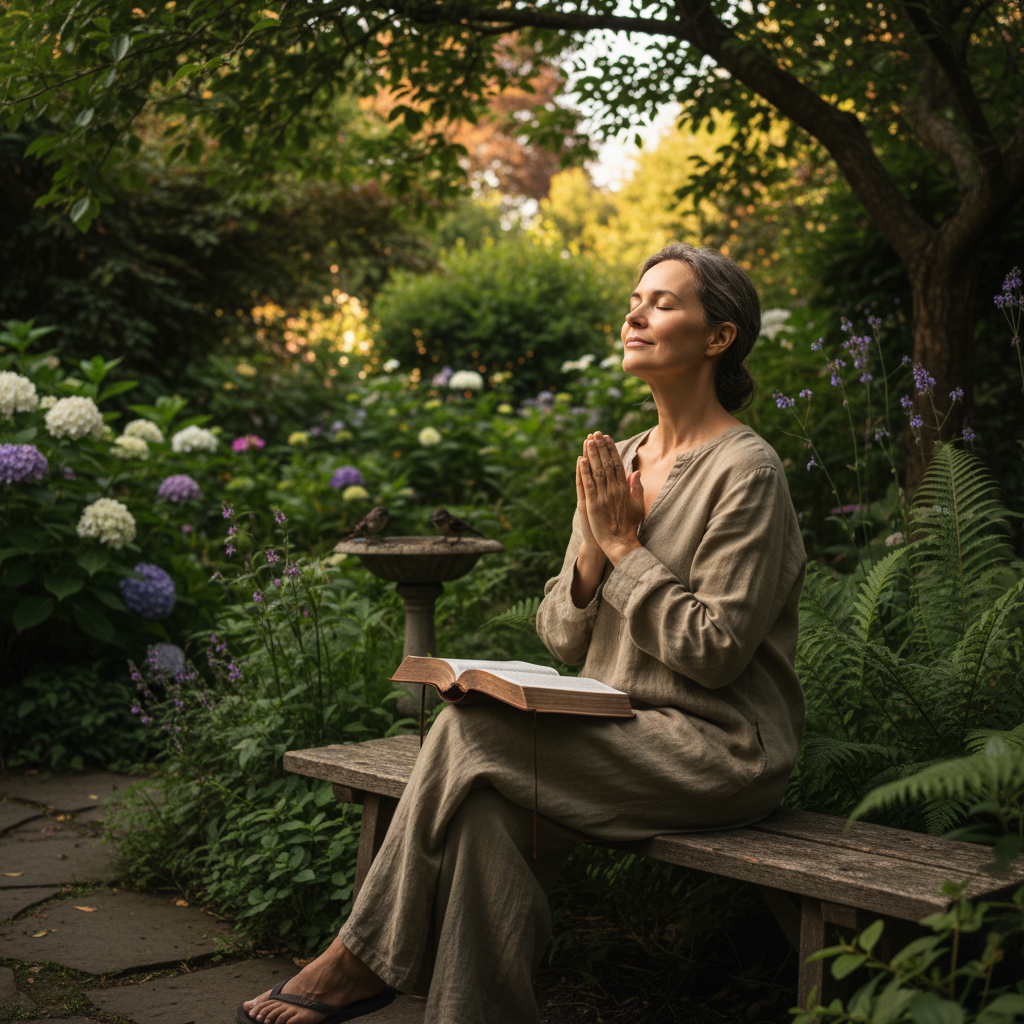
Matthew 6:25-34 — Yeshua’s Teaching on Worry
“Therefore I tell you, do not be anxious about your life, what you will eat or what you will drink, nor about your body, what you will put on… Look at the birds of the air: they neither sow nor reap nor gather into barns, and yet your heavenly Father feeds them. Are you not of more value than they?”
What this teaches: Yeshua addresses the most common sources of anxiety — basic needs like food, clothing, and security. His argument is from lesser to greater: if God cares for birds, how much more will He care for you? Worry is ultimately a trust issue — it’s acting as if God isn’t watching or doesn’t care.
1 Peter 5:7 — Cast Your Anxiety on God
“Cast all your anxiety on him, because he cares for you.”
What this teaches: The word “cast” is active and intentional — like throwing a heavy burden off your shoulders onto someone stronger. And the motivation? Not duty or obligation, but love: “because He cares for you.” God isn’t annoyed by your anxiety. He invites you to hand it to Him.
Isaiah 41:10 — God’s Promise to the Fearful
“Fear not, for I am with you; be not dismayed, for I am your God; I will strengthen you, I will help you, I will uphold you with my righteous right hand.”
What this teaches: Four “I will” promises from God: presence (“I am with you”), identity (“I am your God”), strength (“I will strengthen you”), and support (“I will uphold you”). Fear is countered not by willpower but by God’s active presence and power.

Understanding Anxiety from a Biblical Perspective
Anxiety Is Not a Sin — But It Is an Invitation
Nowhere does the Bible condemn someone for feeling anxious. Even Yeshua experienced deep anguish in the Garden of Gethsemane (Luke 22:44). The Psalms are filled with raw expressions of anxiety and fear (Psalm 55:4-5, Psalm 94:19).
What Scripture addresses is what we do with our anxiety. Do we let it consume us? Or do we bring it to God? Anxiety, in God’s economy, is an invitation to draw near to Him.
The Root of Worry: A Trust Issue
At its core, anxiety often reveals where we’re trusting ourselves instead of God. We worry because we feel responsible for outcomes that are beyond our control. The biblical response isn’t to pretend we’re not concerned — it’s to acknowledge our concern and choose to trust the One who holds all things together (Colossians 1:17).
Faith and Mental Health Can Coexist
It’s important to say this clearly: seeking professional help for anxiety is not a lack of faith. Just as you’d see a doctor for a broken bone, there’s no shame in seeking help for mental health struggles. God often works through counselors, therapists, and even medication. Biblical wisdom and professional care are not in conflict.
Practical Steps for Applying These Truths
- Identify your anxious thoughts. Write them down specifically. Vague anxiety grows; named anxiety can be addressed.
- Bring each one to God in prayer. Follow Philippians 4:6 — present your specific requests with specific thanksgiving.
- Memorize key verses. When anxiety strikes, having Scripture in your mind gives you something true to hold onto. Start with Philippians 4:6-7 and Isaiah 41:10.
- Practice gratitude daily. Thankfulness and anxiety cannot occupy the same space. Keep a written gratitude list.
- Stay in community. Isolation fuels anxiety. Stay connected to believers who can pray with you and remind you of God’s faithfulness.
- Limit anxiety triggers. Be wise about news consumption, social media, and other inputs that increase worry.

A Prayer for Anxiety
“Father, I bring my anxiety to You — not because I’m strong enough to let it go on my own, but because You told me to cast it on You. You care for me. I name these worries before You: [list them]. I choose to trust that You are working even when I can’t see it. Fill me with Your peace that surpasses understanding. Guard my heart and my mind in Yeshua. I am not alone, because You are with me. Amen.”
Frequently Asked Questions
Is anxiety a sin according to the Bible?
The Bible does not classify the feeling of anxiety as a sin. Anxiety is a human emotion that even godly people in Scripture experienced. What the Bible warns against is allowing worry to replace trust in God. The feeling is natural; the response matters.
What is the best Bible verse for anxiety?
Philippians 4:6-7 is the most comprehensive verse addressing anxiety, offering both the instruction (pray with thanksgiving) and the promise (peace that surpasses understanding). Isaiah 41:10 is also deeply comforting for its direct promises from God.
Can Christians struggle with anxiety disorders?
Yes. Anxiety disorders are medical conditions that affect brain chemistry and nervous system function. Having faith doesn’t make someone immune to mental health challenges, just as it doesn’t prevent physical illness. God’s peace is real and available, and professional treatment can be part of how He provides that peace.
How can I help someone with anxiety using the Bible?
Listen first — don’t quote verses at someone in crisis. Be present. When the time is right, share Scripture gently. Pray with them. Encourage professional help if needed. Most importantly, be the kind of steady, faithful friend that reflects God’s character to them.
Frequently Asked Questions
Is anxiety a sin according to the Bible?
The Bible does not classify the feeling of anxiety as a sin. Anxiety is a human emotion that even godly people in Scripture experienced. What the Bible warns against is allowing worry to replace trust in God. The feeling is natural; the response matters.
What is the best Bible verse for anxiety?
Philippians 4:6-7 is the most comprehensive verse addressing anxiety, offering both the instruction (pray with thanksgiving) and the promise (peace that surpasses understanding). Isaiah 41:10 is also deeply comforting for its direct promises from God.
Can Christians struggle with anxiety disorders?
Yes. Anxiety disorders are medical conditions that affect brain chemistry and nervous system function. Having faith doesn’t make someone immune to mental health challenges, just as it doesn’t prevent physical illness. God’s peace is real and available, and professional treatment can be part of how He provides that peace.
How can I help someone with anxiety using the Bible?
Listen first — don’t quote verses at someone in crisis. Be present. When the time is right, share Scripture gently. Pray with them. Encourage professional help if needed. Most importantly, be the kind of steady, faithful friend that reflects God’s character to them.
Struggling with anxiety? You don’t have to face it alone. Founded in Truth Fellowship is a community where real people bring real struggles to a real God. Reach out to us — we’re here for you.
Continue Your Bible Study Journey
Ready to Go Deeper?
Join Founded in Truth Fellowship for weekly Bible study and authentic community.
Visit Founded in Truth Fellowship
Join us for Bible study and worship in Rock Hill, SC
Address: 1689 Springsteen Rd, Rock Hill, SC 29730
Phone: (803) 627-8623