Blood and Doorposts: The Night That Changes Everything | Passover Part 1
Blood and Doorposts: The Night That Changes Everything
Matthew Vander Els opened this teaching — the first in a three-part Passover series called "The Night That Changes Everything" — with a confession: Passover can become so familiar that people stop actually seeing it. Everyone knows the plagues, the Seder plate, the general outline of the story. But somewhere along the way it becomes a holiday to celebrate rather than a story to keep living out. His aim for the series is to show that Passover isn't a one-time event that happened to a group of people in Egypt — it's the hinge point the entire biblical narrative swings on. And to understand it, he argued, the story has to start not in Exodus 12 but in Genesis 1.
Eden, the Original Sacred Space
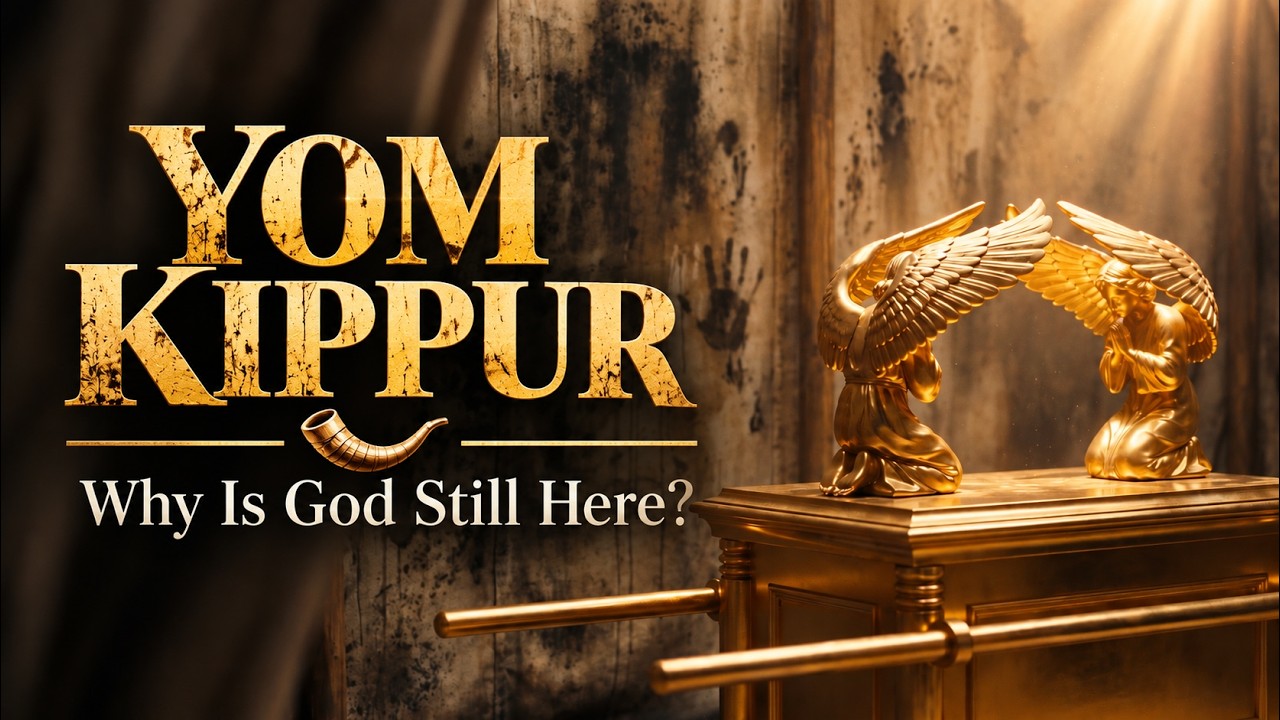
Vander Els used the image of setting up a fish tank before bringing home a goldfish — filtration, plants, water conditioning, everything prepared for the one thing you actually want to spend time with. That, he said, is Genesis 1. Creation is built, piece by piece, for day six: the placement of man in a garden that functions as a temple, the place where heaven and earth overlap. The language describing Eden — cherubim, the tree of life at the center, a river flowing outward, an eastward-facing entrance — deliberately echoes the language later used for the tabernacle and temple, because they're meant to be read together as the same kind of space.
Humanity's vocation in that space was to bear God's image outwardly. The Hebrew word for "image," selem, is the same word used for idols and statues — the radical claim of the Hebrew Bible being that Israel's God has no carved image except the human being. Adam and Eve were priests of the garden temple, tasked to tend it, guard it, and extend its borders outward. Genesis 3 is the story of that mission derailed: humans reaching for autonomy, defining good and evil on their own terms, and being cast out. The cherubim take up the entrance, and the way back is blocked. From that point forward, Vander Els said, the whole Bible is asking one question: how does God get his presence back to his people, and his people back to his presence?
Egypt, the Anti-Eden
Genesis ends well — Joseph in power, the family fed and safe in Egypt. Exodus opens with reversal: a new Pharaoh "who knew not Joseph," and the image-bearers now enslaved, making bricks instead of tending a garden. Pharaoh, as "son of Ra," represented not merely political power but cosmic authority in Egyptian theology — to resist him was cosmic rebellion, not dissent. Vander Els drew a straight line from that to every empire since, including Rome stamping Divi Filius on its coinage: take political power, wrap it in sacred language, and make the two indistinguishable. He was blunt that mixing the heavenly kingdom with any earthly empire — "wrapping a cross with a flag" — repeats Pharaoh's move.
The ten plagues, in this reading, aren't random disasters but a systematic dismantling of Egypt's gods: the Nile (Hapi) turned to blood, frogs (Heket, protector of the household) overrunning everything, livestock (Apis, Hathor) dying while Israel's herds were spared, three days of darkness extinguishing Ra himself, and finally the firstborn — the collapse of divine succession itself. Exodus 12 states it plainly: "I will bring judgment on all the gods of Egypt. I am the Lord."
What Pesach Actually Means
Vander Els traced the word pesach through 1 Kings 18, where Elijah asks Israel how long they will "pesach" — waver, limp, straddle the fence — between Yahweh and Baal, and through Isaiah 31, where God's pesach over Jerusalem is pictured as a bird hovering protectively over its nest, wings spread. Passover, then, isn't God floating past a house — it's active, protective positioning at a threshold. The blood on the doorpost wasn't a warning sign to keep people out; it was an invitation, calling God to stand guard at the door — and the answer to Elijah's question about wavering.
He then turned to the doorpost itself as an ancient Near Eastern symbol of declared allegiance — the place named in Deuteronomy 6 for writing God's words, the origin of the mezuzah tradition, and, strikingly, the site in Exodus 21 where a servant who freely chooses to stay with his master has his ear pierced against the doorpost as a permanent declaration of belonging. The Passover blood works the same way, in the other direction: an Israelite household in Egypt publicly declaring, "This house belongs to Yahweh, not Pharaoh."
The Lamb, the Hyssop, and the Pattern
He noted the deliberate four-day gap between selecting the lamb and slaughtering it (Exodus 12:3-8) — long enough for a family to grow attached, so the sacrifice would cost something. Citing scholar Jacob Milgrom, he pointed out that slaughtering a lamb was itself provocative in a culture where the ram-headed Khnum was worshipped. The sacrifice, he stressed, wasn't complete at the killing — it had to be eaten, standing, ready to move, for the allegiance to be internalized.
He then followed the hyssop plant — used to apply the blood in Exodus 12, used for purification in Numbers 19, invoked by David in Psalm 51 ("purge me with hyssop"), and lifted to Yeshua's lips on the cross in John 19 — as one of Scripture's deliberate threads tying the doorpost blood to the crucifixion. Paul's declaration in 1 Corinthians 5, "Christ our Passover [Pascha] has been sacrificed," was framed not as metaphor but as a trained rabbi's flat theological claim: this is the Passover.
Application
Vander Els closed by pointing to the Haggadah's instruction that in every generation each person must see themselves as though they personally went out of Egypt — not their ancestors, not their community, but them, personally. The question he left the congregation with was direct: is the blood on your door, or are you still wavering — like Israel at Mount Carmel — between two loyalties? He was explicit that this isn't vague spiritual language: the sacrifice of Yeshua as Passover lamb has been made, and the open question is whether it has been applied to the threshold of one's own life — whether the wavering has stopped and the declaration has been made that "this house belongs to Yahweh." He invited anyone carrying something they needed to set down to come to the altar during worship and leave it there.
Read the transcript (6,772 words)
Automated transcript, lightly edited for readability. Scripture appears as spoken; the video is the authoritative teaching.
Opening: The Blood on the Door
Shabbat Shalom, everybody. We're in Passover season, so this is exciting. That's what we're going to be speaking about today: the blood on the door.
We are about three weeks away from Passover, and I wanted to use that time well—not just to observe it, but to actually understand what we're observing. Passover is one of those things that can become so familiar that we stop actually seeing it. We know the plagues, of course. We know the Seder plate, the general outline of how Pesach works. And somewhere along the way, it kind of just becomes a holiday we celebrate instead of the story we keep living out.
So over the next few weeks, we're going to dig into it. It's a three-part series called "The Night That Changes Everything," and my goal is simple. I want you to walk away understanding that Passover is not simply a one-time event that happened to a group of people in Egypt. It's the story—the one that the whole Bible is building toward and building from. It's the hinge point that everything swings on throughout the entire narrative of Scripture.
This morning, we start at the beginning. And when I say the beginning, I mean the very beginning—not Exodus 12, not Moses, not even Egypt. We're going to zoom all the way out. We're going to explore what the problem is that Passover is solving, why it happened. We're going to talk about the blood on the doorpost, which looks like a weird ancient ritual, and we're going to hash this out.
You can open your Bibles to Genesis 1. That's where we're starting—to kind of footnote and mark it, because that's where everything actually begins.
Creation and the Image of God
The Bible, when it opens in Genesis 1, opens with a very specific image: God speaks, and creation comes into being. Light, the sky, the land, the seas, the creatures. And then on the 6th day, the climax.
When you get a goldfish—if you have a little kid, go get him a goldfish when they're a couple of years old—you don't just open the bag and pour it out on the ground, right? The fish can't survive without the environment that it's built to live inside.
So you get the aquarium, and then you do all the Googling. You have to leave the bag in there for a few minutes to let the water adjust so it doesn't shock the fish. But you also have to have some plants in there, maybe some pebbles. You have to have the filtration system. You have to have the food ready. You have to have everything ready for the one thing that you really want to spend time with so that it can have the environment built.
That's Genesis 1. Everything that God is calling into being and piecing together, giving meaning to, curating, molding this environment—it's not for an end in itself. It's for the 6th day. It's time to put the goldfish in the tank.
Man is created on the 6th day, and he's made in the image of God. He's placed in a garden that functions as a temple—the place where heaven and earth overlap, where God's presence fills the space and humans live inside of it.
The Garden as Temple
It's not a coincidence that the language describing Eden—with the cherubim, the angels, with the tree of life right at the center, with the river flowing outward, eastward-facing entrance—it's the same language the Bible later uses for the tabernacle and the temple, because they're meant to hyperlink each other. You're meant to see them all as representing the same thing.
Eden is the original sacred space, the original place of divine and human cohabitation. So it's a big deal.
The human vocation—your job, the mission in that space—is to bear the image of God outwardly. The word there for image is "selem." It's literally the same word for idol, statue. When Joshua ran into the land and broke down all the images—selem—all the pagan images of the other gods—he broke them down.
There's only one image of our God. It's you. It's you. That's the radicalness of the Hebrew Bible. No, we don't carry a statue into battle. We carry an empty throne. That's what the Ark of the Covenant is. "Where's their God?" "I don't know, but there are His images, right?"
That was the intent. God wanted His human beings to be His representation in the mortal world. When you see us, you should see God. Sounds so poetic, right? And then you look in the mirror and it just goes—
That's the plan. When we act, we carry the same type. We're His image. People see and feel God. That was the plan for human beings.
Priests of the Garden
The humans are the priests of the garden temple. They tend to it, they guard it, they keep it, and they extend it. They were supposed to grow it. "Be fruitful and multiply" didn't mean leave the garden—you take the boundaries and you colonize the world with it, right?
This is why the exile matters so much. Much later, as we go through the prophets and the exile into Babylon—it's not just that humans were expelled from the garden in Eden. It's that the priests left the temple. The image bearers left the sacred space. The people through whom God's presence was supposed to move throughout all of creation are now outside, blocked by the cherubim, the angels with the swords, east of Eden. That's the wound at the center of the whole story.
The Fall and the Question
As we explore Genesis 3, we see the story. We see how this happened. The humans reach for autonomy away from God. They want to do things their way. They want to indulge in determining what is good and evil for themselves. So they decide that they're going to define these terms on their own terms rather than God's wisdom.
The consequences aren't just punishment. It's exile. They are cast out of the garden, out of the sacred space, out of the place where God's presence dwells. The cherubim take up the post of the entrance, and the way back is blocked.
From Genesis 3 forward, the entire Bible is asking a single question: How does God get His presence back to His people, and His people back to His presence? That's the question every covenant, every sacrifice, every prophet, every temple is trying to answer. That's the goal, the mission. The whole story is an exile and return story.
The Bible as we know it was compiled during and after the Babylonian exile. That concept was at the center of how the Bible was pieced together and the story it tells. And Passover is the hinge point, right in the middle of it.
Egypt as Anti-Eden
Egypt is the anti-Eden. Let me show you what Egypt is doing in the story.
You remember the Exodus story? If not, please watch "The Prince of Egypt" this afternoon. Great overview. It's the Exodus story. It's the Passover story.
When we turn from Genesis to Exodus—Genesis ends with Joseph. And of course Joseph and Israel go down to Egypt. 70 people walk into this foreign land, and Egypt, for a minute, is actually good. Joseph has risen to power, the family is fed, they're welcomed there, they're safe.
But then when we turn to Exodus chapter 1, it opens with a new Pharaoh who knew not Joseph. And everything good that was established by the end of Genesis is now reversed.
The image bearers—the people through whom Yahweh is supposed to bless in the world—they're now slaves, right? They're building cities for this human king who has declared himself divine. Their labor is being extracted for the glory of an empire, not for a kingdom. The ones who were supposed to tend the garden are now making bricks. The humans called to be priests are being treated as livestock.
Pharaoh's Divine Claim
And over all of it sits this person named Pharaoh, the son of Ra, the Egyptian sun god. In Egyptian theology, Pharaoh is not just another political leader. He is the living embodiment of divine order in Egypt. His word is the word of the cosmos. His authority is cosmic, not merely governmental.
To resist Pharaoh in Egypt is not political dissent—it's cosmic rebellion in Egyptian theology.
It's not a new play. Every empire does that. Every empire, even today, runs the same play, right? You take the raw political power and you wrap it up in some sacred language, and then you make the two indistinguishable.
Rome pressed Caesar's face on the front of every single coin. Can you imagine? "Divi Filius"—the son of god—was printed on it. Just to make the statement, right? You couldn't buy bread without holding that declaration in your palm.
We put "In God We Trust" on ours, and we tell ourselves that it's different.
The Church's Complicity
And when the church decides its job is to put the right king on the throne rather than speak truth to every throne, that's when it stops resisting the beast. It becomes the one handing out the mark in Revelation 13.
That's what happens when you wrap a cross with a flag. It's the same thing that Pharaoh was doing. It's the same thing we do in Rome.
It's the same thing when you mix the heavenly kingdom with the earthly empire and make them indistinguishable. Divinely blessed empires. Yahweh has been dismantling that claim since Egypt. And that's what the entire Bible is about. It is an anti-imperial story of resistance explaining to you who your God is and who your God is not and what your mission is on Earth. And it is to thwart evil, darkness. And the Bible chooses empires to represent that persona.
So when Yahweh says to Moses in Exodus chapter 3, "I have seen the affliction of my people, I have heard their cry, I know their sufferings, and I have come down to deliver them," this is not simply a rescue mission that God just looks at and says, "Oh, I need to go rescue them." This is God challenging the entire theological architecture of Egypt at once. This is a direct confrontation between two competing claims about who is actually sovereign over creation. Stakes just got a lot bigger, right? It's not just God coming down here to pick a fight with some dude. It's the entire myth of Egypt that has power because people think it's real. When in reality, it's just a facade.
The Plagues: An Attack on Egypt's Gods
The plagues of Egypt are not random disasters. They were systematic, put in place to dismantle Egypt's theological worldview. For example, the Nile turns to blood. What's Hapi? The god of the Nile River. The source of all agricultural life in Egypt. And Yahweh turns the life source to death.
Frogs. Heket, the frog-headed goddess of fertility and childbirth, is invoked to protect the household in Egypt. Now when you read the story, frogs were the worst plague. Oh my gosh. Frogs were the worst. Now frogs are jumping in the ovens and in the beds. If you read some of the extra commentary stuff, it's kind of like the book of the Faux Book of Jasher that we have today—still interesting. I think it talks about one of the rabbis who wrote in the commentary there. He said yeah, and they were jumping in the stomachs of people, too. Anywhere that there was water, the frogs would just—I love it, right? But yeah, how is this happening? We have the god Heket protecting our home. Why are these frogs everywhere? It's like someone's using the frogs against us.
Livestock die. All the cattle were sacred in Egypt. The bull Apis was worshipped as the living embodiment of Ptah, the creator god. Hathor, one of the most important goddesses in the entire pantheon of Egypt, is depicted as a cow. Now all the cows are dying. They're diseased. They don't look right. It makes you wonder what they were really worshipping out in the wilderness, right? Egyptian cattle died, but Israelite cattle don't. Yahweh is making a general statement about disease. He's being surgical.
In darkness. For three days. That's Ra. Ra, the sun god, Pharaoh's divine father. The deity who defeats the chaos serpent every day so that the sun rises again. Ra is extinguished. He got fired. Something happened. Like the entire theological engine of Egypt stalls and directly impacts the morale of the government as well.
And I want you to feel how serious this is. Like in Egyptian cosmology, when Ra loses, it means that chaos wins. That's the story that they put around the sun falling and rising every day. Oh, he's going into the darkness to defeat chaos. And the sun rises in the morning, you know Ra won. It's like, yes, we did it. And you never expected it not to rise, and darn—did he lose? Can he lose? He lost.
And then the 10th plague. The firstborn. Pharaoh's firstborn son was not merely an heir. He was the continuation of divine kingship in Egypt. His death was more than personal tragedy. It was theological collapse. Again, precision. The divine succession was severed.
By the time Yahweh reaches Exodus 12, he's been doing this for months. Deity by deity, domain by domain. And now he says in Exodus 12, "On that same night, I will pass through Egypt and strike down every firstborn of both people and animals, and I will bring judgment on all of the gods of Egypt. I am the Lord." I mean, Yahweh—I am the Lord. No credentials here, no extended argument. He's not going to spend a lot of time explaining it. His argument is just the 10 plagues. That's the argument. This is the verdict.
And it's not my favorite part of the story in the Bible, but I understand why it's emphasized here.
The Meaning of Pesach
Before we jump into that, let's get some clarification. We need to talk about the name of the day. Passover. We get the name Passover for this holiday, this festival, from the Hebrew verb pesach. I say pesach. A standard translation is Passover. Like God passes over the houses that have blood on them, right? And that's fine. That's cool. But the same word, pesach, also appears in 1 Kings chapter 18.
You know the whole Elijah on Mount Carmel event. It's a showdown between Yahweh and the prophets of Baal. And the reason why this whole battle is going down is because the people of Israel have been straddling the fence for so long. They worship Yahweh on some days, but on other days, they worship a little bit of Baal, you know? Just on the weekends. And I phrase it like that on purpose.
The people of Israel have been straddling this fence. They're trying to hold on to loyalty to the empire, which is really what Baal represents in the context of the story. They want to hold on to loyalty to empire and loyalty to the kingdom of Yahweh, which has no flag or borders, right?
And Elijah turns to the crowd and asks, literally: "How long will you and you and you pesach between two different opinions, two loyalties, two masters?" How long are you going to straddle the fence? Pesach.
This was during a time when the people of Israel gave God a wife in his temple. Her name was Asherah. Yeah. In multiple temples because they had multiples. Before that—who's the good king? Josiah. Josiah came. Right? Can you imagine getting so complacent and thinking, "You know what? You know what would look good? Asherah beside God in the temple."
Now, most translations when you read 1 Kings 18 say limping or halting or straddling the fence or whatnot, but the point is it's wavering. Standing at a threshold. Unable to step all the way this way or all the way that way—this refusal to commit. It's the same root as Passover, pesach.
Which means the word underneath the holiday has something to do with thresholds and a decision and a refusal to be caught between two things.
Now if we go to Isaiah chapter 31, God is promising to defend Jerusalem, and he says this: "Like birds hovering, so the Lord of hosts will protect Jerusalem. He will protect and deliver it. He will pesach, pass over and rescue."
So, a bird hovering over a nest with their wings spread. Active coverage. It's not floating past. It's protective positioning, defensive.
Shielding, Not Passing By
So when God says, "I will pesach over your house," it gives a bit of a more dramatic, hopefully cinematic, subwoofer going the whole thing—Passover, not like, you know, the animated movies we see, this little spirit. No, it's—I love it because that's the God we know we serve. Shielding.
The Doorpost: Where Allegiance Is Declared
The blood on the doorpost was not a warning sign. It was the invitation. You see, it called God to stand at the threshold. And here's the connection to the Elijah question that he asks. The blood answered it. "How long will you waver?" The blood on the door was the answer of the faithful households. You cannot pesach, waver between two lords and also have the blood on your door. It doesn't work. The blood is the declaration that I've stopped limping, I've stopped swaying, I've stopped straddling the fence. You've chosen whose house this is.
Which brings us to the doorpost. Most people when they read the story of the Exodus read, "Put the blood on the doorposts" as like a survival instruction. God tells you what to do, you do it, and you live. Transactional, right? It makes sense. But would you be surprised if I said there's a deeper level that's really more interesting than just a transactional warning sign from God? I knew you would.
So in the ancient Near East, ancient cultures, pretty universally, not just Israel, the doorpost was not just architectural. It was the place where allegiance was declared. Many cultures had an altar at the doorpost. They carved out a little bowl in the doorpost, and that's where you sacrifice an animal and put some blood in the door, and in some cultures it was meant to honor and make covenants to honor guests into your home in some situations, right? It was the place where allegiance was declared.
Deuteronomy 6, after the Shema: "Hear, O Israel, the Lord our God, the Lord is one." God says, write these words where? On your doorposts. Why the doorpost? Because the doorpost marked whose house this was. Whose name governed the threshold, right? And that's where we get the tradition of the mezuzah, right? It wasn't just like a religious decoration, it's a public claim.
Across the Near East, the ancient world, households put identifying markers at the entrance announcing which deity covered their home. It was a threshold declaration. It wasn't neutral space. The space belonged to somebody.
And here is the one that I think we look over the most. It comes in Exodus 21. See, God gives Israel its first law code. And one of the laws deals with an indentured servant. And so if you have a servant that serves you six years of service, in the ancient world, then freedom is granted. But what if the servant doesn't want to leave? What if he loves his master's household and he wants to stay permanently? Might be a pretty good deal depending on the economy, right? Can I just stay here? The master brings him to the door and then he drives a dowel through his ear into the doorpost or against the doorpost.
The Blood Says Whose House This Is
He shall take him to the door or the doorpost and pierce his ear with an awl, and he will be his servant for life. This is not a temple. It's not one of the altars in the Torah. This all happens at the doorpost, because the doorpost was where permanent allegiance was registered. The servant's ear pressed against the wood of the threshold was the declaration: this is my home. I belong here. I'm under the authority of this house, freely and permanently. And notice, the law gives him the choice. He could walk out a free man. No one's forcing him to go to the doorpost. He chooses to be marked. He chooses the household. The doorpost becomes the witness to a decision that he freely made.
So the blood on the doorpost in Exodus 12 is doing the same thing, just the other direction. Right? So if you're a dad of an Israelite home in ancient Egypt, you're declaring your allegiance not to Pharaoh's household but to God. This house is not Egypt's house. This house is not under Pharaoh's cosmic authority. The blood says Yahweh governs this house. And God hovers, wings spread, covering every house that bore his mark.
As the story gets near, and as people are preparing for this evening where they're going to have to do this, in Exodus 12:3-8 God specifies 4 days between the time when the family goes and selects the lamb and the time when it will be slaughtered for Passover: the 10th of the month through the 14th. The text tells you this. The animal lives with the family for 4 days. Long enough to at least get a name. Even if you didn't name it, you end up calling it something, right? It gets in your way. No one has a big dog in their house, do they? We just got a little Bernedoodle about 6 months ago, and we shopped with our eyes.
And now we have a horse that's a snuggle bug. And I don't call the dog Cosmo very often now. 4 days is long enough for this animal to have an identity with your family, naturally. It's long enough for your kids to ask why this thing is different than the rest (your kids are going to notice). It's long enough that it's not really considered livestock anymore. And that gap is deliberate. It seems God wanted it to cost something. The lamb's death was probably not supposed to be too easy to watch.
One of my favorite Jewish scholars, Jacob Milgrom, the only man who ever made Leviticus seem cool (he spent his entire career on Leviticus and the sacrificial system), notes something important here. He says, "In Egypt, the lamb was connected to Egyptian religious practice." Khnum, the ram-headed creator god, was associated with the flock. Slaughtering a lamb in certain regions of Egypt was genuinely provocative. You don't do that in this area. It was a theological statement, not just a meal. The Israelites were shepherds. The animal was their livelihood, and the blood on the door was a very costly, yet visible and public act of declaring whose house this was.
And we always camp out on killing the lamb, of course, because according to the text, that's a pretty big part of Passover. You need to kill the lamb to get the blood and do all this stuff. But killing the lamb doesn't complete the sacrifice. This is important, especially for believers, to understand this concept of what the Pesach sacrifice was. The sacrifice of Pesach was not complete until it was consumed. It wasn't just the killing. You had to eat it, too. It's not active until it's consumed. You have to eat the lamb for the allegiance to take hold.
The family doesn't just mark the door and go to bed. They roast the entire animal. They don't even really clean it. They've got the head, the legs, all the inward parts. Nothing is withheld. Stick it on a stake. The text is specific about roasting, not boiling. And then the whole family eats it. The lamb becomes part of them. The redemption gets internalized.
And they eat it standing up. Sandals on, staff in hand, cloaks tucked in. This is not a meal eaten in safety. This is a meal eaten in motion. Because the blood on the door was never meant to keep them in Egypt. It was meant to get them out. Passover was never the destination. It was the first step of the entire Exodus, right?
Little Hyperlinks Across the Whole Bible
And so I would like to focus your attention on something I think is one of the really neat nuggets in the Bible, the whole Bible. And it runs through a plant that's used in the story. It runs through a very common bush that grows in Israel, known as a hyssop plant. It grows on walls. It grows in cracks. It's kind of a weed. It's nothing really impressive. But it shows up at very specific moments.
One of those is Exodus 12. The blood of the Passover lamb needs to be applied to the door with a branch of hyssop. Numbers 19 also mentions it. It says that a person who has become unclean through contact with death is purified with water applied using it. Then Psalm 51: after Nathan names what David did with Bathsheba and Uriah, David cries out to God. And he says, "Purge me with hyssop and I shall be clean." He's not reaching for legal language here. He's reaching for purification imagery. He wants the thing that cleanses from death to be upon him.
And then you have John chapter 19, the crucifixion scene. Yeshua is on the cross. He's suffering, and he says he's thirsty. And someone lifts up a sponge soaked in sour wine to his lips on a branch of hyssop. John wrote his gospel later than all the other three, right? He's been sitting on this thing for decades, and he's just wanting every detail. If you read John and try to compare it to the rest, you see he's a lot different. He loved to tell a story differently. And here he chose to tell us which plant was used to give Yeshua the drink. And he chose to name it. The same plant that applied the blood of the Passover lamb to the doorpost is now lifting something up to the lips of the one Paul calls our Passover. Scripture keeps these little threads alive, these little hyperlinks alive, and you pull one end and something across the whole canon of the whole Bible just moves. It's kind of neat. It's not an accident. It's intentional.
Remember the ninth plague? The ninth plague is 3 days of darkness: Ra, the sun god, extinguished. The theological engine of the most powerful empire on Earth goes dark for 3 days. And then what does Pharaoh do? He releases Israel. And there's morning again. 3 days of darkness, and then Pharaoh says, "Get out." Right? You can go. And then morning.
The Israelites are inside their houses for those 3 days. Can you imagine what that is like? To see the rest of the world in darkness, but you've got some lights on. The surgical distinguishing between Egypt and this massive group of Israelites. And then you come to the time when you look up and the Passover is there, and there's blood on the door, and the lamb is eaten now, and you're dressed to leave. And they are waiting in a country that has gone dark. Whatever is moving outside, they can't see. They can only trust the mark on their door. That's the whole thing: the blood is there. God is hovering.
Paul writes in 1 Corinthians 15 that Yeshua was raised on the third day in accordance to the scriptures. And scholars have spent a lot of energy trying to identify which scripture he means, because it'd be real nice if you could just have a footnote and go back. He doesn't clarify. And that's because the answer is probably not a single text. It's a pattern. It's the shape of how God operates, visible all the way back to Egypt. The divine figure extinguished. Darkness, and then the morning comes, and everything changes.
G.K. Beale, an amazing New Testament scholar, has written extensively about New Testament authors and how they read from a template of Exodus, a pattern God established in the beginning that he would repeat and fulfill until the larger scale came. That's what Paul says in Colossians . Come on. In Colossians , that at the cross Yeshua disarmed the rulers and authorities and put them to open shame, triumphing over them. It's the same structure as the plagues: the powers that claim dominion over creation, addressed one by one.
Christ Our Passover
First Corinthians 5: Paul's writing to Corinth, and there's a serious moral failure in the community, and the congregation has decided to look the other way. Paul's not happy about it. He uses the image of leaven: a little bit of yeast spreads throughout the entire loaf. Got to be careful. And then he claims this sentence. He says, "Clean out the old leaven that you may be a new lump as you really are unleavened. For Christ our Passover lamb has been sacrificed." Pascha. The Greek word for Passover is Pascha. You can say that one, too. Pascha, right? Or the Paschal mass, right? It's a Greek word. It means Passover.
When Paul says this, he does not say "like a Passover lamb" regarding Yeshua. He doesn't offer this as just an illustration. He states it as fact. Our Passover. Christ is our Pascha. Written by a first-century rabbi. Someone who grew up observing Passover every single year of his life. Who had the text memorized. Who knew what the blood meant, what the doorpost meant, what the hyssop meant, what it meant to eat the lamb standing up. He knew all of this. He was very trained in it. And he looks at what happened at the cross, and he says: that thing right there? That's not a picture of the thing. That is the thing. That's the Passover. Which means everything that we've been going through here: the Pesach as hovering protection, presence at the threshold, the doorposts as covenant declaration of allegiance, the lamb as the costly substitute and declaration.
The Blood on the Wood
The blood that invites God to take up a position at the door, the internalization of the sacrifice and everything that went through that. Multiple days of darkness with the plagues. Paul says all of what this is is Yeshua. This is what Yeshua is and what he does. The blood is on the wood, always on wood. The Passover blood was always applied to the doorpost. That's not a detail that Paul's rabbinically trained mind walked past. So he reaches for it.
There is a rabbinic tradition that asks why God specifically has hyssop for an application. And I thought this explanation was reasonable. Hyssop grows low, at the base of walls, in the cracks close to the ground. And the answer the rabbis give in their discussion of all of this: They say even the person who is low, who feels like they have nothing to bring, can reach the blood. That's pretty good. The instrument of application was never about worthiness of the one applying it. It was always about what was actually being applied. I thought that was beautiful.
Is Your Threshold Declared?
Here's the question. The question the Passover has been asking ever since the first night of Passover in Goshen. The judgment that moved through Egypt that night didn't check family histories. It didn't ask whether or not your grandfather had been faithful. It didn't give credit for proximity to people who had blood on their doorposts. Each house required its own mark. The only question was: Is your threshold declared?
In the traditional Haggadah, which we'll read a shortened version of it at our seder, it says this—and something Heather touched on in the Torah portion—it says that in every generation, each person is obligated to see themselves as if they personally went out of Egypt. It's an invitation for application. Not their ancestors. Not the community they were raised in. Them. Personally. Each person is obligated to see themselves as if they went out. It's the same thing the doorpost is saying.
And it's the reality that at some point you have to realize that the blood on your parents' doorpost is not your door. The faith of the person sitting next to you is not your door. At some point every person has to answer. Have you applied the blood yourself? Have you stood at the threshold and declared whose house this is?
Stand at Your Own Threshold
Let me be specific about what that means because I'm not the guy that loves using spiritually vague language. Some people like that. It helps navigate through certain things. Paul says Yeshua is our Pesach. The sacrifice has been made. The question is whether you've allowed it to be applied to the threshold of your life. Whether you've stopped limping between two opinions—which is the other meaning of the same word, right?
And have you made the declaration that this house, my house, belongs to Yahweh? Not to the empire. Not to a king. Not to the powers that God is dismantling before our eyes every generation. Not to whatever lesser thing that has been governing your threshold now. No. Does your house belong to Yahweh? AKA the God that sees you—a name given to God by an abused girl sitting alone in the desert.
Don't Stay in Egypt
And nobody eats the Passover and stays in Egypt. That's not how it works, right? You eat the lamb standing up with your sandals on, as the Israelites were told, because the blood on the door is the beginning of the Exodus. It's the starting point. It's ready, set. It's not an invitation to get comfortable. The sacrifice gets internalized and then you move. You're enabled. You leave. You walk toward what God is calling you toward.
Yahweh systematically dismantled Egypt's gods just one by one. He proved, through the 10 plagues, that none of it was ultimate. That the things Egypt had been putting its weight on could not hold. That the story that it was telling its constituents was going to end very soon. Not permanent. Not going to be the same.
And then he stood at the threshold of every house that bore his mark and hovered over it, wings spread. And I guess you could say Yeshua did the same thing. He addressed every power and authority that claimed ownership over human beings. And then he too went in the dark for 3 days. And then the morning came.
The Gods Still Fall
Guys, the gods are still being dismantled as quickly as they pop up in this world. Whatever you have been building your life on that isn't Yahweh, it may look impressive. It's destined to fail and fall. It won't hold. The question is whether you're still wavering at the threshold or whether you've made your choice.
One more thing about hyssop, by the way. So, if you were that dad or father of the ancient Israelite home that put blood on the doorpost that night in Egypt, you probably did not understand nor need to understand the full theological weight of what you were doing. And I love that. All you needed to do was do it. We can talk about the details and the opinions and all the rest. It's fun. Great. It's a lot of fun. Do the thing. Make the choice who you serve. Who will you serve?
Just Do It
You take the branch, you dip it in the basin, you apply the blood to the wood of your house. And that's the act of declaration. The understanding is going to deepen over a lifetime, but the act came first.
And so the question is: Is the blood on your door today? Or are you like the Israelites who thought God looked better with a wife? And they wavered on Mount Carmel. They wavered when Elijah confronted them. Guys, I don't know where you're at today, but Passover season is an appropriate season to audit yourselves—as if you yourself personally are about to go through the Passover and Exodus out of Egypt.
The Time to Choose
And so please stand as we conclude with worship today. Worship team will come up, and during this time you're welcome to worship with us, praise and pray with us. You can meditate on the word. If you need prayer today, if you'd like to make a decision with somebody today, we have a prayer team on either side of the stage, and these are prayer warriors. They will pray with you over something relating to the message or something that's just going on in your life. That's why we're here.
We do have what we call a faux altar, a symbolic altar here that is specifically made for putting things on and giving things to God that you're never going to pick up again. And so if today you've been wavering between two things, you've been carrying something around for way too long and maybe it's time to set it down. You can walk out of here without holding on to that, whatever that would be. Maybe that's a decision you need to make. Maybe it's something that you have in your life you need to put down. Maybe it's time. Who knows? There's a spectrum, I'm sure. But there's one place that you can symbolically give that to God today. Come down, set it down.
And so join me as we go before the Father.
Prayer
Avinu Malkeinu, our Father, our King. Father, we thank you for this opportunity to dive into your word once again, to understand what Passover is, but not only that, who our Passover is. Father, you say that the Holy Spirit that you have given to us right now is the same spirit that had the power to raise Yeshua from the dead. And if that's the case, Father, I ask that that same power would dwell in us—that would be able to mold not only our hearts, but make us worthy images so that when we walk out into the world, people will no longer need to ask who God is. They will be experiencing his love, grace, and mercy through his images every single day. We thank you, Father, in the name of Yeshua, our King. We pray. Amen.
I will never forget the moment I met you, the moment you called my name. Pulled me out of the darkness. You gave me a promise to never thirst again. All that I ever wanted, my heart has found in you. I have tasted, and nothing satisfies like you do. The fountain that won't run dry. I want all that you are. Your living water. Drink from the endless well. I will sit at your table. Forever grateful. Forever where you dwell.
And all that I ever wanted, my heart has found in you. Oh, I have tasted life, and nothing satisfies like you. The fountain that won't run dry. All my fountains are in you. And all my hope is built on your love. With every breath I live for you, Lord.
I call, you answer. And you came to my rescue, and I want to be where you are. Yeah. I called, you answered. And you came to my rescue. I want to be where you are. In my life be lifted high. In my life I called, you answered. And you came to my rescue. Want to be where you are. 'Cause all my fountains are in you. All my hope is built on your love. Oh, my fountains are in you. With every breath I live for you, Lord. Oh, my hope is built on your love. Oh, my fountains are in you. Live for you, live for you, Lord. Oh, worthy one, I live for you. You're my everything. My everything.
Thank you, Father. You're the only one. Thank you for satisfying us in a dry and weary land. Thank you for hovering. Thank you. Thank you, Yeshua.
Shema Yisrael Adonai Eloheinu Echad. Baruch shem k'vod malchuto l'olam vaed. Hear, O Israel, the Lord is our God, the Lord is one. Blessed is the name of his glorious kingdom for all eternity. And may the Lord bless you and keep you. May the Lord make his face to shine upon you and be gracious to you. May the Lord lift up his countenance toward you and give you his peace. In the name of our Sar Shalom, our prince of peace, Yeshua Hamashiach, we pray.
Shabbat Shalom, family. Shabbat Shalom, family.