Nahum - When Mercy Ran Out
Nahum: When Mercy Ran Out
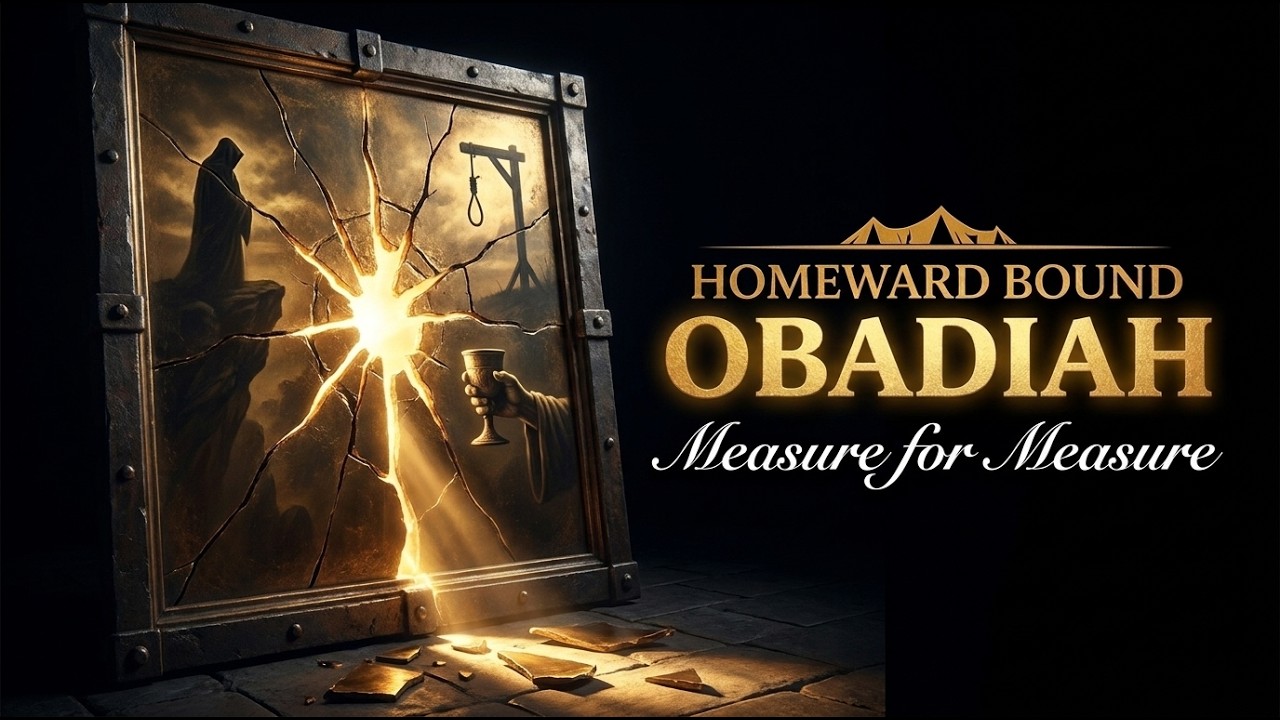
Nineveh again. Last week the congregation sat with Jonah, the prophet who begged God not to save the city he'd just watched repent. This week, the same city gets a different messenger, and a very different word.
Two Prophets, One City
Jonah is famous for what he quoted and, more tellingly, for what he left out. In Jonah 4:2, furious that God spared Nineveh, he throws Exodus 34 back at God: "I knew that you are a gracious and compassionate God, slow to anger and abounding in love, a God who relents from sending calamity." That's the foundational self-revelation of Yahweh given to Moses after the golden calf. But Jonah stops there. The rest of Exodus 34 says God "will not leave the guilty unpunished," visiting iniquity to the third and fourth generation. Jonah — and, Vander Els argued, post-exilic Judah reading Jonah's story about themselves — wanted the comfortable half of God's character and skipped the uncomfortable half.
Nahum will not let anyone get away with that. His book opens, in Nahum 1:2–3, quoting the same Exodus revelation, but landing on the other half: "The Lord is a jealous and avenging God... The Lord will not leave the guilty unpunished." Same verse, same God, two prophets emphasizing two different truths depending on what their audience needed. Jonah's Judah needed mercy shoved in their face. Nahum's audience — the victims of Assyrian brutality — needed justice named out loud.
Who Nahum Actually Is
Scripture gives almost nothing about the man. He's from a place called Elkosh, location unknown to scholars. He prophesied sometime between 663 and 612 BCE — after Thebes ("Egypt's great city") fell and before Nineveh's own collapse. No call story like Isaiah, no biographical drama like Hosea, no personal anguish like Jeremiah. Just three chapters of what Vander Els called some of the most sophisticated, violent, cinematic Hebrew poetry in scripture. That's intentional: the book isn't about the prophet. It's about what God has to say about an empire.
And the name itself carries irony — Nahum means "comfort" in Hebrew. But he isn't comforting the oppressors. Assyria had invaded the northern kingdom in 722 BCE and effectively erased it, scattering ten tribes and resettling foreign peoples in their place. Around 700 BCE they turned on Judah, besieged Jerusalem, captured 46 cities, and deported 200,000 people — Assyrian records boast of trapping Hezekiah "like a bird in a cage." Nahum's comfort is for the victims of that terror machine, not for Nineveh itself.
Why the Violence Is in the Text
Nahum 2 and 3 describe Nineveh's fall in unflinching detail: "Woe to the city of blood, full of lies, full of plunder, never without victims. The crack of whips, the clatter of wheels, galloping horses and jolting chariots... piles of dead bodies without number." Vander Els framed this not as gratuitous but as honest — victims of violence need their pain named. The graphic imagery says: yes, it was this bad. You weren't imagining it. God noticed, and God will respond in kind. A nation that built its identity on being "a city of blood," that exported cruelty as strategy, will meet its end by the same measure: "If you live by the sword as a nation, then you will die by the sword."
Strikingly, Nahum 1:15 borrows the exact language later used for gospel proclamation — "the feet of the one who brings good news, who proclaims peace" — the same phrase Isaiah 52 uses and Paul quotes in Romans 10:15 about preaching the gospel. Here, the "good news" is an empire's collapse. For the oppressed, the fall of what has terrorized them is gospel. Vander Els drew a straight line from this to Jesus' own proclamation of liberation and the coming of God's kingdom over the kingdoms of the world.
Holding Both Together
The temptation, Vander Els said, runs two directions: sanitize God's judgment into pure benevolence, or weaponize it into license for tribal hatred against whoever we've decided is "Assyria" this week. Both are wrong, and scripture refuses to resolve the tension by picking a side. Jonah asks whether God should be concerned even for Israel's enemies. Nahum ends flatly: "Your wound is final. Nothing can heal you... For who has not felt your endless cruelty?" Both are true. Both are God.
Yeshua, in this reading, holds Jonah and Nahum together. He weeps over Jerusalem in Luke 19 like Jonah pleading for mercy, then pronounces "woe" seven times over the teachers of the law in Matthew 23 like Nahum pronouncing judgment. He wanted to gather Jerusalem "as a hen gathers her chicks," and when they refused, judgment came — fulfilled forty years later when Rome leveled the city. And in Revelation, the Lion of Judah turns out to be a slain Lamb, and it is the Lamb's wrath the mighty flee from in Revelation 6:16 — the victim who judges the empires.
Application
Vander Els urged the congregation not to sanitize God's justice or weaponize it against political or personal enemies — "your political opponents are not Assyria." He named two temperaments: those who are "Jonahs," quick to resent mercy landing on people they'd rather see judged, and those who are "Nahums," hungry for accountability and impatient with grace. Both need the other prophet's lesson. The call is to love enemies while still longing for justice, trusting God to handle what belongs to God — celebrating when evil falls without becoming evil in the process. And practically: for those in exile, abuse, or oppression, coming home sometimes requires what holds them captive to fall first — Nahum's message was written as comfort for exactly those people, a reminder that what keeps them from home will not last forever.
Read the transcript (5,877 words)
Automated transcript, lightly edited for readability. Scripture appears as spoken; the video is the authoritative teaching.
Shabbat shalom, everybody. Really excited about this little prophet that we are going to dive into today, because this is also a pretty short book of the Bible, Naom. It's the one that everyone claims they've read just like Jonah, but really we've just kind of heard it mentioned and maybe seen it in Veggie Tales or something. Nah.
The reason why I wanted to do Nahum today is again a little bit of nerdiness about the Bible and what the Bible is. Nahum is the opposite of Jonah. Nahum is a prophet that we know not a whole lot about, but we'll look at that. But we do have his message, and his message is to the same city that Jonah's was—Nineveh. And it was a much different type of character of God that is revealed through Nahum, because Nahum is not gracious at all. He's announcing a word from the Lord that Nineveh is going to get everything they've ever deserved in the rawest poetic sense. And there's a lot of tension that comes when you read Jonah and then you read Nahum and you're like, "Wait, these don't go together." And they do. We just have to approach it, I believe, the way the Bible wants us to approach it.
So, without further ado, let's dive into today's text.
How the Bible Works
Again, we're going through a series of Homewardbound talking about the prophets and who they spoke to and what their message was and how all of the prophets are very unique. It's a very diverse array of personalities as well as prophetic performance, right? Each prophet does something a little bit differently in how the message of God is filtered through them.
And today, specifically with Nahum and Jonah, I want to talk about how the Bible kind of works. And to do that, we need to talk about stories. Because I want to talk about the lessons that you've learned in life—the really deep ones, the ones that stick with you, the truths that shaped who you are. Did you learn those lessons from a rule book, or did you learn them from stories?
Take the boy that cried wolf. Nobody sat down and said commandment number 47: if you abuse trust, you will not be believed when you need help. No, they told you a story. And through the story, you felt the truth. You experienced consequence. You learned wisdom, not just information.
The tortoise and the hare. The lesson: arrogance blinds you. Slow and steady wins. But the fable doesn't lecture you. It's wisdom. How about more complex stories? King Midas and the golden touch. What's the lesson? What we think we want will destroy us. You sure you want to win the lottery? Oh man, look at the résumé of people who have. Maybe it's not such an easy path.
Robin Hood—justice versus corruption. No bullet points, just narrative that shapes your moral imagination. Or the sword and the stone. Character makes the king, not brute force. The little boy coming up and grabbing the sword when all the brute men couldn't get it out. Character makes the king.
Stories That Shape Us
How about long form wisdom? More complex stories, very adult-themed stories like the Lion King. Simba runs from responsibility, wanders into exile as a consequence, learns who he really is, and returns to confront injustice. Oh, sounds like the story that should have been Israel's, right? Your identity and calling matter. And when you run from that, you don't heal anything.
Finding Nemo. It's a story about a fish and a son. No, it's a story about how fear disguises itself as love, and growth requires risk, and control always destroys relationship. He says things like, "I promised I'd never let anything happen to you." But then remember how Dory responds. What does she say? "Well, that's a funny thing to promise. If nothing ever happens to him, then nothing will ever happen to him."
Right? Marlin thinks he's loving Nemo by controlling him, restricting him, and keeping him safe. But he's actually just projecting his trauma onto his son—the loss of his wife and his other kids dying. He's preventing Nemo from growing up. He's communicating to Nemo that he is weak and incapable. He's suffocated the relationship. He calls it protection, but it's actually fear.
I don't like that movie as an adult and a parent, right? Yeah. We have the Matrix. Awakening requires courage. While most people will never face it, they want to live in comfort. Beauty and the Beast. Transformation happens when you confront your inner ugliness. Moana. Identity is discovered through journey, but calling demands courage.
Stories shape who we become when we allow ourselves to wrestle with the story. Because when you wrestle, when you have that tension—just like at the gym—you develop strength and wisdom. All of these things have something in common. They don't tell you what to think. They teach you how to think. They put you at a crossroads where you have to empathize with the characters. Why? Not for information's sake, but for wisdom.
And this is similar to how the Bible works and how it's laid out. The Bible is not a rulebook. Basic Instruction Before Leaving Earth—it's so cute. But it's not something I want to teach my kids. I don't want them to think, "Oh, it's just a bunch of instructions." No, it's a story. It's a real story. It's an epic about a real God. And you're one of the characters. It's meant to be a journey, not a rulebook. You're meant to develop as you continue to meditate and study it.
Scripture is a story. It is a collection of stories. Stories that teach wisdom by making you work for it. And sometimes—often actually—scripture gives you stories that you could say seem to contradict each other. Stories that pull you in different directions. Stories that force you to hold two truths at once.
Wrestling with God
Why? Why did God send the Holy Spirit to influence this amazing work through the hands of mortals? Because that's how you develop wisdom. That's how you grow up spiritually. You wrestle. You sit in discomfort and you let the stories shape you, and you wrestle with God. [*crying*] That's what the story is about.
It is about the people who choose to get in a wrestling match with God. Do you know what you call someone who gets in a wrestling match with God? Israel. That's what the name means. It's not a checklist that tells you what to do. It's a story that teaches you what to become.
Jonah and Nahum
So all of that brings us to Jonah and Nahum. Again, last week we spoke about Jonah, and he's the prophet who hated grace. Remember how that story ended? Jonah is furious that God showed mercy to Nineveh. Very upset. And in his anger, he quotes scripture back to God because that's always a great wise thing to do, right?
Let's see. Oh, I forgot to get my slides ready.
In Jonah 4:2, he quotes a very familiar verse from the origin story of Israel: "I knew that you are a gracious and compassionate God, slow to anger and abounding in love, a God who relents from sending calamity."
Yeah, that's Exodus 34, right?
The Character of God
That's the core confession of who God is. The Lord, the Lord, the compassionate and gracious God, slow to anger, abounding in love and faithfulness, maintaining love to thousands and forgiving wickedness, rebellion, and sin.
After the golden calf disaster, Moses asked to see God's glory, and God passed over him and proclaimed his own character. This is the verse. This is the foundational revelation of Yahweh's nature. And Jonah knew it. And he had his theology down. Like he knew he could quote it.
What? Where did he stop?
"Slow to anger, abounding in love, forgiving wickedness."
And then Jonah stops with his quote. Notice what he leaves out: "Yet he does not leave the guilty unpunished. He punishes the children and their children for the sin of their parents to the third and fourth generation."
Well, we like to leave that part off. I like to leave that part off because I don't like that part. Be honest. I just don't like that part. I like the first part.
I like Jonah's message, and I love Nahum's message because I don't like it, and I love it when the Bible does that to me, because that means I'm being called to dive into something and find something and develop something. I got to work this out, meditate on the law, meditate on his word.
But this is the part where Jonah left out. Jonah grabbed the mercy and left the justice sitting on the table. He quoted the comfortable half and ignored the uncomfortable half. He took the grace that made him feel good about God and skipped the judgment. That may have made him nervous. I don't know.
And remember, the story of Jonah was really a story about post-exilic Israel. That's what the whole book was for. It was a mirror that had them cheering on the destruction of Jonah. "What a jerk! This guy, he's not a true prophet of God. Look at this guy. This is amazing. This is hilarious. Look at this."
And then at the very end, they turn the mirror around and they show you that, oh no, it was talking about you the whole time. You are the one that's supposed to be going to Nineveh, going to the world. You are the one that is in covenant. You're the one that went to exile and came out. And now you're not doing anything. Now you're exclusive. Now you're saying, "Nope, they all need to." Nope. Jonah was written for them. Look what Jonah's emphasizing.
The author of Jonah chose to emphasize the mercy half of Exodus 34 because that's what Judah at that time needed to hear. They were so focused on judgment, so obsessed with God's punishing their enemies, they needed the mercy half shoved in their face. But scripture doesn't let us get away with just taking one side of the character of God, because there's another prophet who speaks about Nineveh, and his name is, of course, Nahum. And guess what verse Nahum references straight out of the gate? Nahum, chapter 1, verses 2 and 3.
The Lord is a jealous and avenging God. The Lord takes vengeance and is filled with wrath. The Lord is slow to anger but great in power. The Lord will not leave the guilty unpunished. You see that both prophets have this God, right? They're in both. Both prophets acknowledge God's patience. But that's where the message of Jonah stops. Nahum hits the gas pedal. He will not leave the guilty unpunished. Who's right? Who's right? Which one is God? Is it the nice God over here or is it the really mean God over here that's about to—I mean, really graphic? Stop. It's all the character of God. We love the idea. I don't know where we learned it, but we love the idea that we can just get a razor blade and just do surgery on God's character to make ourselves go out in the world and make it feel more palatable for who we want to be. That's not how it works. I'm guilty. It's not how it works. We at least have to admit that. It's not how it works. This is the same God. Same verse, but two prophets emphasizing two things. Jonah's messages of mercy, the character of God. Nahum's give us justice.
God's Dual Character
And I want to quote another movie because what I really want to drive home today is I really want to set Nahum up, because I would guess that most of us, if we've read it, haven't really studied it. And it's three chapters of brutality. And so I'm hoping that I can get you excited enough about the word of God that you'll go home and read through this book with a set of new eyes. But how do we deal with this tension between mercy and justice? Because it does seem to be opposites in this world.
Mercy and Justice in Lord of the Rings
Lord of the Rings—there's a moment in The Two Towers where Frodo and Sam have captured Gollum, right? And I don't know why I felt compelled to make the sound effect, but everybody understands, right? The only character everyone wants to mimic, you know: "my precious." They get Gollum and Sam wants to kill him because he needs to be killed. Sam has every reason to. Gollum is dangerous. He's untrustworthy and clearly he's plotting against them all the time. It's a smart move. It's a safe move. We have to eliminate the threat. But Frodo shows mercy. He spares Gollum. And as an audience, when you're watching it, you're conflicted. You're like part of you screaming, "Frodo, what are you doing?" Like this is going to come back to bite you. You want justice, then you need to remove the threat. And Frodo says something that haunts the entire trilogy. He says, "I have to believe he can come back."
What enemies are you not praying for because you refuse to say those words? I have to believe if my God is that powerful, they can—they—fill in—they—with the worst of the worst. They—I have to believe he can come back.
And so you watch, sure enough, Gollum does betray him. Sam was right. Gollum leads them into a trap, into Shelob's lair. And right then and there you see you should have shot him in the head. Would have been nasty. Would have been messy. But Gollum would have been gone and everyone would have been safe and this would have never happened. Just kill him. [clears throat] Justice, justice should have been done. And once again, mercy looks foolish.
When Mercy Becomes Wise
But then at Mount Doom, you see something you weren't expecting—Frodo finally fails. He can't let go of the ring. He can't do it. The whole epic can't do it. When mercy seems to have been wasted, Gollum jumps, bites off Frodo's finger with the ring on it and falls into the fire and the ring is destroyed. The mercy that seemed foolish became an instrument of salvation. And in that moment, you realize something you couldn't have learned from a checklist. Sometimes mercy and justice aren't opposites. Sometimes the most merciful thing accomplished what justice couldn't. Sometimes holding both in tension leads to wisdom that choosing one or the other never would.
Now, Tolkien didn't tell us mercy is good, everybody. No, he made you wrestle with whether mercy was wise. And by the end, you understand mercy at a depth no instruction manual could have ever given you. That's what scripture does. It gives us Jonah and Nahum, not so we can pick a side. Stop letting the secular world fill your head with ideas about the Bible. Not so you can pick a side, but so you can grow into the kind of people who can actually hold both and walk a life like that.
The Prophet Nahum
So we have this book about a prophet who has a mission and although his name means comfort, he did not come to bring peace but a sword. His name is Nahum. And his name in Hebrew means comfort, which is ironic, right? The prophet announcing violent judgment has a name that means comfort. But here's the thing, he's not there to comfort the oppressors. That's who the message is to. The message is to the Assyrians, Nineveh. No, he's comforting the oppressed. This is good news for victims, not perpetrators.
We know the prophet himself is from a place called Elkosh, but scholars don't have any idea where that is. We're just not sure. We know he prophesied sometime between 663 and 712 BC, after Egypt's great city of Thebes fell, sometime around that time, but before Nineveh fell and collapsed. That's it. That's all we actually know about the prophet Nahum. That's all we get when you open the book. You have no call story like Isaiah. You have no biographical drama like Hosea. No personal struggles like Jeremiah. Just three chapters of the most sophisticated Hebrew poetry in all of scripture. Vivid, violent, cinematic descriptions of what happens when God's patience runs out for empire. Nahum is a voice—he's not portrayed as a character. And that's intentional because in this book, it's not about the prophet. It's about what God really has to say about Nineveh.
Assyria's Empire of Terror
So, as you know, Nineveh was not just another city. It was the capital of Assyria, the empire that haunted Israel's nightmares. In 722 BC, Assyria invaded the northern kingdom of Israel. And they didn't just conquer, they basically erased them. They scattered 10 tribes across all of the empire. They brought foreign peoples in to resettle in the land. They just wiped them off the map. And then they targeted Judah in around 700 BC. Besieged Jerusalem, captured 46 cities, carried away 200,000 people. The records of the Assyrian general describe trapping Hezekiah like a bird in a cage. Assyria became a symbol, brutal empire, violence as a civilization. Their strategy was terror against other nations. And it was a death machine that was just going around grinding up God's people. And as we read the opening verses, God is slow to anger, yet he won't leave the guilty unpunished. It makes you squirm a little bit.
Nah 2 and three describe Nineveh's fall in violent, unflinching detail. It says, "Woe to the city of blood full of lies, full of plunder, never without victims. The crack of whips, the clatter of wheels, galloping horses, and jolting chariots, charging cavalry, flashing swords, many casualties, piles of dead bodies without number." This is war poetry. Brutal, visceral. Why does scripture include this? Why does it have to be that detailed? And the reason is Nahum wasn't written so much to Assyria as to the victims of Assyria.
The reason it's so detailed is because sometimes victims need words. People who have experienced violence sometimes need their pain named. They need someone to say it out loud what was done. Nahum gave victims words. The imagery isn't gratuitous. It's honest. It's saying yes, this was as bad as you remember it. You're not making it up. You're not overreacting. You're not being sensitive. This was as bad as you remember. And yes, God has not forgotten and God is going to respond in kind. Nah 3:1 says, "Woe to the city of blood." That's what Nineveh was. They had cruelty as a policy and a strategy. Dominant military power of its day in the world.
More weapons than any other nation. Bases and outposts everywhere. Violence exported in order to secure resources back home. And all the while, Assyria had this deep, unshakable belief that they were the good guys when they were doing it all along. And Nahum says, "You have become a city of blood, and blood will be your end. Blood will be your end. If you're known for being dominant in war, in other words, the prophet continues and goes on to say, then war is going to be your end. If you are known for going after other nations and invading them, then invasion will be your end. If you live by the sword as a nation, then you will die by the sword.
As for Assyria, there's an entire army of beardos. It's impressive.
Gospel to the Oppressed
But here's the verse that kind of changes everything for me. Again, the Bible puts you in a place of tension among all the stories because it wants you to wrestle to realize that maybe the two things that you think are opposite of each other are not. So here we have Nah and it says: "Look, there in the mountain, the feet of the one who brings the gospel, the good news, who proclaims peace. Celebrate your festivals, Judah. No more will the wicked invade you." Sounds familiar, right? That's Isaiah 52, right? "Beautiful are the feet that carry the good news." And Paul quotes the same thing in Romans , except for he's talking about the gospel preachers that are bringing the good news.
But here, the good news is that Nineveh is falling. The fall of an empire is described as gospel, as good news. And that's when you realize, oh, that's the same good news as the New Testament. When Jesus came in saying, "I'm coming to bear good news. Freedom, liberation is coming. God's kingdom is coming. God's kingdom is going to make this empire that is ruling the world, the kingdom of Satan, through all of the nations. He's going to make them fall and we will be vindicated and peace will abound on earth." It's the same message.
Good News for the Oppressed
And truly, it is good news. Destruction is cause for celebration. But is that okay? Well, for people under oppression, the fall of their oppressor is good news. It's vindication. When the empire terrorizing you finally collapses, that's relief. That's survival. That's finally being able to breathe. And Nahum says to Judah, "Celebrate — the nation preventing you from worshiping in peace is now removed." The journey home requires the fall of what has kept you captive every time.
But there's a problem we still face. And that is, what do we do with the thing that will make sure justice is fulfilled? Typically we can go in two different directions, or at least our flesh wants to pull us in two directions. The first is to sanitize it. Right? God doesn't really celebrate judgment. That's just a little bit of exaggeration. He's a God of love and mercy and grace. Totally in that camp, right? That's my preference. Not my struggle — my preference.
Or something else we tend to do, on the other side, just as bad: weaponize it. See, God hates our enemies, too. That's right. Hey, Jesus, I know you hate him, too, right? Let's call down fire on them. That's what the disciples said. And Jesus is like, why do you want to bomb people who don't understand the message? Oh, because they're — no. Maybe judgment's going to come a different way. Or maybe we're going to introduce mercy, and it's not going to bloom the way that you expect it.
Whether you sanitize God's judgment or you weaponize it, pointing fingers — yeah, you're going to get it, and you're going to get it. You're going to get it. I like you. You both are wrong. You don't do that with God's character. And if you do choose to do that, which we all tend to do, you will find bumps in the road and walls that you're running into, because it doesn't quite work out the way that you hope. Truth is more complex than that. We don't get to claim this is a license for tribal hatreds. Your political opponents also are not Assyria. We tend to do that with the Bible. We'll take something out of context so that we can use it with the full measure of that context toward a context that isn't a fit.
How Do We Hold Them Both?
So how do we hold them both? Jonah says God shows mercy to enemies who repent. Nahum says God brings judgment on enemies who refuse. Jonah ends with the question, "Should I be concerned?" Jonah forces you to answer the question that God is asking. Hey, shouldn't I be concerned about this huge city of people? You know, like, I'm their God too. They have — like, all these other nations, I have an Exodus story for all of them that I've been involved with that you don't even know about. I have all these other nations that I'm managing, and you just think that — no, should I not be concerned about them too, along with you? That's how Jonah ends, and you as the reader have to answer that. Well, of course you should be concerned.
And that means — Nahum ends with the statement, "Your wound is final. Nothing can heal you. Your wound is final. All who hear the news about you clap their hands at your fall. For who has not felt your endless cruelty?" The end. End of story. Both are scripture. Both are true. Both are God.
How does Yeshua fit into all this? Well, in one sense, Yeshua is the ultimate Jonah, sent to enemies with repentance. He's also the ultimate Nahum, pronouncing judgment. Remember in Luke chapter 19, we have Yeshua weeping, and he's looking at Jerusalem, and he says, "If you had only known what would bring you peace, but now it is hidden from your eyes. The days will come when your enemies will surround you, and they will dash you to the ground." He's weeping like Jonah while announcing judgment like Nahum.
You have Matthew 23. So we have Nahum, who says, "Woe to you, city of blood." Matthew 22, 23 — Yeshua says seven times, "Woe to you, teachers of the law." I like to think there's a connection. We can debate it. That's fine. I'm going to go with it. Woe to you. Woe to you. Then in verse 37 in Matthew, "Jerusalem, Jerusalem, how often have I longed to gather your children together as a hen gathers her chicks, and you were not willing." He wanted to be Jonah — protective mercy. But they refused. So he becomes Nahum, pronouncing the fall. Pronouncing the fall.
Piled So High It Collapses
If you keep going this way, as the pattern is for all of scripture, your sin will be piled up so high that at some point it will collapse onto you. And that comes in the form of playing the game of empire. And the bigger empire comes in and nails you to the ground. 40 years after Yeshua did this lament over Jerusalem, Rome does just that and levels the place, destroys the temple, kicks the Sanhedrin out, bans Jews. A couple hundred years later, all the Jews are sent out into exile. Jonah and Nahum, they go together.
Remember Revelation 5, my favorite. John is told, "Look, the lion of Judah has triumphed." And he turns to see the lion, and he sees a lamb — like a little lamb with its throat cut. He's been slain. And this is — rejoice. The lion of Judah, like, he's victorious. This is the conqueror. The great lion of Judah is the lamb. The expected conquering warrior is the sacrificed victim. He's the one that was oppressed. And yet in Revelation , the mighty cry, "Hide us from the wrath of the lamb." The wrath of the lamb — not the lion, the lamb. The slaughtered one judges. The victim is what brings down the empires. Yeshua holds Jonah and Nahum together perfectly.
And I love how the Bible will withhold an obvious answer to force you to take a journey of meditation and processing — a journey into handling what God wants you to learn with maturity and practice, not just a quick answer because you were able to turn to the back of the index and find it. That's how you do it. Yeah. Oh, I'm supposed to be merciful and judgment at times. Okay. Yeah, I can do that. That's not wisdom. Try it. No. The Holy Spirit saw it fit to design the Bible in a way that it's actually purposeful.
What This Means for the Journey Home
So what does this mean for the journey home? Again, sometimes you can't come home until what's keeping you in exile falls. For abuse survivors, coming home might require the abuser losing power — I don't know, to be at peace. For the oppressed, coming home might require a system collapsing. For the captive, coming home requires the empire releasing its grip. Nahum is good news for these situations. The thing keeping you from home will not last forever. That's the message of Nahum. It was meant for victims.
But here's the warning. In your desire to see vindication and justice come, you cannot become Assyria to defeat Assyria. You cannot adopt empire's methods to bring down the empire, because that's the trap. That's how victims become perpetrators. When you grab hold of power and control — Yeshua shows us another way. You defeat empire by refusing to be shaped by it. I will not be aligned. You overcome evil with good. And according to Jesus, you win by losing in their eyes.
We are called, with this tension, to grow into a type of people — I didn't put it in here, there it is — who love our enemies like the message of Jonah, compels us to long for justice like the message of Nahum, and to offer mercy because we've received it, but also demand justice. Don't be partial with number four, just like you're not supposed to be partial with number three. Just because you like someone doesn't mean they're excused from number four. Just because you hate someone doesn't mean they're excused from number three.
And I say that with great emphasis in the world that we're living in today — last week, this week, this month, this year, in four years, in eight years, 12 years. Do not let someone put shaded glasses over your eyes that affects the last two, because we are partial creatures. When we like somebody, or when we feel like we're aligned with someone, we don't just get to pick one of them.
Jonahs and Nahums
Some of us are temperamentally Jonahs — quick to judge, angry when mercy lands on them. We need Jonah's lesson: God's mercy is more scandalous than we'd like. And we have to just admit that and deal with it and work through it. Others are temperamentally Nahums — angry at injustice, hungry for accountability. You need Nahum's lesson: your anger at evil is not wrong. God shares it.
But most of us are inconsistent. We tend to always give mercy to ourselves and justice for others. Yeshua gives us the example of what it looks like to hold those in tension together perfectly. He died for his enemies, yet he judges the world. Because of him, it is possible to live in that tension wisely. We can love enemies knowing that God will handle justice. We can long for justice knowing God has already showed mercy. And we can celebrate when evil falls without becoming evil ourselves. That is the starting point of the wisdom that is within the book of Nahum.
And so I encourage all of you: go home, read this book of brutal war poetry for three chapters — now understanding who the audience was supposed to be. It was sent to Nineveh, but it was for comfort. For who? It's for the victims. God has not forgotten about you, and here's what he's going to do. And guess what happened? Guess what happened? Guess what always happens to empire when God continues to judge the world?
So, please stand with me as we conclude services and pray. And if you need prayer today for any reason — whether you're struggling with something maybe the message has highlighted, or you're going through something in your life that you just want prayer for — guys, we have a prayer team on either side of the stage. And so, during worship, you're welcome to walk up and receive prayer. We also have an altar here, symbolically. If you've carried something into services today that you don't want to take home, maybe it's time to leave it.
Maybe it's time to unhook the chain, the shackle, and leave it. You can walk up and you can put it down here symbolically. It's what it's here for.
A Prayer of Thanksgiving
Alina Mako, our father and our king. Father, we thank you for this opportunity to dive into your wisdom. We thank you for your word and we thank you for including and inviting us in this story of God. Father, you would continue to allow us to grow in maturity and to dare practice the tension, practice the wisdom, practice understanding that you are perfect and your character is perfect and understanding how we become an echo of that character into the world. We thank you, Father, for your mercy. We thank you for your grace. And we thank you for the heart of love and wisdom you've given to us. In the name of Yeshua we pray. Amen.
A Song of Devotion
I don't know [singing] how to say exactly how I feel and I can't begin to tell you what your love has been. I'm lost [singing] for words. Is there [singing] a way to show the passion in my heart? Can I [singing] express how truly great I think you are, my dearest friend. Lord, this is my desire to pour my love on you. Like oil upon [singing] your feet, like wine for you to drink, like water from my heart. I'll pour my love [singing] on you. If praise is like perfume, I'll lavish mine on you till [singing] every drop is gone. I'll pour my love on you.
Is there a way to show the passion in my heart? Can I [singing and music] express how truly great I think you are, my dearest [singing] Lord, this is my desire to pour my love on [singing] you. Like oil upon your feet, like wine [singing] for you to drink, like water from my heart. [singing] I'll pour my love on you. It praises the life of you. I'll lavish mine on you till every drop is gone. Like oil upon your feet, like wine [singing] for you to drink [singing and music] It praises light from you. I lavish [singing] mine on you till every drop is gone. Oh, my [singing] love is for you. My love is for you, Lord.
Oh, my love is for you. My love is for you, Lord. [singing and music] Oh, my love is for you, [singing] my love is for you. My love is for you, [singing] Lord. Oh, my love is for you. Oh, my [singing] love is for you. My love is for you, Lord. Oh, [singing and music] my love is for you. Like oil upon your feet. Like wine for you to drink. Like water from [singing] my heart. I'll pour my love on you. If praise [singing] is like perfume, till every drop is gone. [singing] I'll pour my love pour [singing] my love on you.
The Blessing
Yisrael Adonai. [singing] Hello. Hey. Adon [singing] Here, O Israel, the Lord is our God, the Lord is one. Blessed is the name of his glorious kingdom for all eternity. May the Lord bless you and keep you. May the Lord make his face to shine upon you and be gracious to you. May the Lord lift up his countenance toward you and give you his peace. In the name of our Sar Shalom, our prince of peace, Yeshua Hamashia. Amen. And amen.
Shabbat shalom, family.