The Cosmic Reset: Understanding Yom Kippur
The Day That Outweighs Every Other
Every holiday on the biblical calendar gets a sentence or two in Leviticus 23 — Passover, First Fruits, Shavuot, Yom Teruah, Sukkot. Yom Kippur gets its own chapter. Leviticus 16 is built entirely around this single day, and even within Leviticus 23 it receives a fuller treatment than its peers. Matthew Vander Els framed the imbalance with a solar system analogy: if the other holy days are planets with their own gravitational pull, Yom Kippur is the sun — disproportionately massive, bending everything else around it. Miss that weight, he said, and you'll miss what the day is actually doing.
The common assumption is that Yom Kippur exists so individuals can get right with God — dealing with personal guilt and shame. Vander Els didn't deny that's part of it, but called it a byproduct, not the point. The real story is bigger, and it starts with a warning.
A Dangerous Threshold
Leviticus 16 opens by reminding Aaron of his sons Nadab and Abihu, who died for offering "strange fire." Vander Els argued the passage isn't really about what kind of fire it was — it's about the fact that they walked into a space that wasn't theirs to enter casually. God tells Moses to tell Aaron he cannot come "whenever he chooses" behind the curtain, "or else he'll die." Three hundred sixty-four days a year, the Holy of Holies stayed sealed. On this one day, the high priest alone stepped through — not as symbolic theater, but into what Vander Els described as the actual overlap of heaven and earth, the place where divine and human realms intersected. One wrong move, and he wouldn't walk out. Before entering, Aaron stripped off his usual priestly garments — no golden breastplate, no embroidered robe — bathed, and dressed in plain linen. Every detail signaled how dangerous this encounter was.
Cleansing the House, Not Just the People
Leviticus 16:16 says the atonement is "for the most holy place because of the uncleanliness and rebellion of the Israelites" — atonement for the tent of meeting itself, not merely the people. Vander Els explained the ancient Israelite view of sin as a kind of pollution, one that doesn't stay contained to the person who commits it. It builds up over the year like contamination in an air filtration system, clogging the space where God dwells among His people. Left unaddressed, God's holiness cannot tolerate the environment — and He leaves. Vander Els pointed to Ezekiel 10:18-19, where God's glory is pictured departing the temple before Babylon's invasion, as the sobering proof this actually happened.
He walked through Leviticus 4's graduated system of sin offerings — a bull for the high priest's error, a bull for the whole community, a goat for an individual, each corresponding to how deeply the offense penetrated toward God's presence. Rebellious, willful sin had no prescribed offering at all, because it stained the seat of God directly and nothing could reach that far in. Yom Kippur was the yearly reset that dealt with what had accumulated.
Two Goats, Two Problems
Leviticus 16:7-10 describes casting lots over two identical goats — one "for the Lord," one for Azazel, the scapegoat. The first goat's blood, mixed with the sacrificial bull's, was sprinkled on the mercy seat to cleanse the sanctuary itself — what Vander Els called "the cosmic cleanup." The second goat carried a different burden: the high priest laid both hands on its head, confessed the sins of the nation over it, and it was driven into the wilderness. Vander Els connected this directly to exile, the ultimate curse of Deuteronomy — the goat bore away not just sin but sin's consequence, standing in for what Israel itself deserved. Two goats were needed because sin creates two separate problems — contamination of God's dwelling and the guilt of the people — and both had to be resolved for the reset to hold.
Where the Cross Fits
Vander Els turned to Hebrews 9, where the writer describes Yeshua entering "the greater and more perfect tabernacle" with His own blood, "once for all." He argued Yeshua doesn't just fulfill the high priest's role — He fulfills both goats simultaneously. His blood addresses the cosmic contamination Hebrews describes and, per Colossians, reconciles "all things in heaven and earth." And He fulfills the scapegoat by carrying guilt outside the camp — except, unlike the goat that vanished forever, He returned. Matthew 27 records the temple curtain tearing top to bottom at His death — a picture, Vander Els said, not of God inviting everyone in, but of God coming out: the barrier removed, permanent access opened, as Hebrews 10:19-20 puts it, "through the curtain, that is his body."
Application
Vander Els said this changes how believers should live now. First, approach God with confidence, not carelessness — the same holiness that made Yom Kippur dangerous still meets us in prayer and worship, so access should be treated with reverence, not casualness. Second, take sin seriously, understanding that what once required annual cleanup now cost the cross — sin is "cosmic vandalism," not just personal failure. Third, remember that cleansing is no longer temporary or annual but continual and eternal — believers don't visit God's presence occasionally, they dwell in it. And when guilt from past failure resurfaces, he said plainly: the scapegoat has already carried it away, "as far as east is from west," and you have permission to stop punishing yourself for what God has already let go.
Read the transcript (6,905 words)
Automated transcript, lightly edited for readability. Scripture appears as spoken; the video is the authoritative teaching.
Shalom everybody. So I'm excited about today's message because it addresses one of my passions in the Torah—Yom Kippur, the day of atonement. Hopefully you're familiar enough, but it's known as the most solemn, most dangerous, most holy, most theologically explosive day of the entire biblical calendar.
And when we think of Yom Kippur, many times the first thought we have is that the day revolves around personal forgiveness—getting right with God individually, just me dealing with my guilt, dealing with your shame, dealing with your personal spiritual mess. And yes, that is all in there. But if that's all you think Yom Kippur is about, you're missing out on what's actually happening. Your personal forgiveness is a byproduct of what's actually happening on the day, on the grand scale of things.
Many times as Messianic folks, we find many different examples and patterns to make sense of biblical theology. One of those is treating the high holy days kind of chronologically, and they kind of match up on the temple calendar. You have seven different things and you can do all kinds of stuff with them, and that's great. I want you to take that if that's your view of the holy days and how they match up. I just want you to put it in your pocket for a minute and zip it up, because there is a disproportional weight to this holiday that the others do not share.
Like, if we read Leviticus 23, it gives you a couple sentences about every biblical holiday in the Bible—Passover, your first fruits and unleavened bread, Shavuot, Yom Teruah, Yom Kippur, and Sukkot, right? But Yom Kippur gets its own chapter in Leviticus 16. It is the theological center. It is the climax of the book of Leviticus—this one holy day and the details it prescribes. Even when you go into Leviticus 23, Yom Kippur kind of gets a beefier section there as well. So even among its peers in the holy days, it's bigger. And it's hard for us to really understand if we don't fully understand the big picture of what's happening. We don't understand the gravity that it carries.
The Weight of Yom Kippur
So in our little solar system, we have varying planets with different densities and different gravitational pulls. This will be my nerdy moment—I've saved it for this. Jupiter, I believe, has the greatest gravitational pull at around 25 meters per second in our solar system. That's its gravitational force. And that's kind of like maybe Passover and the other planets, or the other holy days, right? Yom Kippur is like the sun, which has 275 meters per second as far as the calculation of its gravitational force. It's just disproportionately greater in what it impacts. Have I built that up to at least get you curious now? I'm glad.
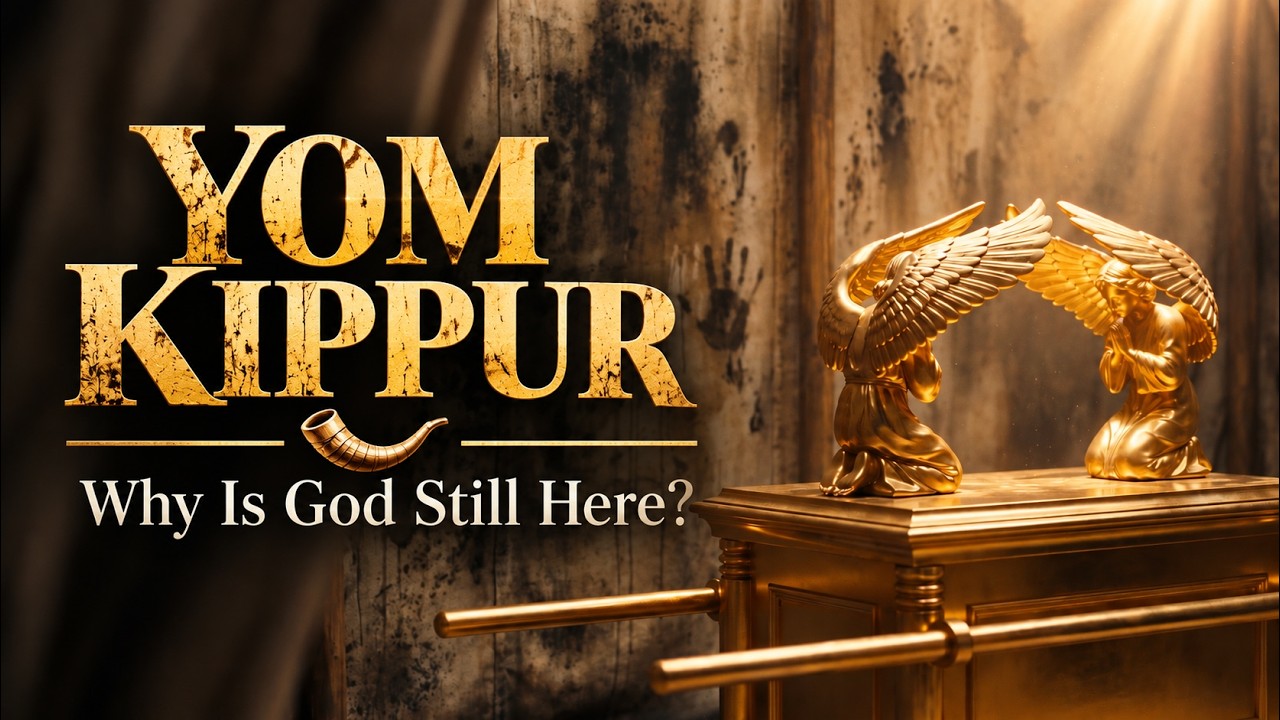
Yom Kippur gets its own chapter in Leviticus 16. It goes into great detail about the high priest going into the holiest of holies one time a year. It talks about the two goats—one is sacrificed, one is sent away. You have the cleansing of not only the people's sins but the cleansing of the sanctuary itself. And you have the annual reset of atonement for the entire nation. And then of course, it's not simply another moadeem holy day. It's the only holy day where God says it is a Shabbat Shabbatan—a Sabbath of a Sabbath. It's the granddaddy Sabbath day. It pierces deeper. And when you understand what Yom Kippur is really about, you'll also never read the crucifixion the same way either. You'll see why the curtain tore from top to bottom. You'll understand why Yeshua cried, "It is finished" with such finality.
The Danger of Approaching Holiness
But let's see how the day starts. The Bible is telling us in Leviticus about Yom Kippur in chapter 16. Let's see how it starts, because we're going to discover that it's also the most dangerous day of the year. So in Leviticus chapter 16, starting in verse one and two: The Lord spoke to Moses after the death of the two sons of Aaron who died when they approached the Lord. The Lord said to Moses, "Tell your brother Aaron that he is not to come whenever he chooses into my holy place behind the curtain in front of the atonement cover on the ark, or else he'll die. I'll kill him."
Leviticus 16 begins with reminding everybody of what took place with Nadab and Abihu. And we all know the story. Aaron's sons walked in and they were killed because they offered strange fire. And we do such a great job focusing on that—the strange fire. Like, what was it? Oh, it was the wrong kind of worship, or maybe they were drinking some alcohol, or maybe they did something else—idolatry—and that's great. But unfortunately, I think that distracts us from the bigger picture here. Because when Leviticus starts out reminding Aaron of this, it doesn't mention strange fire. It's not just strange fire. It's the fact that you disrespected the environment. "Tell your brother Aaron he can't just come in here like it's his pad, his hangout. I will kill him. Period." Carries some weight there.
It's the first thing God wants to remind Moses of before proceeding with Yom Kippur. That's the weight of the day. 364 days of the year, the most holy place stayed locked behind a curtain or two later on. Nobody entered—not the priest, not even Aaron himself. But on Yom Kippur, one man would step through the curtain. The high priest would walk into the throne room of heaven on earth. And it wasn't symbolic play-acting. The holiest of holies wasn't simply just a room inside of a tent. It was the physical—in the biblical worldview and in the story—the physical overlap of heaven and earth right there. The place where the divine and human realms intersected. One wrong step, one wrong move, he would not walk out alive.
It was such a serious thing that I think later on this made-up tradition got attached to it about a rope being tied around the high priest, or if he died they'd pull him out or something like that—that never happened, or we have no documentation—but that's the level of severity that those types of traditions would come about.
Aaron's Preparation
So look how carefully Aaron had to prepare in verses 3 or 4. Aaron is going to go into the holiest of holies on this one day, and it says this: "This is how Aaron is to enter the most holy place. He must bring a young bull for a sin offering and a ram for a burnt offering. He is to put on a sacred linen tunic with linen undergarments next to his body. He is to tie a linen sash around him and put on a linen turban. These are sacred garments, so he must bathe himself with water before he puts them on."
So Aaron stripped down the priestly glamour that he was accustomed to wearing every day. There's no golden breastplate today. There's no embroidered robe. Just simple white linen like a servant. He washed head to toe, clothed himself in humility, and prepared to walk into the fire of holiness. Every detail mattered because this was the most dangerous thing any human could do—to stand in the unfiltered presence of the living God.
The Sanctuary Itself Needs Cleansing
But why did Yom Kippur exist in the first place? Most believers assume that Yom Kippur exists because people sinned and God needs to forgive them. That's true. That's maybe half the story. Here's what Leviticus says: "In this way, he will make atonement for the most holy place because of the uncleanliness and rebellion of the Israelites. Whatever their sins have been, he is to do the same for the tent of meeting, which is among them in the midst of their uncleanliness."
Did you catch that? It's not just about the people being forgiven. It's about the sanctuary, the actual house of God, being cleansed. The place itself needed atonement.
Sin as Cosmic Contamination
See, again, in the ancient worldview or the Israelite worldview, sin isn't just breaking rules and hurting feelings. It goes far beyond that. It was seen as pollution—pollution. It stains creation. It seeps into the fabric of reality like radioactive contamination. Think about Cain and Abel. When Cain killed his brother, God said, "Your brother's blood cries out to me from the ground." The blood doesn't just disappear when violence happens. It creates a kind of spiritual static that interferes with the relationship between heaven and earth.
When people lie, when people cheat, when people steal, when people abuse power for their own gain, when they worship idols, the contamination doesn't just stay local. It rises up like smoke from a fire and it settles in the place where God dwells. And as much as I would love for that to be just some ancient superstition, it's not. This is an understanding of how moral evil affects the entire cosmic order of things.
Sin doesn't happen in a vacuum. It's like throwing a rock in a pond—it creates ripples that contaminate the very environment where God and humanity are supposed to meet together. Over the course of a year, the sanctuary absorbed all of that buildup. The tent of meeting, the place where God and humanity could meet—it was slowly being clogged with human corruption. And if nothing was done, God's holiness wouldn't tolerate the environment anymore, and God would have to leave.
Now, you can imagine your air filtration system in your home. Miss Heather Duncan has an amazing cleaning service. She has an amazing crew. I know a lot of people use other services, but I would talk to her if you need a good, reliable someone. It's amazing. But the most impressive thing is when she came to me and said, "I need to change my air filters," and I said, "You've only been here for a minute."
You haven't even been near the return." It's like I can tell. She told me. She's like, "You see up here and there? There's a little dust at this one little place." She's like, "That dust shouldn't be there unless your air filter's been a couple months." And yeah, you impressed me. I went and opened up the air filter because I totally forgot about it. You check the date. So, you remember it's too long. But what happens if you keep that going? Well, it puts stress on your air conditioning system. So what? Keep it going. Systems running get clogged up, and then moisture gets caught up in the gunk, and then mold grows on the filter, and then your home's going to be like the explosion of Chernobyl—the scientist sitting there watching everything, all the gauges going up, all the pressure building. "If we've got to get this down, or something bad's going to happen." Now imagine that being God's house, and relying on his presence being in the land with you and your sin and everyone else's collectively—that's the thing that thwarts that. Yom Kippur is really cool, the function of it.
How do we know that would happen though? Would God really leave? Numbers kind of speaks of it, but it did happen. In Ezekiel, remember Ezekiel -19? It records a tragic moment when he has this vision of God's glory literally packing up his bags and departing the temple because the contamination had become so unbearable. He moved out. Why wouldn't he? What happened after that? Oh, Babylon swept in. The temple was destroyed. As far as God was concerned, it was messy. I didn't want it. And the people were dragged away in exile.
When God's Presence Leaves
When God's presence leaves, protection leaves—that's the worldview. When protection leaves, everything falls apart. When God's presence was secured among his people another year, that was the hope. That was the celebration after Yom Kippur.
See, for those nerds, homework this week: read through Leviticus 4. And if you really want a dense book on the topic, Jacob Milgrom has a great commentary called "The Continental Commentary of Leviticus." It is scholarly, so it has a lot of different ideas, but it lays out the framework of everything we're speaking about here in a much more dense and hard-to-read fashion. But Leviticus 4 starts out with the protocol of sin offerings. If you sin, what do you do and why?
Starts out with the anointed priest—the Messiach priest, the high priest. If he sins, he has to bring a big bull. Big bull, Bessie, right? He has to kill the bull, and then he must take that blood into the holy place where the menorah is—not the holiest of holies but the inner sanctum—and there is an altar of incense there that he must sprinkle that blood on, and that atones for his non-rebellious, involuntary sin. Whoopsie.
If the whole community sins against God, it's a big deal. So a bigger offering—a bull has to come in, and the same protocol applies. If the community does something actively together, turning their back on God, the high priest has to come in with another bull, and he must sprinkle that blood on the altar of incense. That's the level of penetration into God's house that these whoopsie sins made, because the high priest carries a lot of authority and represents the people.
If you're just Joe-Mo, like everybody else—a worker—and you make an oopsie that's involuntary, non-rebellious (and that's really what I want to focus on: involuntary, yes, but non-rebellious), you would have to bring a goat and you would kill the goat. And then you would watch as the priest goes to the brazen altar outside and puts it on the corners, and then the blood of the goat goes on top, right? It's all functional. It's a level of impact of the sin. If you're a lower person, your sin still impacts God's house, but it doesn't penetrate through the curtain, through the doors. It remains outside. So that's where the blood goes, because the blood purges sin.
The Weight of Our Sins
What? Detergent—dawn, dish soap—the impact that you made on God's altar. If you have a level of authority, or it's a bigger impact as far as the collective community, it is a much grander force. It penetrates through the front gate of the tabernacle or temple and into the holy area where the menorah is and the showbread, and it contaminates the next altar, which is the altar of incense.
If anybody rebelliously sins against man or God, Leviticus doesn't give a prescription for how to atone for that because you can't. Why can't you? Take the goat and I'll just lie and say I did it accidentally. No, you don't understand. Because the penetration that has occurred with the pollution has not just landed on the outside altar. And it didn't simply barge into God's living room and land on the altar of incense. It was so dense that it pierced through the curtain and stained the very seat of God. And nobody can go in there to atone for that. So that's why there's no offering. You can't get in there.
Everybody learned something with Jeopardy. You'll at least know, right? Jeopardy. There's a graded holiness, and the impact it has. So in Leviticus 4 you'll see that pattern of who and why different people go to different places. Yom Kippur was the annual reset—the day when the filters got changed out, the day when your rebellious sin was no longer seen by God. Everything was wiped away. What a grace, by the way.
The Two Goat Solution
But then we come to maybe the strangest and most powerful part of the ritual: the two-goat solution. Leviticus 16:7-10: "Then he is to take the two goats and present them before the Lord at the entrance of the tent of meeting. He is to cast lots for the two goats—one lot for the Lord and the other for the scapegoat."
So I want you to picture this scene. You have two goats and they're identical, perfectly identical for the most part, and they're standing before the high priest, and he has two lots—two little pieces of stone or something. One says "for the Lord," one says "for Azazel" (which we don't talk about what or who Azazel is, by the way, but we'll just call it a scapegoat—be easier that way). One says to the Lord, and one says this is going to be the scapegoat to Azazel.
And as the priest randomly reaches into a bag, it's supposed to be random, he pulls one out and looks at it as he approaches the goats. And if the lot says "for the Lord," then that goat that he had chosen it for will have his throat cut within the hour. If it says "for Azazel," that goat will be driven into the wilderness to die alone. It will endure the culmination of the curses of Deuteronomy.
The people watching understood that God was making a choice when the high priest did this randomly because it wasn't random. It was random for him, but God's in control, right? So it's whatever it is—God did it, right? They understood that this was a divine decision on which goat would die on the altar and which would carry away the sins in exile.
But why two goats? Because sin creates two different problems, and it requires different solutions. And both problems have to be solved completely, or everything just doesn't quite line up. It fails.
The first goat is chosen for the Lord. It was slaughtered. Its blood cleansed the sanctuary. Its blood was mixed with the bull that was sacrificed that day, and the mixture was sprinkled on the ark of the covenant, the mercy seat of God in the holiest of holies. This is the cosmic cleanup, right? That's what goat one does. Without this goat, the sanctuary stayed contaminated, and God would have to leave.
The second goat, the scapegoat, dealt with what we'll call guilt—a big zip file of guilt. Look what verse 21 says. It says the high priest is to go in, and he's to sprinkle the blood on the ark of the covenant.
The Escape of the Scapegoat
So I want you to kind of picture the high priest now being a conduit for all of the sin that was just purged, metaphysically, and he walks out to the live goat. And he lays both hands on the head of the live goat and confesses over it all of the wickedness and rebellion of the Israelites, all of their sins, and puts them on the goat's head. He shall send that goat away into the wilderness in the care of someone who is appointed for the task. So someone has to go walk this goat out with a leash, so it's far enough away that it can't come back.
The high priest placed his hands on the goat's head and confessed every sin of every person. Maybe not like I would imagine, but that was symbolically what was taking place. Every act of violence, every word of deceit, every abuse of power—all of it was transferred in some way, shape, or form with the laying of hands on this animal. Everything that was wrong with the nation is now the goat's burden to carry. And then it disappeared in the wilderness, carrying all of it away forever.
And here's the deeper layer that a lot of people just kind of stop short of, and I've already mentioned it, but he didn't just carry away the sin. It carried away the consequence of the sin, which is exile. Deuteronomy—the ultimate curse in Deuteronomy, and the list of curses, Deuteronomy —the ultimate culmination of all of the consequences of sin in the Bible is exile from God.
I mean, that's what happened to Israel. That's what happened to Adam and Eve. Like, that's the pattern. That's the pattern. It's exile and banishment from the promised land. And when the scapegoat was driven into the wilderness, it was experiencing what Israel would later experience when Babylon dragged them away from their homeland.
So, you see how there is a literary echo here that we're supposed to notice with the story. The goat became the exile the people deserved.
It went into the wasteland so they could stay home. And every year as that goat disappeared over the horizon, it was the sermon. It was the living sermon of the day. This should have been us. We deserved it. We should have been cut off forever. But the goat has taken our place. You needed both goats. Environmental cleanup and guilt removal. But let's focus on what happened with the first goat's blood because it's where the drama happens. The high priest took the blood, which represents life itself, and he carries it into the holy place. And here's the description of it in verse 14. It says: "He is to take some of the bull's blood with his finger and sprinkle it on the front of the atonement cover. Then he shall sprinkle some of it with his finger seven times before the atonement cover, which is the ark of the covenant. He shall then slaughter the goat for the sin offering for the people and take its blood behind the curtain and do with it as he did with the bull's blood. He shall sprinkle it on the atonement cover and in front of it."
Blood on the Mercy Seat
Blood on the mercy seat. Life poured out in the presence of ultimate holiness. When you sprinkle blood on the mercy seat, you're offering life directly to God as payment for the contamination that sin has created. But it's not human blood. It's animal blood. An innocent creature dies so guilty humans can live, right? Story of humanity. A pure life gets poured out so contaminated lives can be cleansed. And it works. Apparently, when that blood hits the mercy seat, contamination is neutralized. Pollution is cleansed. The cosmic reset—it's complete. God can continue dwelling with his people for at least another year, but only for another year. Twelve months later, contamination is built up again. A little bit of a crisis. We've got to figure out how to swap the filters out. The cycle continues every single year until something greater comes along.
The Greater High Priest
Now, why does all this matter for followers of Yeshua, believers in Jesus? Because the New Testament authors saw the cross through the lens of Yom Kippur in very stunning ways. Specifically, the author who wrote the letter to the Hebrews. And here's what he says in Hebrews chapter 9: "But when Christ came as high priest of the good things that are now already here, he went through the greater and more perfect tabernacle that is not built with human hands, that is to say, is not part of this creation. He did not enter by means of the blood of goats and calves, but he entered the most holy place once for all by his own blood, thus obtaining eternal redemption."
Jesus is the ultimate high priest who entered not the earthly holiest of holies but the heavenly one, not with animal blood but with his own. Not for a one-year thing but once and for all time. We've heard that a lot. If you've been a believer, went to church, we know this teaching. But I hope that you understand the weight of what that means.
The thing that's so neat about Yeshua is that everything in the Torah is an echo of what is to come. And sometimes we look at that as like, "Okay, Jesus is fulfilling the Torah." Well, yeah, but no, it's bigger than that. Yeshua is fulfilling all the stuff that the Torah was written for people to navigate through. There's a bigger picture where we stop short at just, "Oh, he fulfilled the goats and the high priest." No, he fulfilled the issue that Yom Kippur was trying to address completely. We're not trying to go back to Moses. We're trying to go back to Abraham, right? That's the trajectory. A lot of us like to go back to Moses and we stop at Mount Sinai again.
We're going to redo everything that the whole story just took us on a journey on. And no, we're going back to Abraham. That's what Paul talks about. The faith. Walk in faith. Be like Abraham, the Babylonian man. Our forefather was a Babylonian. Be like the Babylonian who had faith in God enough to trust him. That's our goal. That's who we're trying to get to as far as walking by faith. And that's what Yeshua demonstrates to us.
Both Goats Fulfilled
But Yeshua doesn't just simply fulfill the high priestly role of Yom Kippur, but he also fulfills the goat. Which one? Both. Surprise. Yeah, both. The first goat—his blood cleanses cosmic pollution. That's what Hebrews talks about. When Yeshua dies on the cross, his blood doesn't just deal with your personal guilt. It addresses the contamination that human sin has created in the very fabric of reality. The one that we could only swat at once a year to try to push back. He did it. He actually did it. Paul says in Colossians that through him, God reconciled all things in heaven and earth, making peace by the blood of his cross. That is cosmic language. That's big language. The cross is not just about you. It was about healing the entire universe, all of creation, which does include you.
The second goat. Yeshua carried our guilt outside the camp—very literally to the cross. But unlike the scapegoat that vanished into the wilderness, never to return, Yeshua came back. He rose. The scapegoat returned alive, victorious, leaving sin in the grave. I love that word scapegoat. So when the Vulgate was written—the Latin Vulgate came about with Jerome, 4th century-ish—he translated the whole Aazel thing as emissary goat. So the goat that is the ambassador or the emissary, he's taking a message, he's carrying something. I believe it was Tyndale that saw it and was like, "Oh, sin is escaping on a goat." That's the escape—escape goat or scapegoat. That's where we get it from.
In the original ritual, you needed two separate animals because no single creature could bear both the contamination problem and the cleansing—the purging that needed to take place—and the guilt problem. The system required both. Yeshua is the first person in history who could handle both those problems simultaneously within the whole story that we have. He's pure enough to serve as a perfect sacrifice, but he's also willing to bear the guilt that belongs to others. He was holy enough, human enough, divine enough to be a priest, a sacrifice, and a scapegoat all at once. And because Yeshua uniquely holds together the divine and the human, his sacrifice carries infinite worth. One offering is enough to cleanse all contamination for all time. It's one of those things that makes your head hurt, but you still embrace it. One death is enough to carry away all guilt forever. The endless cycle is broken because the perfect offering has been made.
God's Sacrifice for Us
This is not God demanding blood from someone else. This is God himself saying, "I'll bear it. I'll cleanse it. I'm going to take it away."
When Yeshua died, Matthew tells us something earth-shaking occurred. In Matthew 27, it says: "When Jesus had cried out again in a loud voice, he gave up his spirit and at that moment the curtain of the temple was torn in two from top to bottom."
The curtain separating the holy place from the holiest of holies was the barrier that kept humans out of God's immediate presence except for one person once a year. And that's a generalized overview of its function. It gets ripped in half when Jesus dies. It gets ripped in half top to bottom. Meaning God did it. This wasn't God. We pick up so many traditions in how to look at scripture. And so I need to remember where I'm at and where I've come from. Many times we're like, "Okay, God's saying everybody come in. Let's have a party now." And I don't think that's based on all of scripture and the protocol. That's not what's happening here.
God's not saying, "Okay, you can all come in now and meet me." No, this was God saying, "I'm coming out. I'm going to come out. I'm out. Let's do this." As if to say—and I love the labels because God is infinite, right?—it's as if God gives us so much grace, but it's as if to say, "Yeah, pollution's gone. I'm not staying in the bubble anymore. I'm not staying inside. The barrier between heaven and earth is gone."
Yeshua had opened a new and living way that didn't replace the temple system but fulfilled it completely. It addressed the issue, not the protocols. Yeshua carries our sins away like the scapegoat—as far as east is from the west. Perfect purification, complete guilt removal, permanent access to God, and the return of the one who carried it all away.
Access to the Holy of Holies
Hebrews chapter 10, starting in verse 19, it says it perfectly: "Therefore, brothers and sisters, since we have confidence to enter the most holy place by the blood of Jesus, by a new and living way opened for us through the curtain, that is his body."
The holiest of holies is no longer locked behind a linen cloth during the time of Jesus. It's wide open in the person of Yeshua. The way is permanently accessible, not to one person one day a year, but to anyone at any time through Yeshua's blood. And that's a message that everybody needs to hear. Our best friends and neighbors, and our worst enemies, need to hear this message.
So what does it mean for us today, living on this side of the cross? First, we can approach God with confidence, but not with carelessness. There is still a very dangerous protocol of holiness that exists. And sometimes we feel like because God is accessible, it can be casual. But you don't do it carelessly. There's a difference between casual and careless.
Access Through the Blood
The same holiness that made Yom Kippur dangerous is what we encounter when we pray. When we worship, when we open our Bibles and dive into his word. The difference is we approach through Yeshua's blood—purified by his sacrifice and made clean by his purification and atonement. This should impact how we pray. We don't have to wonder if God will listen. We don't have to worry that our sins have built up so much contamination that God can't stand to be around us, that he's way far away, that he's left us and that God will never come back to us. No, no, no. He's right there. He's always been right there beside you.
Well, yeah, but I'm just—I mean, if he's omnipresent, he's—I mean, we can get technical if you want. He's never left you. You've never been alone.
But I felt like it.
I know. But it's not because of him. That's what we learn from the Bible. But we also don't approach carelessly. We're not walking into a casual meeting with a buddy every time we come before the Lord. We're entering the throne room of the universe. The access is free, but the reverence should be real.
Taking Sin Seriously
Second, we take sin seriously because we understand what it costs as believers. Every act of violence, every selfish choice still creates contamination. The difference is that instead of polluting the sanctuary and requiring annual cleanup, it just drove nails into the hands and feet of Jesus. It just flowed from his side. Sin is not just personal failure. It is what I heard one person say—cosmic vandalism. And the cost of cleaning it up is always higher than the cost of avoiding it in the first place.
We live as people with permanent access to the Holiest of Holies. We don't visit God's presence occasionally. We dwell there as believers in Yeshua. We don't get cleansed annually. We're being cleansed continually. We don't have guilt removed temporarily. We have it removed eternally. That means you don't live your life trying to claw your way into God's presence. You live in it already. You just need to realize it and act accordingly. You carry it with you.
And this is why early Christians had such a reputation when they prayed. This is why early Christians had such a reputation in how they treat others. This is how early Christians were taken seriously in their boldness of following Yeshua—because that was before they became integrated back into the world and everything got kind of messy. How you handle conflict, all of this should come into play. All of it kind of makes you almost want the tabernacle back sometimes. This is a lot of weight to carry. It's a lot of responsibility to be a soldier of the divine army of Yeshua. It's a very serious thing.
Priests of the New Covenant
Every prayer is a priestly act. Every act of love is an echo of heaven in a dark earth. Every refusal to compromise is a testimony that the veil has been torn. When Yeshua died, he wasn't just a good man being killed by bad people. He was the ultimate high priest entering the ultimate holy of holies with his own blood to make atonement for the contamination of the entire created order. He was the ultimate sacrifice purifying not just the earthly sanctuary but the cosmic one according to Hebrews. He was the ultimate scapegoat carrying away not just one year's worth of sin but all of it, of all time.
When he rose from the dead, that's when he proved the atonement was complete. The purification was permanent. The access to God was eternal. Yom Kippur was the day everything reset. The cross was the day that everything changed forever.
Jesus didn't die so that you could just get into heaven. That's what he tore heaven open and brought it down here for you. That's what we believe as Christians. That's what we do. That's the mission. That's the whole thing—we're on that journey with him throwing hooks into heaven and pulling it down the best we can. And that's called your witness. That's how you act. That's how you speak.
Standing Out in a Burning World
When the world is on fire, you stick out because you're not displaying fear. You stick out because there's a peace among you. You stick out because the words that you speak are unlike anything the world is saying. You stick out.
And when the world is on fire, it's a great time to look in the mirror and ask yourself: Do I stick out right now, or do I just want to think I do?
The curtain is torn. The way is open. The blood has been applied and we live in a new reality where we ourselves are priests, where Yeshua is both our high priest and our sacrifice, where the holiest of holies is as close to us as our very next breath.
Living as God's Priests
So when you wake up tomorrow, remember you are someone with permanent access to the throne of God. You're a walking holiest of holies. When you face fear this week, remember you have access to God, the same one who controls the universe. When you're tempted to compromise your integrity, remember you carry the presence of God. When you're struggling with guilt over past failures, remember that the ultimate scapegoat has carried those sins so far away that they're never going to return. You're the only one that's still thinking about them. And that's a hard one to overcome, isn't it? That's a hard one.
You have permission not to punish yourself anymore because there's a God that's been holding you this whole time—already forgiven, already walking with you, already with his spirit inside of you, making you stronger as you pray every day. He's heard your cry for forgiveness. It's done.
You have permission to let it go. You have permission to stop beating yourself up as if you feel like you continually deserve it. Because the God who has that ultimate say, it's gone. It's over, east and west. The red string turned white.
That's what that refers to. There's a tradition that they would tie a red string to the goat. I think Isaiah makes a reference to it. They tie a red garment string to the goat, and the idea is that when he went out into the wilderness and the forgiveness took place, the string would turn white. That's kind of the backstory of this. That's where that reference comes from. It's turned white. The cosmic reset happened. The work is finished. The scapegoat came back and that changes everything for us.
Keeping Yom Kippur Today
And I want you to remember that this week we are not keeping the feast days according to the Bible. Passover, soot Yom Kippur is the closest one we can do actually because we're not going to Jerusalem. We don't have the sacrificial system, and so on and so forth.
Why do we do these? As a way to honor God. As a way to show God we listen. As a way to say we know that what your intent was and we're going to keep following through, upholding this. Why? Because they keep reminding us of how great our King Yeshua is. This is where the reminders are.
So in Yom Kippur, Yom Kippur still has the same type of function: sometimes I take the holiest of holies for granted. Sometimes I get careless with my relationship with God. Sometimes I get careless with the things that I do that contaminate my life, and I make an assumption that it's already good. We are still continually being cleansed. And Yom Kippur is the time where we're reminded of what actually took place, and that's the time where we allow that to impact us, where we do afflict our souls in remembrance of him. We do afflict our souls understanding the grace that God has given to us. And we do afflict our souls once again, straightening up and wanting to walk forward and grow more.
So please stand with me as we close with worship and conclude services. And if you need prayer today, we have prayer partners on either side of the stage. You can worship during this time. Maybe you've brought something with you today that you're tired of hanging on to. Maybe you've realized that you don't need to take it everywhere with you anymore. It doesn't need to be in your life anymore. Maybe it's time to just lay it down. And if that's you today, we have a symbolic altar up here that you can come up and lay it down at, or you can get prayer from one of the prayer partners.
Prayer and Blessing
Avinu, our Father, our King. Father, we thank you for this opportunity to come before you today, to once again dive into your word. And we thank you for the grace of Yom Kippur, the grace of the ritual, the grace of the goats that you would create a way where the rebellious sins of your people would be taken from your sight so that you could remain with them even longer.
Father, as believers, we now understand the impact of Yeshua, and we thank you for implementing a way that our rebellious sins can be taken away from your sight forever, that you would want to remain with us. Father, allow your spirit to move—the spirit that has all power and wisdom. It's the same spirit that raised Yeshua from the dead, the same living spirit that has been given to us. And that every breath we take, Father, it would be like new life that we are wanting to spread to others. That we would be the ambassadors of heaven in a dark place. That we would not look or speak like the world, but we would stand out. We thank you, Father, in the name of Yeshua, our King and our Savior. We pray. Amen.
Shema, O Israel, Adonai Eloheinu. The Lord is our God. The Lord is One. Blessed is the name of his glorious kingdom for all eternity. And may the Lord also cause you to increase and overflow in love for one another and for all people in order to strengthen your hearts as blameless in holiness before our God and Father at the coming of our Lord Yeshua with all of his holy ones.
The God of Patience and Encouragement
And may the God of patience and encouragement grant you to be likeminded with one another in the manner of Messiah so that together with one voice you glorify God and the father of our Lord Yeshua the Messiah. Amen. And may the Lord bless you and keep you. May the Lord make his face to shine upon you and be gracious to you. May the Lord lift up his countenance toward you and give you his peace. In the name of our sar shalom, our prince of peace, Yeshua Hamashiach, we pray it. Amen. And amen. Shabbat shalom family.