The Image of God
The Image of God – Humans, Mission, and Jesus
In this insightful Bible teaching from Founded in Truth Fellowship, Matthew Vander Els explores the profound concept of humanity being created in the image of God. He begins by inviting listeners to consider their search for something bigger than themselves, a community rooted in truth and love, and a place to worship God. The teaching then delves into the overarching narrative of the Bible, suggesting that it culminates in the mission embodied by Jesus (Yeshua).
Vander Els emphasizes that the creation account in Genesis 1-3 is foundational, portraying God's initial design and intentions for humanity. He highlights the state of the earth before creation – tohu vavohu, often translated as formless and void, a desolate and watery chaos. God's method of creation is through speech, signifying the power and authority inherent in His word. The Hebrew word for create, bara, not only implies bringing something into existence but also giving it function and purpose.
The pivotal moment comes in Genesis 1:26-28, where God declares, "Let us make mankind in our image, in our likeness." Vander Els stresses that this applies to all humanity, both male and female. He points out the shift from singular ("mankind," "his own image") to plural ("them," "he created them"), indicating that God desires a community of image-bearers who co-rule together. This community is commanded to be fruitful, increase in number, fill the earth, and subdue it, exercising dominion over creation. This subduing (kava) implies authoritative rule, akin to a king, and even suggests the trampling of sin.
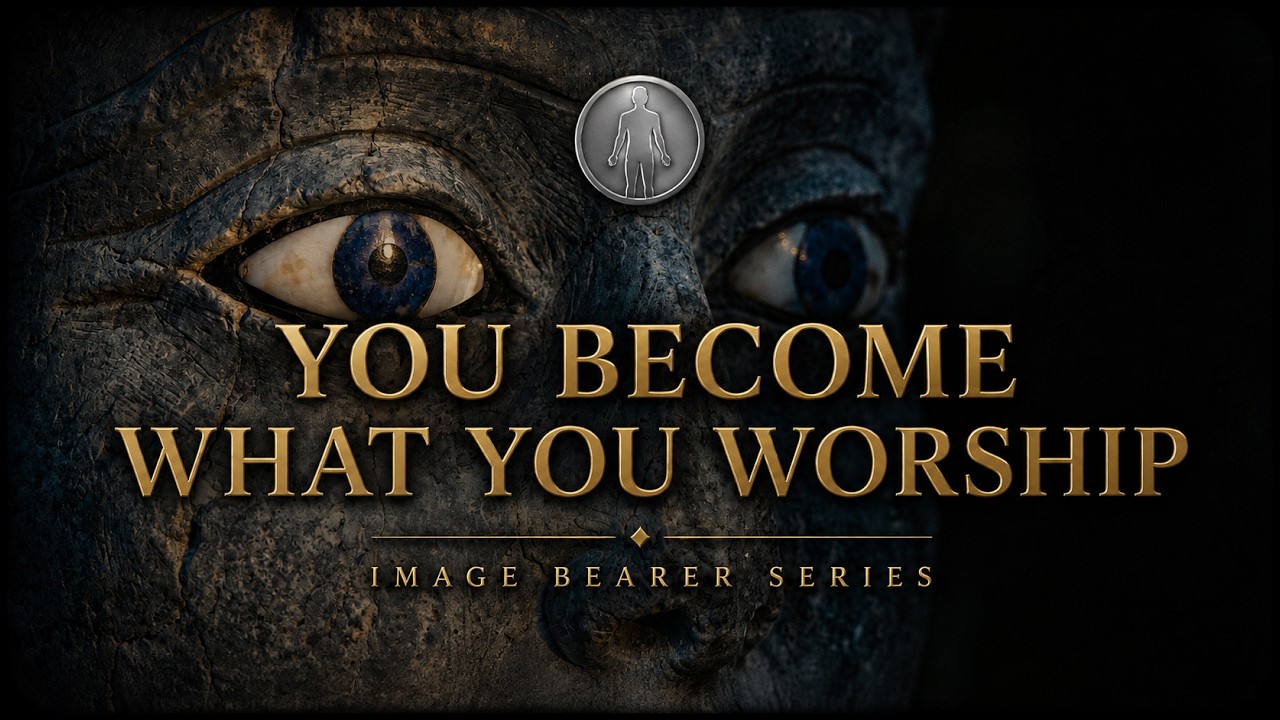
To understand this role better, Vander Els examines the meaning of "image," the Hebrew word tselem. In the ancient world, tselem referred to statues, particularly idols representing pagan gods and statues of kings placed in temples or at borders to signify their authority. These statues were not seen as having power themselves but as representing and channeling the power of the deity or king. Vander Els argues that in the creation story, God doesn't create a physical statue of Himself but instead creates humanity to fill that role – to be His proxy on earth. Just as idols in pagan cultures were believed to be vessels for the spirit of the god, humans are intended to reflect God's will and character within creation.
The teaching further explores Genesis 2:7, where God forms man (Adam) from the dust (Adama) and breathes the breath of life (ruach) into his nostrils, making him a living being. This act of God molding man like a clay statue, a tselem, and then animating it with His spirit is presented as a profound act of significance. Vander Els emphasizes that this significance extends to all humans, regardless of their abilities or background, their purpose being to reflect God's reign and creative motives. The intention was for these image-bearers to fill the earth in unity, reflecting God's will towards each other and creation.
For more Bible Teachings, click the link.
Application for Everyday Life:
- Recognize the inherent worth and dignity of every person you encounter, understanding that they are created in God's image. This should influence how you treat and speak to everyone, regardless of their background or beliefs.
- Act as God's representative in your sphere of influence, reflecting His love, justice, and compassion in your actions and decisions.
- Use your words to speak life, encouragement, and truth. Be mindful of the power of your tongue and avoid using it to condemn or belittle others.
- Cultivate empathy and seek to understand the perspectives of those who hold different views. Engage in conversations with a genuine desire to listen and understand their concerns.
- Look for opportunities to actively participate in creating a more life-giving world. This could involve supporting organizations that care for the vulnerable, volunteering your time, or advocating for policies that promote human flourishing.
- Be self-sacrificial in your efforts to help others, mirroring God's outward-pouring nature.
- Stand up against injustice and advocate for those who are oppressed or marginalized, reflecting God's concern for the cries of the oppressed.
- Remember that your mission as an image-bearer extends beyond personal piety to actively engaging with the world around you.
- Continuously strive to reflect the perfected image of God, which is Jesus Christ, in all aspects of your life.
- Be aware of the tendency to weaponize your beliefs and instead focus on extending grace and understanding to others.
References:
- Genesis 1:26-28 (Biblehub)
- Psalm 33:6 (Biblehub)
- Habakkuk 2:18 (Biblehub)
- Jeremiah 10 (Biblehub)
- Genesis 2:7 (Biblehub)
- Ezekiel 37 (Biblehub)
- Psalm 8 (Biblehub)
- James 3:10 (Biblehub)
- Ephesians 1:9 (Biblehub)
- Hebrews 1 (Biblehub)
- Matthew 25 (Biblehub)
Books and Resources Mentioned:
- Breath of Life, Speech, Gender and Authority in the Garden of Eden
- Books on this topic
Links to books are provided for convenience. As an Amazon Associate, Founded in Truth earns from qualifying purchases.
Read the transcript (8,504 words)
Automated transcript, lightly edited for readability. Scripture appears as spoken; the video is the authoritative teaching.
Do you ever find yourself searching for something bigger than you? For a community to be a part of? A place founded on truth and love? A place to worship the King of Kings, the Lord of Lords, and the Son of God? Welcome to Founded in Truth, where we're more than just a fellowship. We're a family. So welcome home. Shabbat Shalom, everybody. Shabbat Shalom. Welcome to Founded in Truth Fellowship. We are so glad you're here. If you're visiting for the first time in person or online, welcome.
The Mission Gets Bigger
Yeah, today we're gonna talk about one of my favorite topics, the image of God and what that has to do with the mission that you are called to pursue. The role that you were created for according to the beginning of the big, big story, the story of God. And so we've been exploring storylines in the Bible, and I hope this series has kind of been edifying. When we really look at what the Bible is, and the story that was put together by the people inspired by the Holy Spirit, it has an impact, it should. The mission gets bigger and bigger and more significant the more you realize that. And the reason why I point that out is because everyone—I grew up being taught little snippets of the Bible and encouraged to memorize very specific verses. Depending on your denomination and the curriculum that they put out, they'll tell you to memorize specific verses that end up furthering their doctrine or whatnot. But that was fine. I learned a lot of Bible verses. I learned a lot of things about the Bible. But I was never taught the story and what it all pointed to.
Understanding the Biblical Story
Because the final compilation of the Bible, the Old Testament, when it came into its final form, it was intentionally put the way it was. We think, oh, it just fell out of heaven in this order. No, it was put together that way. Narrators, we see editors, times when editors went in there and added little notes here and there to put emphasis on certain things because they're guiding, they're driving you through this big story and why it's so vital. And spoiler alert, this entire story culminates in the mission and everything that it's pushing forward in the person of Yeshua. That is the climactic moment, if you will. But it doesn't even start there because that's when the story goes from being a story about God to a story about you and the mission he has you on. And so I hope it's been edifying when we talk about the Sabbath as a storyline instead of just a day of the week. Or why is God portrayed as always being in heaven throughout the Old Testament? Why is that significant? It's significant, more significant than we realized, hopefully.
Genesis 1, 2, and 3
And so, guys, we are going to dive into, guess where we're going? Again. Genesis 1, 2, and 3, guys, is the setup. And it's the same story that echoes throughout the Bible. Passionate topic. Guys, I really want you to hear my heart today because I'm going to be talking about some really cool stuff in the Bible, an ancient document and stuff. Let's be honest, we kind of take it for granted. We know the creation story, we know this, and okay. I want you to hear my heart because I might say some things during the message that you don't hear right. Or I may say things incorrectly that you did hear right. And I just want you to hear my heart. Can we try to just go ahead and put that on the... Okay. Silence. That's good.
From Chaos to Creation
So we are going to start in the beginning at Genesis 1. And we're going to read an ancient text like an ancient text. Okay? Okay. And so we know imagery of a wasteland, tohu vavohu, commonly translated as formless and void. This desolate, unlivable, barren place. But then it's also described as this dark, deep, watery place, right? In the Hebrew, it gives you two kind of contrasting images. Both of them are where you go to die if you don't want to live, right? In the ancient world, you go to the desert, the barren desert, no life, no water, you die. And then, of course, the water, right? That's where you go. That's why in the Bible it's made synonymous with the underworld because that's how you access the underworld very quickly in the ancient world. And we have this desolate, unlivable, chaotic, watery place. And God's spirit begins to hover over it. And then what does God do? How does he create? He speaks. He creates through speech in Genesis 1. That's important. That's important. That's important. I've always taken that for granted. Okay, he talked. I mean, it's fine.
God Speaks and Creation Responds
Psalm 33:6 says something about his breath or spirit, ruach, so it's the same word as spirit in Hebrew. Something about his breath has divine creative action. God speaks and creation responds. It's king language. It's royalty language. When a king speaks, what happens? Things happen, right? Things come about. It's the act of creation. There's something that's not happening, the king speaks, and all of a sudden, it exists, it happens, or at least it should, or someone's going to get in trouble.
The Word Bara
The word there used in Genesis 1 for create is bara, and the context of the word is fascinating because we always think of it as poof out of nothing. And yeah, that's obvious. Poof out of nothing. Absolutely. But the context of the word emphasizes something else. It emphasizes function. So not only can God create something out of nothing, but the emphasis here in Genesis 1 is not only is he doing that, because all the other gods can do that—he creates everything and gives everything function. How to fit. How to work. It's a big deal.
Humanity Made in God's Image
And then we come to verse 26, 27, and 28. And verse 27 is actually a formal poem here. It's actually pretty cool. First poem in the Bible. There you go. Jeopardy. Verse 26. What's that word? "And all the wild animals and all of the creatures that move along the ground. So God created mankind in his own image. In the image of God, he created them. Male and female, he created them. God blessed them and said to them, be fruitful and increase in number. Fill the earth and subdue it. Rule over the fish of the sea and the birds of the sky and over every living creature that moves on the earth."
Who Bears the Image? So a couple things here. Number one, who is created in God's image? Who? We are, mankind. I thought people were going to say humans. Which human? Maybe we're going to start saying Adam and Eve, right? That's not in the story yet. We have not arrived at the story of Adam and Eve yet. This is humanity. Humans. Humans. All humans. Male and female, he created them. Males only. Females too. They. They are to do what again? Rule. And that's important because we have this function of the image bearer. And I want to impress this to you. It goes from singular to plural, right? Singular to plural in the poem. "God created mankind in his own image. In the image of God, he created, then it pops to plural, them. Male and female, he created them."
Co-Rulers and Co-Creators
"God seeks not only to have an individual image bearer in his creation, he seeks to have a community that works to bear as image bearers and co-rule together." Matt, you sure did pull a lot out of that. That's just what I see. There's a community being formed here. So they may rule. They may fill the earth. And so this community of image bearers is not meant to stay at the size that they are. They're supposed to grow, right? Because their command is to go fill the earth. So they're supposed to grow. Whatever is happening here, whatever these images are going to do, it's supposed to grow. Like the temple and the prophets in Zechariah that we talked about a few weeks ago. It's supposed to grow and overtake the world. And who's the temple? And then they are supposed to kava, subdue the earth. Very authoritative word there. Dominion, rule, reign. It also means to trample, like in Micah when it says that God, kava, he tramples our sins. Power.
God's Design for Creation
In the opening pages, we learn that God is destined to pour his energies, not into himself, but into creation for the benefit of his creatures. That's who our God is. That's how we're introduced to this God. Not pouring into himself, he pours into others. He pours into his creatures. So humans are supposed to rule. Who else rules? Who else? God. God rules. In the text, they both rule. Humans were meant to co-rule in some way, shape, or form, whatever that means, with God and creation. I'll go so far as to also assert that man was also meant to be co-creators with God as we continue in the text. Oh, I felt someone get triggered by that phrase. Yes, heresy alert, right? That's what the text indicates. So far, so...
What Is an Image? Let's try to understand this role better. But we can't really understand the role and ruling and all that stuff unless we understand what is meant by the word image, right? So what is an image? Well, the Hebrew word there is tselem, tselem. And tselem in the ancient world was a statue, what it was. There's two dimensions of tselem in the ancient world. One of them was idols. I think I have a slide here of a few verses. This word appears like 16 times in the Old Testament. Five of those are the image of God. And pretty much the rest indicate the images that were symbols of the gods of pagan nations that Israel was told to go in and destroy. Images. Tselem.
Ancient Understanding of Statues and Kings
The other dimension, of course, is in statues of kings. So in the ancient world, I think I have a picture here of Asherah and Esau, probably the second. In the ancient world, kings... they'd have large kingdoms. And of course, you can't travel to and fro. You can't get on one of the three helicopters and just go wherever you want to remind people who's in charge.
Tzelem in Ancient Temples
And so kings would commonly make statues or tzelem, and they put them at the front of temples. I think this one was found at the front of a temple to Ishtar. You'd also put them at the borders of your land. So when people saw the image, the tzelem of the king, they would understand the power and authority that is not in the statue itself, but is working through the statue of the king, the king's authority. It's a reminder of that authority. So yeah, pretty cool statue, right? So we're good so far. Now, two instances of Selim in the Old Testament. In the creation story, instead of Yahweh creating his own Selim—and I guess he kind of does—of wood or gold or something, his own idol, he creates mankind to fill that role in Genesis 1.
When you walk into a pagan temple, you have an idol. What was the idol? The idol was the proxy of the God on earth. God's in the heavens, right? And so we're going to go over it in just a minute. But the idol represented the star gate to the power of the God. No one thought the idol or the statue had the power, but it represented the presence of the God. And therefore it was honored because of that.
This is why the golden calf incident was so bad in the Exodus story. Instead of Yahweh creating his own idol, he made his image bearers. And the Israelites go out there and instead of representing or being the representatives of God, they create a golden calf and call it Yahweh. Can you imagine? Can you imagine? I'd get mad too. But at least now we have some context.
Made to Rule Creation
Mankind was made to rule, given authority and power to be God's representative in creation. Humans were created to reflect God, the creator's will, within creation. And what do humans do again? They do what? They rule. What do they rule over? Specifically, in the outline, it says that they rule over the fish in the sea, the birds in the sky, and the livestock of the land. They rule over and they give of themselves to the other creatures. It's shepherding language. Shepherding. That's why Ezekiel 37 puts such an emphasis on the sheep and the shepherds, human shepherds that trample the flock and take advantage of them.
But then you have this king shepherd, Yahweh himself coming to take care of these creatures of creation. Psalm 8 furthers this point. It says this, starting in verse 3: "And crowned them with glory and honor. You made them rulers over the works of your hands. You put everything under their feet, all flocks and herds and the animals of the wild and the birds in the sky and the fish in the sea, all that swim the paths of the seas. Lord, our Lord, how majestic is your name in all the earth." Did you guys hear that? Have you ever looked out in the world and thought that you have some type of God-given authority to put into action what God has called you to put into action, to reign and rule like he does, to initiate acts of justice?
What does God do throughout the story of the Bible? He listens to the cries of the oppressed. Do we do that? If there's a people group in our nation—let's just start with us—if there's a people group in our nation that collectively cries out, do we listen? Do we investigate just like God did, come down and look at the Egyptian issue? Do we? Or do we not feel like that's our calling? Or do we not feel we have the authority or the power? Or are we just scared of politics and we might lose our label, whatever label we stuck on ourselves, and our friends will get upset with us? As God's Selim, you've been given the authority to act and represent God on earth as a king.
I don't know, it just kind of hit me different. Man was created to rule. Create and be the representative of Yahweh through all of those attributes as the image of the life giver. You were meant to give life. You were meant to give life. That's a politically charged phrase right now. Take the politics off of it and the phrase broadens quite a bit. It's a bigger burden.
The Mouthwashing Ceremony
As I said, Selim of the ancient world were also idols. They were perceived to be the vessel of the spirit of the God they represented. As I said, the star gate. I think I have a slide you guys can follow along. So there was a ceremony that we know took place in Egypt and Mesopotamia, Babylon, called the Mouthwashing Ceremony. And if you're interested in history, this is interesting because it ties in to exactly the language not only used in Genesis 1, but also by the prophets. And so there were three main stages of creating an idol. And of course, the first one is you form the idol. You take your hands, you get the clay or the gold or whatever, and you make the idol.
And then there was an inauguration ceremony that we have records of taking place in Babylon. And this would be a huge festive thing, but it would take place at the Miss P or Pit P ceremony. Sounds funny. You can Google it. There's lots of research and lots of information about it. But there would be a ceremony where the mouth and the nostrils are washed out. I believe in Babylon they take it down to a sacred river and wash its mouth out seven times. Right? Right? In other places, they did it a little bit differently. But the idea, on a surface level, is to get all the imperfections out. You got your fingerprints and you rub that out, make it smooth, make it nice.
But on a spiritual level—pagan, not endorsing paganism, someone will take that out of context—the idea is that you're making it suitable so that the spirit of the deity that you worship will come and fill the idol and make the star gate connection. Some cultures believe the idol became animated at that point, so they put clothes on it and they take food to it, right? Yeah, right. Ah, I know. But that was the idea, and then there would be an enthronement ceremony where the idol was taken into the temple or wherever it was going to be housed and placed in its sacred place. It's not going to be its house—it's walking around doing its thing.
Y'all can't see it. Only the pagan priests can see it. It was a scam. But you guys get the idea, right? It's a mouth-washing ceremony so that the spirit would enter in. And this would be the vessel of the God on earth. So when you saw the vessel, you understood that the presence of that God was not only there, but working. That's the idea. Habakkuk , Habakkuk calls this ceremony out. And he says this: "What's that word? Breath in it. There is no divine breath in it." Jeremiah 10: "Step one, shapes it with a chisel. They adorn it with silver and gold. They fasten it with a hammer and nails so that it doesn't totter."
Notice that language. The prophets are mocking this ceremony. And they're mocking them. I find that interesting. And the prophets are saying, y'all a bunch of morons, because y'all don't know the one true God that actually has power in his speech and his breath. Not about a Christmas tree, by the way, Jeremiah 10. It's about the idols. It's not about Christmas trees. Very anachronistic. Anyway, that's old stuff.
Back to the Biblical Story
So with that in mind, can we jump back into the story of the Bible? You guys ready? Can we read an ancient text like an ancient text? Yeah, okay, everyone's scared. This is scary. And the reason, Matt, why are you talking about all this history stuff? Because I want to build your vocation that God gave you up to the point where when you walk out of here today, you can't shake it off, I think. That's why I'm doing this. That's why I'm doing this. Because we like to ignore this. We like to ignore our responsibility to creation. We like to ignore our responsibility to the other creatures in creation. We like to ignore the fact that all mankind was made as the image of God because if we can ignore that, then we can objectify people and make them not human in our eyes and then we can minimize them and then we don't feel bad for mocking them or exploiting them or talking badly about them and absolutely destroying any type of image of God that we would ever shine into this world for goodness and life-giving trajectory.
And so that's why I wanted to build that up, because this is important. And we're going to jump over to Genesis 2, verse 7, and it says this. So we're going from the Genesis 1 kind of macro view, creation story, and now we're in the land. The camera has shifted amongst the leaves, and you can kind of see the leaves kind of parting in the film, right? And you're looking out. Then the Lord God formed man from the dirt. Look at what the text describes. God forms. He molds man out of the dirt. Love that. He formed Adam, which means man, out of Adama, the dirt. That's where he comes from. Remember what I was saying about the tzelem?
It means statue, like an idol. And here God molds a clay statue in Genesis 2. And he does what? He breathes the breath, the ruach of life into his nostrils. And man becomes animated. His image comes alive through the embodiment of the spirit of life from Yahweh. Mankind awakens. Isn't this just powerful? Like, isn't this a showstopper? Man, can you imagine how the neighbors of Israel felt when they were telling them about this? Okay, that's a big deal. I know, it's about us. You are significant. That God has chosen you, mankind, to represent him, his spirit, and his reign in creation. And what's amazing about this is it doesn't even dictate abilities.
Like wherever you are, whoever you are, whatever your ability level or skill set is, whatever culture you come from or skin color or language or whatever, whatever. Your purpose is to reflect the reign and rule and creative motives of God into the world. All mankind, all humans, no matter how many fingers, toes, eyes you have, no matter if you're slow to speech, no matter if you're disabled, no matter any of it. And again, the idea here is that images would fill the earth and they would all be in one accord, somehow, someway reflecting God's will for creation toward their fellow creatures and toward each other. And that's a hard thing because we don't like that.
We like to be the one created in the image of God, but we don't always like it that everyone else is. Because if they are created in the image of God, like the text says, then that means they have the same status as me. And that means that I don't get to have power over them. I cannot exploit them. Can't look down on them. And this is where we're going today, especially with things going on in the world right now and how Christians need to respond and not just act like they were told to act. Because we have a problem as believers, and the problem is the same problem that the secular world has, by the way.
We like to be told what to do and how to act. It's easier. It's easier. It's easier not to rule and just follow the crowds. And then you join a crowd that claims that they're not cheapo, and you've just joined another crowd, and you're following them around. We love identity in groups.
The Mankind in the Image of God
Alright, so we're going to read an ancient text again. We're going to move on to Genesis chapter 2, verse 18. So mankind was molded. The breath of life, the life-giving Ruach has been entered into him. And now he is animated. He's alive. He's up and at him. Pun. And he's doing his thing. So verse 18 says man is lacking something. He's lacking something. It needs community, right? And I love this because in the Hebrew, we always see this helpmate, helper corresponding to him. I love the CSB translation because it attempts to reveal what the Hebrew is saying very clearly. And in the Hebrew, it's a power equal to him.
That's why you see that corresponding. You have this power equal to him, this balanced authority, rule coming together alongside him. Verse 19, the Lord God formed out of the ground every wild animal and every bird of the sky and brought each to the man to see what he would call them. Man's going to talk. And whatever the man called, living creature, that was its name. Now what's interesting is mankind is made from what? Dirt, clay. And what are the animals made from? Dirt and clay. Is that a literary connection? Is something in the story that clicks? We have a connection here. Pretty cool. Both are made from dirt.
And both are called living creatures, living beings. You notice that? So in each account, and I think I have a graph up here that I got from a fantastic article. I'll post it in the description this afternoon. The Breath of Life, Speech, Gender, and Authority in the Garden of Eden. And I also have some other books on this topic if you want to go deeper in the description, if you want to nerd out more. But here we go. Both accounts of the creation of man and creation of animals start the same way and they end with the same language. And so the question is, what is different in between them? Well, the creation of man, what happens between the first and the last is that God breathed into his nostrils the breath of life.
And what's in the middle of the animal's creation account is he brought each one to man to see what he would call him and everything that the man called it was its name. I love that. Man is engaging in some form of creative pattern just like God is. Something to do with him speaking.
The Breath of Life in All Creation
In Genesis chapter seven, verse 22, I'm not even sure I have a slide for it, but it talks about during the flood. And the thing about the flood is everything died. And it says everything on dry land that had the breath of life in its nostrils died. Not just humans died during the flood, but animals. Animals had the breath of life in them. When did the animals get the breath of life in them? That's the assertion. In the text, it's emphasized through this pattern, the structure linking the creation of Adam to the creation of animals. Here, Adam, we can conclude from the text, he passed on the breath of life.
Something about what he had, he passed on. Naming, speaking. If you thought being an image bearer, merely representing God's authority, and reign on earth was weighty, here we see that God also invites Adam to join him in his creative work in creation. I know that makes your evangelical skin crawl. You can't say that. It's no different than when we see other vessels of God co-creating work in the story of the Bible. Moses lifted his staff over the Red Sea and what happened? It parted. It's a miracle, right? A miracle took place. Here—was it Moses' power or was it God's power working through Moses, co-creating or splitting the sea?
I guess—decreating. I don't know what you call that split in the sea. God working through his vessels to enact his power, life-giving power. Miracles of Elijah. God working through them and the miracles occur. Here, Adam is not using his own breath to do creative work. He's using the breath that God gave him to flow through him to impact creation, to give life to creation.
Woman and Authority
God creates the animals, he forms them, brings them to Adam, sets them before him. Adam breathes, speaks to them, but they're still lacking for the man. In verse 21, what happens? We have a development in the story. So the Lord God caused the man to fall into deep sleep, and while he was sleeping, he took one of the man's—it says the man's side or curved, it could be a rib, it could be something else. Then he took it and he closed up the place with flesh. Then the Lord God made, formed a woman from the rib he had taken out of the man, and he brought her to the man. Oh, man. Are we following? Are we tracking?
You still with me? That's good. The theme, ancient text, ancient God, brings out of the side, forms her, and then brings her to him and sets him before him. She's made of Adam, and Adam is made of what? Adamah. If you wanted to, you could conclude it's another Selim. Male and female, he created them, right? Just like Genesis 1 says, male and female, Selims. And what's the very next thing that happens? Does God breathe the breath of life into her? It says in verse 23, Adam begins to sing a song. He speaks poetry to this new Selim. Probably thinks she's cute. And here's what he says. The man said, he spoke poetry.
Wordplay there. So woman is Isha. You could even see this theme continued after Adam when they eat the fruit, right? What are the accusations that bring on the curse of the land under Adam? Remember? What was God's thing that he was upset about Adam after the whole fruit incident happened? It says that because you listened to your wife. Now guys, husbands, we get excited about that. This is why I don't need to listen to you because it will destroy creation as we know it. I could not possibly do that in good conscience, right? That's how some read it. But if we take the context of the chapter, there's something much bigger coming on.
Adam was given the divine speech to speak on behalf of God. He was right there. Guard the garden. Till the garden. Give life with your breath. And it says that his wife turned to him and gave him this fruit. And it says that he listened, but he never spoke. He never spoke. He never said anything. He was right there. He never acted with the authority and rule that he was given, with the power and the breath of life, the co-creating breath. This brought about the curse on creation.
Adam Names Her Eve
So neat note here, right after the curse caused under Adam is given with the land and everything, what is the very next thing that happens? And I mean the very next thing. It kind of disrupts the whole story. So the curses are given, all the land, all this stuff's going to happen.
This is because everything that was under your authority is now going to corrode and collapse under your authority because you fell. You did not speak. The very next thing, he names his wife. I found that neat. Very—it disrupts the story. Adam names her Eve, Kava, Zoe in Greek. Why is that significant? Because he did the same thing with the animals. Something about before the curse and after, I don't know. It's kind of a deeper topic than that, but it's just kind of neat. He names her Eve because she is where all life came from onto the earth. Maybe that was a role. She's the life giver. I don't know. It does fit if the context is there, but yeah. And then God makes them clothing.
Vessels of God's Creative Work
Moses, we see this theme develop throughout the story in the prophets specifically. Moses, what happens to Moses? Put my slides up, here we go. It says that in Numbers chapter 12, Moses is being commissioned to lead Israel once again and there's an authority issue that has to be structured. So God once again reminds Moses of the words that he's going to continue speaking and he puts him in authority over Miriam and Aaron and he says, I'm going to speak with you mouth to mouth. Mouth to mouth in the Hebrew. In Isaiah chapter 6, Isaiah is being commissioned to go out and speak the word of God, the breath of God, the breath of life.
And a coal is taken off the altar of God in his temple, and it's placed on Isaiah's lips to give him the words to speak. This is when he's commissioned to speak on behalf of Yahweh. Jeremiah 1.9 says, The Lord reached out his hand and touched my mouth and said to me, I have put my words in your mouth. God affirms Jeremiah's mission to speak his words of life, calling Israel back, calling Judah back. And Ezekiel, Ezekiel 2 and 3, God says, Open your mouth so I can feed you. Open your mouth so I can give you something to eat. And he gives him the scroll, the words of it. Each instance has examples of ritual involving contact with hands or mouth or words of Yahweh in the prophet's mouth.
And they now endow the divinely aligned speech that they can proclaim, thus saith the Lord. Ezekiel is even able to commandeer the wind of Yahweh in the vision of the Valley of Dry Bones, to raise to life the Valley of Slain Israelites and resurrect them as a nation. Speak to the bones, Ezekiel. Speak the breath of life. Create. The idea of God giving his servants divine speech and divine life-giving breath continues.
Image Bearers and Life-Givers
So humans are given the role as God's image bearers, his reflection into creation for the good of creation. When the world sees us, they should see the same character of God in the beginning. That same character. When God did not grasp for power, he had no need to violently start creation. Like the Babylonians record they had to—their God did. It was a big fight and war and violence, and God's hovering over the chaos. Instead of grasping for power, he put his energy outward toward the other creatures within his creations. When people see you, they should see not only the image of God, but they should see the life-giving presence of God. And when people hear us, they should hear the breath of life pouring out. And that's an important detail to emphasize because James 3, verse 10 says this. James is being critical. What have we done as humans? We have the breath of life given by God within you now. Paul says that the spirit that resides in you is the same spirit that raised Yeshua from thee and now raises you to life. It's the same breath, the breath of God, the Ruach of God.
Weaponizing Divine Breath
Instead of speaking life into creation, multiplying life-givers in creation, taking dominion over the earth by speaking life, instead of using this divine breath for the purposes and will of God, we're much more fond of weaponizing it, are we not? This is me at the altar here saying I'm much more fond of weaponizing the power of the divine creative breath that God has given me toward his creation than I am of actually utilizing it with the weight given to it in Scripture. We are quick to take something holy and define it as good and evil for ourselves instead of maintaining the holiness of it given by God. We grasp at the fruit, the power to do so. And we turn the most powerful thing God gave to humans and we distort it for evil.
And many times, and I totally did this in the past when I get convicted about something or when I don't like someone, I'll use my status as a believer and my relationship with God to justify treating them like an object instead of an image bearer because I'm closer to God and so they don't have the right to be equals with me. We would never admit to that if we articulate it like that. But do you hear me? I don't know where you are, but you guys realize that nowhere in Genesis 1 through 3 did God ever call mankind to worship him. Within these three chapters, there is never a command to praise him, worship him.
There is a command to go out and breathe life, be cocreators, vitalize creation with the character of God. To what end? To what end?
Unity Under Christ
Well, we turn to Paul's letter to Ephesians, chapter 1, verse 9. And he gives us a Jesus message, a painted creation goal. He made known to us the mystery of his will, according to his good pleasure, which he purposed in Christ, to be put into effect when the times reach their fulfillment, to bring unity to all things in heaven and earth under Christ, to bring complete unity to all creation under Christ. That's the end. That's the race. Too many times we like to take dominion and subdue creation in ways that are not life-giving. Again, we've lost the ability to see other people with other beliefs and other convictions, with other fill-in-the-blank.
We fail to see them as fellow image bearers, to start there. And we see that they may not be following their vocation the way that I think they should, so we use the breath of life for condemnation and mockery and arrogant words to beat them down, instead of speaking life and speaking reconciliation and speaking the truth of God's word and speaking the dominion of Yahweh— new creation emanating the Spirit of God. I hope you guys don't shake this off, this responsibility given to you. More empowered by the work of Jesus, more empowered by you following the perfected image of God, the exact representation of who Yahweh is according to Hebrews 1. You guys have a bigger responsibility than anyone else in the world.
And it's not to say a prayer and wait until you die to go to heaven. Your responsibility is to take dominion over the world and represent God's reign and rule the way that he does it, self-sacrificially, with love, mercy, grace, forgiveness, getting the hell out of earth, right? Standing in the way of evil, standing up for those who have experienced injustice. Our mission is so big, it overwhelms me.
Standing in This Moment
This message—cut it off right now—can apply to any and every situation that's going on in the world right now and a year from now and five years from now and ten years from now and thirty years from now. Don't forget your mission and what you were created to do. But what's going on in the United States right now is that a couple weeks ago, Roe versus Wade was overturned. And that's a big deal. Like, that's a big, big, big deal, right? If you value the sanctity of life, unborn children, that's a huge deal because that's been the enemy for so long. Growing up, it's just something that needs to go away.
I'll be honest, I was in shock when it happened. I did not really know how to feel because I was processing everything that it meant, everything. Big changes like that make me a little nervous. I take longer to process. That's why I hadn't mentioned it on Facebook or anything. People come to me, "Matt, what's your opinion on this?" I'm still processing. What does this mean? What does this mean for me as a Christian, someone who is pro-life to a far greater extent than a political party would put limits on? And it scared me. It scared me. Because instead of trying to influence one entity, we now have 50.
Fifty entities. And we only have a little vote in one of those 50. So I'm trying to work through that, not as a sign of defeat or complication, but how do we as believers respond to this situation? How do we respond?
And then I get on social media, and I've totally done this in the past with my convictions. I've totally done this. But I see posts proclaiming that we won this—we won. And this wasn't a political, this wasn't like a Republican post. This was as a Christian: "We've won." And I'm sitting there and I don't think we have yet. Hear my heart? Yet. I don't think we have yet. Abortion is still rampant in this nation. It's still going on. There are some states where it's not. But guess what? We still have a responsibility even in those states. Because the issue is—and this is our goal, right?—our goal is to create a place where life is so appreciated and so valued that unexpected pregnancies would be excited to bring a child into the world instead of doubt that they can and actually consider termination of their child.
And I'll be honest, guys, Christians are not doing that. We're not doing it enough. Some people are working really hard, really hard, putting their hands to the plow to make a difference. One of them is sitting right over here, Miss Elise, very much so involved. If you want to know how to get involved with something, talk to her. But guys, now more than ever, we need to realize that we need to stand as the ones who breathe life. Amen.
Empathy and Understanding
Children will be born. But have we learned to have empathy for the mothers? Or is that not allowed? Have we learned to understand why the outcry on half the country against this decision is so frightening to certain people? Have we asked someone on the other side, "What are you worried about? What is your concern? What are you so scared of?" Have we even tried to understand? And if they give us a valid concern, are we willing as the life-breathers to do something about it? Most people aren't prepared to bring a child into this world, likely due to poverty, life circumstances, no support. Is that something that Christians can offer in a way that's more than simply sending money to a few nonprofits that are doing their best to try to keep up with the volume of this?
I don't know. I'm overwhelmed at the reality of the job that we have before we can ever get close to claiming we won. And then the fact that I see fellow believers mocking people, mocking arrogantly. Like we won, but you're just a baby killer or you just want to murder people. You just want to X, Y, Z. That's not going to get you anywhere closer to breathing life as a co-creator of God and bringing what Paul says in Ephesians 1, 9—unity to Christ—any closer, any closer. You can't have a conversation without empathy, and that starts with speaking to someone with life-giving intention and empathy. I can only assume that the foster care system, and this is what I've heard the chatter, is going to be overwhelmed.
Good problem to have, I guess. Absolutely. Children are living.
Will We Respond as Life Givers? This is wonderful. This is a great step. But will we respond in the next step as life givers? We get calls every week, and these are emergency calls for children of all ages. We can't find a home to place them in. There's not enough available foster parents to love a child, to take care of a child. That mom, for whatever reason, or dad, for whatever reason, or parents, for whatever reason, could not keep them in their home. Or children that were abandoned. Or children that were neglected. And they call us, not for us to have a permanent place, just listen—we just need a couple days to find a home for them. Because we can't find one in this county, and we've checked the other counties, and we still have a few more to check. Can you be available for this? Every week, sometimes multiple times a week.
A Political Party Won
A political party won. They can stand in victory, and that's what they're standing in right now. But as Christians, we understand that this race is not over yet, and we have a long way to go, and we have a lot more to do, and we have to be willing to do it, and we have to be willing to self-sacrifice for the sake of our mandate. Or we can think that everyone else in the world who are hurting, who are facing circumstances that are likely unbearable, who don't think that there's a way to give life. We can label them as mere objects, subhuman, and mock them publicly, and never care about putting any effort into reaching them.
A Life-Giving World
What would it take to create a world where no one would contemplate abortion? What would it take for them to look forward to on the other side of pregnancy? What world do they have to have surrounding them to say, no, I would never want to terminate a child? This is a world that the child can live in and can be taken care of, or I can take care of it. What type of life-giving world does that look like? And whatever you're imagining right now, pursue that. Pursue that. If it takes legislation, pay more taxes to create the support that women need so that they don't have to search out. They don't think there's any hope out there, hopelessness.
Our Job to Do
God, we have a job to do. And we've been so indoctrinated that we think the politicians will figure it out and I'll just cheer when they do something, but I feel politics are beneath the Christian as far as control. We exploit them for our gain and the gain of the kingdom. That's it.
And so guys, that's my rant about being an image bearer in life, but right here, right now in the United States. Because the more divided people are, the more easily they are controlled. I know that sounds like one of those conspiracy theories, but it's true. That's how propaganda works, and that's all we see. Break that cycle and view the world for what it is. It's hurting. It's hopeless. It anticipates hopelessness. What are you doing to change that? What are you doing?
Foster Care and Adoption
Want to check out foster care? It's a broken system, but it doesn't have to be if we have more support in it. Talk to Ben Cohen. He can get you hooked up with some more information. For information about private adoption and why it's so expensive, you can talk to Janina. People complain about adoption. If adoption could cost cheaper than an abortion, then more people would adopt kids. No, because we celebrate our economy, capitalism in this nation, and private adoption is for profit. It will never happen. It will never be cheap because there's money to be made. Understand the situation. Understand it. Would you be willing to give a mother as much support as she needs for however long she needs it to say, yes, I now have hope that this child will be taken care of either in my arms or someone else's?
Measuring Stick
Roe versus Wade was overturned. Are we gonna actually do what we claim we're made to do or speak curses and blessings, death and life out of the same tongue? So I don't know where you're at today. I know where I'm at, but I pray that you will not be able to shake off the message of who you are in the first few chapters of the Bible. Because Yeshua says in Matthew 25, this is the measuring stick for you. The decisions that you either choose to make or you choose not to as life breathers and co-creators in God's beautiful creation. So please stand and I'll conclude us in prayer. And if you need prayer today, we'll have a prayer team on either side of the stage.
Not front and center—it's off to the side if you need some privacy. And if you're going through something, you guys take advantage of the prayer team. It doesn't have to be related to the message. But you guys, during this time of worship, as we sing songs, you can sit, you can pray, you can meditate, you can reflect, you can raise your hands. But I hope that the word of God would do what it says it's supposed to do in our hearts, to show us the things that we either need to get out of our hearts or to put in our hearts so that we can represent the true image of God, who is Yeshua, Jesus Christ, our King.
Prayer
Avinu Malkenu, our Father, our King. Father, we thank you for this time together. We thank you for this day of rest that we walk with you. Remind us of the life-giving breath, spirit that you've given to us. Remind us of our role as humans today. Remind us of the image that we bear and the name that we carry so that we can boldly face the world, face the darkness that is trying so hard to keep a hold on it, but it's losing. It is losing, but that you would give us the strength and the audacious boldness to say, I will not be moved backwards in my mission and calling of the kingdom of God. I will keep pressing forward.
I will be self-sacrificial towards other creatures in creation. And I will not grasp for power to exploit anyone or anything to feed my own pride and arrogance. That I would reflect the God who called the light, who told the waters to split, who brought forth dry land, who spoke. We thank you, Father. In the name of Yeshua, our King, the one that we reflect to the world. Amen. Let's sing it together. Hear, O Israel. The Lord is our God. The Lord is one. Blessed is the name of his glorious kingdom for all eternity. Now may the God of patience and the God of encouragement grant you to be like-minded with one another in the manner of Messiah, so that together with one voice, you glorify the God and Father of our Lord Yeshua, the Messiah.
Amen. Shabbat shalom. Shalom.
Closing Message
We pray this message has blessed and encouraged you in your relationship with God, and we hope that it has made the Bible more beautiful and more powerful in its impact in your life. Founded in Truth Fellowship exists to build a community that bears the image of God and lives the redeemed life only Yeshua gives. If this message has blessed you, or if you see God working in and through this ministry, we invite you to prayerfully consider partnering with us so that the message of Yeshua and the truth of God's word continues to reach all nations. If you would like to take part in this mission, you can do so at foundinthetruth.com/give, or you can scan the QR code on the screen. These offerings go toward providing resources for both our local fellowship as well as our online ministry, but also our many outreach ministries, including our foster care and adoption ministry, local charity outreach ministry, our international online children's ministry, and any future ministries that the Lord would allow us to walk through to impact the world around us with His love and blessing and the bold proclamation of the gospel of King Yeshua.
We thank you for your continued support, and we look forward to seeing you next time. Shalom, shalom.