The Sound that Wakes the World - Rosh Hashanah's Trumpet Blast"
The Sound That Wakes the World: Rosh Hashanah's Trumpet Blast
Of all the feast days God gave Israel, there is exactly one He never explained. Passover comes with a reason attached — "this is the day I brought you out of Egypt." Sukkot comes with a reason — "so your descendants will know I had Israel live in temporary shelters." But the Day of Trumpets, Yom Teruah, arrives in Leviticus 23:24 with nothing more than an instruction to blow the horn. No backstory. No commentary. Just noise. Matthew Vander Els opened his teaching by naming that silence itself as the sermon's real subject: why would God leave the most significant unnamed feast in the Bible without any explanation at all?
A Feast Without a Reason
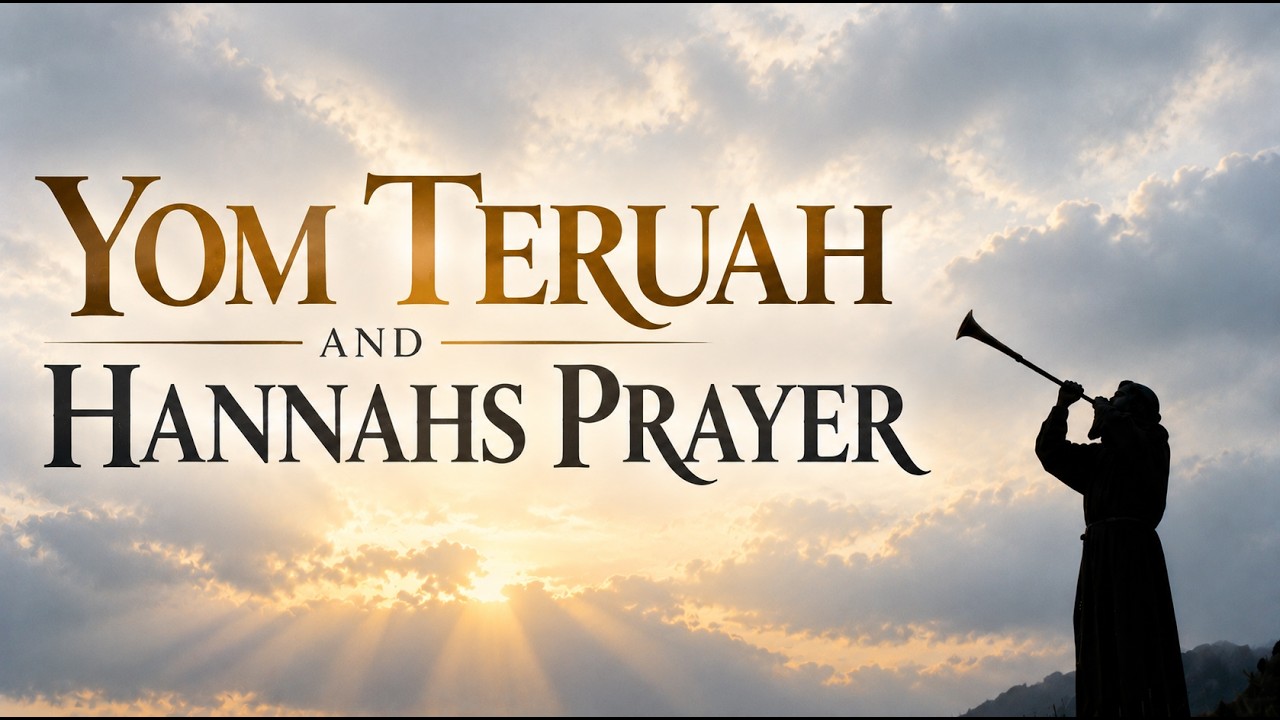
Yom Teruah falls on the first day of the seventh month — the only festival that opens a month rather than falling mid-month, timed to the sliver of a new moon that ancient watchmen scanned for from mountaintops, lighting signal fires to relay the sighting across the land. Vander Els argued the silence surrounding the day is deliberate, not an oversight: "God left Day of Trumpets mysterious because what it represents can't simply be explained, only experienced. You can't lecture someone into having a revelation or an awakening to God's presence and power in the world." He drew a comparison to Israel's Holocaust Remembrance Day sirens, which stop the entire country cold for two minutes — cars pull over, conversations halt, children freeze. That, he said, is what a trumpet blast does: "It doesn't ask permission. It doesn't wait for a convenient time to get your attention. It cuts through the ordinary life and it demands a response."
What the Terua Means in Scripture
Vander Els traced the word teruah — shout, blast, racket — through several biblical moments where it marks reality cracking open: the walls of Jericho collapsing at the trumpet and shout (Joshua 6), the ground shaking as the ark entered the camp with a great terua (1 Samuel 4:5). "The shout, the terua in the Bible, it marks moments when ordinary reality just crumbles at the sound and divine possibility begins to emerge... It's holy disruption." By the Second Temple period, Jewish teachers had connected biblical dots the text itself never spelled out — the number seven suggesting completion, trumpets signaling coronation, the new moon marking new beginnings — and settled on the name Rosh Hashanah, "head of the year," along with the tradition that on this day the books of judgment open, with ten days given to tip the scales through repentance. Vander Els urged the congregation to meet such traditions with curiosity rather than suspicion: "Ask questions and not simply jump to judgment... Our Jewish brothers long before us were scholars of the book."
Jubilee and the Trumpet of Yom Kippur
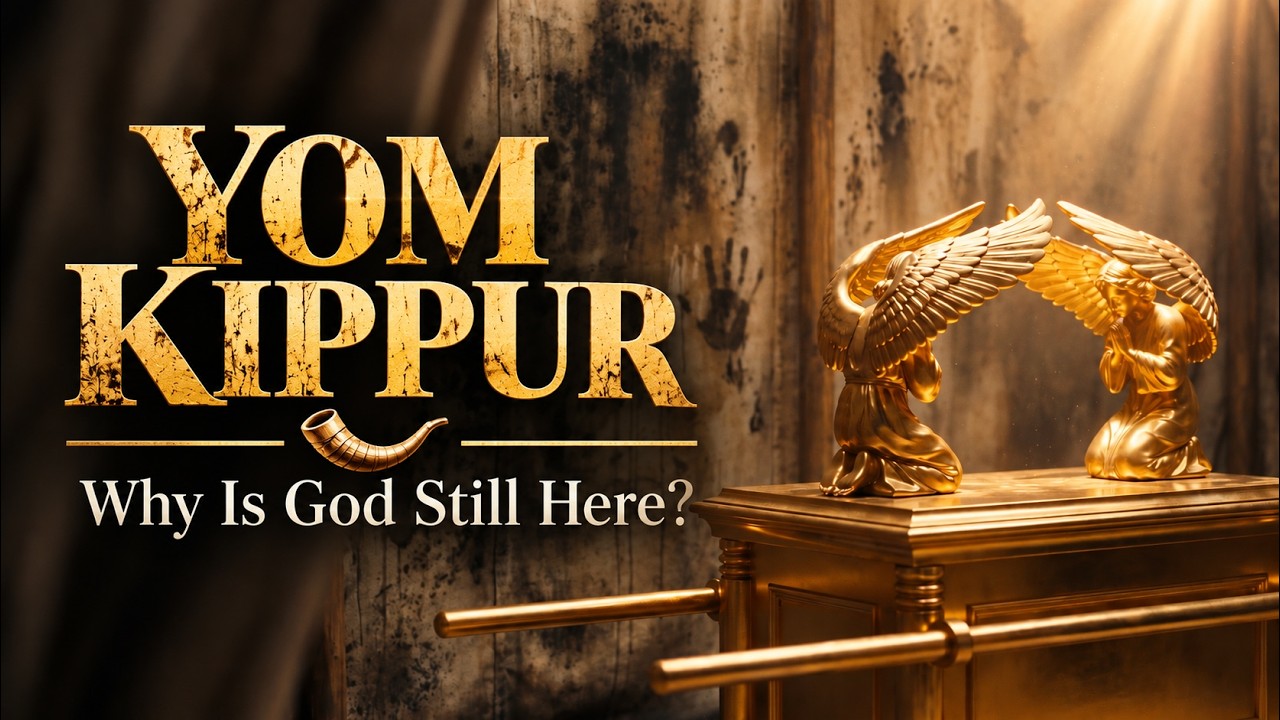
Ten days after Yom Teruah comes Yom Kippur, the Day of Atonement, when the high priest entered the Holy of Holies with the blood of bulls and goats to cleanse the sanctuary of sin — sin Vander Els described in the ancient Israelite imagination as mud slung on the throne room of God, accumulating until God's Spirit could no longer remain, the crisis behind Ezekiel's vision of the Spirit departing the temple. Every fiftieth year, a second trumpet sounds on Yom Kippur to ignite the Jubilee: all debts forgiven, slaves freed, ancestral land restored, captives released. "Greed has a limit," Vander Els said. "And oppression has an expiration date." He pressed the discomfort of this directly — "that's not fair," he admitted is the honest American reaction — before turning to Yeshua's parable of the vineyard workers who all receive the same wage regardless of hours worked: "It's not about being fair... he's not going to send a worker home to a starving family because he didn't work as much as everyone else." God, he said, "doesn't care about fair. He cares about justice."
The Trumpet in Yeshua
Vander Els drew a sustained parallel between the unexplained mystery of Yom Teruah and the quiet, unheralded arrival of Yeshua — born at night, unnoticed by the powerful, first witnessed by shepherds. Yeshua's opening words, "Repent for the kingdom of heaven has come near," and his reading from Isaiah in Luke 4:18–19 — proclaiming good news to the poor, freedom for prisoners, "the year of the Lord's favor" — Vander Els identified explicitly as Jubilee language: "These words have been fulfilled is what he says." And as with the trumpet itself, it was not the religious establishment who responded but tax collectors, prostitutes, and fishermen — those who knew they needed the wake-up call. The ten days between Yom Teruah and Yom Kippur, the Yamim Noraim or Days of Awe, traditionally center on teshuvah (repentance), tefillah (prayer), and tzedakah (justice and charity) — the same three threads, Vander Els noted, that run through Yeshua's entire ministry, turning personal transformation into social transformation.
Application
Vander Els closed with three specific charges tied to Monday evening's shofar blast. First, identify one specific area — not five, not a vague call to "be more spiritual" — where God is calling for an awakening: fear driving decisions instead of faith, pride mistaken for conviction, defensive relational patterns, or busyness functioning as spiritual anesthesia. Second, take one concrete step this week toward that area, not a full overhaul — one faith-based decision instead of a fear-based one, one honest conversation, one small act toward justice. Third, live in anticipation rather than waiting for a more convenient moment: "Don't wait until next Shabbat to start living differently... that's the whole message of Yum Trua. It starts on the darkest day." He also invited the congregation to pray specifically for their enemies and their enemies' families this week, and to bring anything they are still carrying to the symbolic altar rather than continue carrying it. The question he left standing, as the ram's horn prepares to sound: has the King who came to Bethlehem actually been crowned in your life?
Read the transcript (8,381 words)
Automated transcript, lightly edited for readability. Scripture appears as spoken; the video is the authoritative teaching.
Shalom everybody. Shabbat shalom. Had to wait on the signal there—got it.
So today we're going to continue. Last week we kind of started a miniseries on the fall festival, the fall feast days found in the Bible. And if we go to Leviticus 23, we have seven festivals—seven feast days, seven times a year where Israel was called to stop what they're doing and remember something about God and who they are as his people. And we spoke generally about the first of the fall festivals, which is the only one that happens at the beginning of a month. That is the festival of trumpets, or the day of shouting, also known as Rosh Hashanah. If you have a calendar at home, you'll see it right there starting at Monday night, Rosh Hashanah.
And then we know 10 days later, we have the day of purgation, or the day of atonement—Yom Kippur. It's the day where the sins of Israel that, metaphysically if you will, stained the throne room of God in the tabernacle. It's the day where God says, "There's a way that this can be taken out of my sight forever, and it must come through the blood." And so the high priest would enter through the tabernacle—various steps of the workflow—but eventually end up in the holiest of holies, the one time a year where someone would dare go beyond the veil to the most intimate sanctum of the tabernacle where the ark of the covenant, or the mercy seat, or the throne of God sat. And he would take the blood of bulls and goats and sprinkle it on there.
The Mud on the Throne Room
Because the idea in the Bible, in biblical theology if you will, is that if you intentionally sin against God, if you intentionally and rebelliously pursue the iniquities and transgressions against God, it doesn't just affect you. It doesn't. It's affecting everybody. In the mind of the ancient Israelite, it was as if someone was walking through the gates, the doors of the tabernacle with mud and slinging it all over the holy place, ripping down the curtain that separated the holiness from the common and throwing mud on the throne room of God. That was the idea. And the idea is that if there comes a point where this mud just piles up everywhere, God's not going to want to hang out there anymore.
His house is trashed because of us. And this is what prompts Ezekiel's vision when God's spirit leaves the temple because sin and transgressions are just at a tipping point that God just can't—guys, I'm still here. And what Yom Kippur was all about—Leviticus 16, the whole chapter is about a workflow that God gave them to remind them that there's still grace and mercy. Let's wipe it all away from my sight and reset it clean every year. So that was the idea of Yom Kippur. Ten days after the day of trumpets, and then of course five days after Yom Kippur, after a very serious and holy and humble day, you have a week-long festival—honeymoon type of—bring in the harvest.
Let's dance. Let's worship the Lord. Let's fellowship. Let's party. And that's what we're diving into. But today we're going to kind of focus in on the day of trumpets because Monday evening is when we will be coming together and celebrating the day of trumpets.
So Monday evening, Jewish communities all over the world will gather and they will celebrate this day that is considered in Judaism a very mysterious day in the Bible. It's the most mysterious celebration in all of scripture, in my opinion. But here's what strikes you when you read the text: it's the only holiday in the Bible that God doesn't explain why we are to do it. Let's check it out. It's Leviticus chapter 23 starting in verse 24. Here's what it says: "Say on the first day of the seventh month..."
So the first day of the what month? Pretty significant. It's the only holiday that starts at the first of the month. Why is that significant? Well, because they're on a lunar calendar. So, does anyone know what a new moon is? A new moon for us is when you look up and the moon has taken a vacation. It's gone. Where did it go? Right? And then, of course, the day after what we call a new moon is the itty bitty sliver. Just an itty bitty—not even a banana, just a crack. Right?
Waiting for the Sign
For the ancient Israelites, that itty bitty sliver, when they saw that, it kicks off the month every single month. So they had a very elaborate system that was amazing, and we'll go into detail another time, but they would have watchmen all over the mountaintops watching the skies because it's a pretty significant thing. Because we have to plan this. How do we know when to celebrate Yom Kippur and Sukkot? We have to wait to actually see when the sliver comes because we can only calculate it so far. We can get it within a one- to two-day range, sometimes three. So they would—it was a big deal to see the sign of the moon for this celebration.
They would have watchmen all over the mountaintops, and Jewish historians record that they would start lighting signal fires. So if someone way off in the Negev saw the moon first, he'd light his fire, and then the other one would see it and he'd light his fire and across the mountaintops the light would illuminate the land of Israel. Just like that scene from Lord of the Rings when they have the signal fires. That's really cool just to think about if you're ever on Jeopardy. Now you know the whole thing.
"First day of the seventh month, you are to have a day of Sabbath rest, a sacred assembly commemorated by trumpet blasts."
That's why we call it Yom Teru'ah. Yom means day. Teru'ah means a shout, a blast, a racket, a loud noise. This sacred assembly on this day shall be commemorated with a bunch of loud noise—screaming, hollering, trumpet blasts. That's it. That's all we get. There's no explanation. There's no backstory. Nothing. And then if we contrast that to other feasts, you understand the impact of this.
No Story, Just a Sound
Like here's Passover. Exodus 12:4: "This is the day you are to commemorate for the generations to come. This is how you're going to remember. What are we remembering on Passover? When I brought you out of Egypt."
We have a historical. Cool. How about Sukkot? Leviticus : "You are to live in temporary shelters so that your descendants will know that I had the Israelites live in temporary shelters when I brought them out of Egypt and carried them through the wilderness."
Every other feast gets kind of a pretty good explanation, but what we call the day of trumpets? Blow the horn. That's it. For a people that have been given detailed blueprints from everything—from the construction of the tabernacle, the altar, all the way down to how to diagnose skin diseases and the protocols and workflows you should carry out if someone has a little something, right? The absence of something as significant as a major feast day—it kind of makes your head turn a little bit. Why would God leave this feast without any type of definition? And I believe it's intentional, just like every other detail in the Bible.
It's an act of divine teaching. I believe God left the day of trumpets—Yom Teru'ah—mysterious because what it represents can't simply be explained, only experienced. You can't lecture someone into having a revelation or an awakening to God's presence and power in the world. You can talk about it, but experiencing it and waking up one day and realizing, "Oh, that's something different." Something different completely. You have to blow the trumpet to see who responds.
The Power of a Trumpet Call
I've been into Israel several times, and of course, on Holocaust Remembrance Day, which is the 27th of Nissan—usually in April or May on our calendar—at exactly a.m., they have a protocol that affects the entire nation. Sirens ignite across the entire country. And I mean everywhere—cities, villages, highways. When those sirens wail, the entire nation stops. Cars on the busy interstates and freeways, they just pull over. Drivers get out of their cars and stand at attention. People in offices, they stop mid conversation. Children on playgrounds freeze. For two whole minutes, the entire country goes silent as they remember and honor.
That's the power of a trumpet call. That's what it looks like. It doesn't ask permission. It doesn't wait for a convenient time to get your attention. It cuts through the ordinary life and demands a response. What are you going to do when you hear it? You can keep driving to work. Kind of awkward. Everyone's just looking at you. What are you doing? You can, but it demands a response. That's what ancient Israel discovered about the teru'ah—the shouting, the trumpet blast of the day of trumpets.
Let me show you how this word is used in several places in scripture. So the first is Joshua 6, right? You know the story. When the trumpet sounded, they have this big city that's fortified, right? When the trumpet sounded, the armies shouted. And at the sound of the trumpet, when the men gave a loud teru'ah—a loud shout—the walls collapsed. Something significant happened. You have 1 Samuel 4:5: "When the ark of the Lord's covenant came into the camp, all of Israel raised such a great teru'ah shout that the ground began to shake."
Holy Disruption
The shout, the teru'ah in the Bible, marks moments when ordinary reality just crumbles at the sound and divine possibility begins to emerge. As we discussed last week, it's holy disruption. It's holy disruption that says: stop. Reconsider everything right now. Something bigger than your normal life is happening. And so when it comes to the question of what is this day, the day of trumpets that is so detailed in its explanation, what is this day really about? Well, that's what we're going to dive into. This is what faithful Jews began to do very long ago.
They come to something in the Bible and we could just read it in the Bible and say, "Well, that's just the way it is. There's no details. Let's just go to bed." But the people of the book before us—that wasn't enough for them. Wasn't enough for them. We want to know why. We want to interpret this. There has to be a reason. And if God's not giving it to us, then we're going to be faithful enough to search it out and figure this out.
So there was a time when Yom Terua went from being a very mysterious day to a point where in Judaism they began to honor it and recognize it as a day when you have a personal revelation. You have a personal awakening, not only to the reality of the world and who you are, but also to who God is and where God is sitting and what he's sitting on—it's the throne of the universe.
A Mysterious Day Transformed
And so by the second temple period, during the time of Yeshua, Jewish teachers developed a lot of rich interpretations and traditions about this day. The day that's only described as tooting a horn, right? By this time in the first century, they had standardized the name of it. There were about eight different names it could go by, but they standardized it and now they call it Rosh Hashana. It means the head of the year, and they count it as a type of—I would say—agricultural new year reset. It's when the latter rains begin to come down, and that's when the seeding—a type of new year.
They also taught on this day that God has the books opened of judgment and the righteous are inscribed in the book of life and the wicked in the book of death. But most people during this time period get about 10 days to tip the scales in their favor through repentance. This was the standard tradition of how Yom Terua was celebrated in the first century. That's a lot of different traditions we get from blowing the trumpet. Isn't that amazing?
Curious, Not Judgmental
Someone very wise, very wise once told me to be curious and not judgmental. To ask questions and not simply jump to judgment. It also helps you to identify the intentions of others when they come to you. Are they asking questions? And the reason I say that is because we love our Bible and many times we see someone have a tradition about something and interpret something in a way we're not comfortable with, because we just say it says "blow the trumpet" and we get offended.
Why would they change the name? It's Yom Terua. What are they talking about the books? It says "blow the trumpet." You're adding to the word, right? Instead of asking questions, why do you interpret it that way? Where do you get these ideas?
And when I'm talking about judgment, I'm talking to the house of God for a reason, because that's our collective reputation in the world—I'm sure—that we need to work on. But many people see Jewish traditions they can't find in the Bible and they never ask the question: Why are you interpreting it this way when obviously it's just made up, right? It's not made up.
Scholars of the Book
Our Jewish brothers long before us were scholars of the book. It was their responsibility to be that. They connected the biblical dots. For example, they looked at the whole story to try to figure out what this day is about instead of just the verse.
Seventh month, seven. So traditionally, because of the creation story, seven is associated with what? Completion, right? Completion. Oh, it's the seventh month. Oh, it's that simple. Something stops in the seventh month and repeats and starts again. Okay? And we know trumpets all over the Bible are used primarily for a type of coronation event at their most regal status.
So they determined: okay, there's something about the seventh month, something about completing and a new beginning, and then there's trumpet. So there's something about coronation. The first day of the month is a new beginning of every month, the new moon. So they said, "You know what, this day is not just a random day to make a bunch of racket. We believe, based on what we've seen in the Bible across the board, that it has a lot more to do with divine kingship and transformation of the people of God." I think that's a pretty good direction myself.
A Wakeup Call
But here's what's challenging. The terua—the message behind the shout in the Bible—it doesn't just wake you up to good feelings about, "Oh, a reminder that my King is on the throne, and God's enthronement, and the power and the glory, and I'm his people"—and yes, that's a great feeling. But it also wakes you up to the truth about yourself, being in that position, serving that God.
And often when we're having to wake up to ourselves and look at ourselves in the mirror, especially in the shadow of God, sometimes it gets uncomfortable.
Traditional Day of Trumpets, or Rosh Hashana, liturgy in Judaism and throughout Christianity includes very intense confessional prayers listing dozens of ways that humans miss the mark. It's standardized. Just read it to remind yourself every year: I did mess that up. I did mess that up.
Why focus on failure during divine coronation, though? But why do we need to focus on ourselves when God's supposed to be the one getting the glory in this day? Because genuine awakening to who God is requires honest assessment of who we are. You can't wake up to the new possibilities of God's power until you acknowledge where you've been sleepwalking around and not noticing what God's been doing all around you.
The shofar blast asks, "If God is really King, why are you still living like you're in charge?" Oh, the horn's blowing. That's right. I'm not the guy. If divine love and mercy is available, then why settle for broken relationships trying to fill the vacuum elsewhere? If transformation is possible in your life—which is probably hitting every one of us in a different way right now—why make peace and accept the diminishing patterns that we just keep hitting play on and repeat over and over and over again?
It's not just about recognizing where God is. It's the invitation to get closer. That's what the call of the shofar is seen as doing traditionally. It's a wakeup call of who's in charge. So: who's in charge?
And here's the beauty. Here's the beauty, though. The same trumpet blast that reveals our needs and maybe our inadequacies, or maybe shines light on the things that we need to move past in our lives, it also is the shout that declares the availability of grace so deep that it's too radical for most people.
Liberty So Radical
On Yom Terua, we have the clamor of trumpets, everybody. 10 days later, every 50 years on Yom Kippur, there's another single trumpet blast that occurs. And this one doesn't signal divine coronation. Where am I with God? Am I ready for the wakeup call to say, "Hey, have I drifted away this past year? It's an opportunity for me to get close."
Now that time's passed. We're now on the day—the day of atonement. And every 50 years when that trumpet is blown, it ignites something called the Jubilee year, which we spoke a little bit about last week. It is liberty so radical it makes me uncomfortable as an American. I'm sure it does you, too, if we're honest.
Every 50 years in Israel, God decreed that all debts would be forgiven. Yeah, but what about the banks? I mean, that's not really fair. Who cares about the banks? You get bailed out somehow. I mean, whatever. What about the people? What about justice? All debts forgiven.
By the 49th year: You getting that credit card? Got a new car, got a new whatever. You know, it wasn't the reality then. But if you are a slave, you're set free. Chains broken. You're gone. Done. If you had land that originally belonged to your ancestors, to your family, but you had to sell it for whatever reason or get rid of it because you were under financial strain, you get it back. Their name magically gets erased from the deed and yours gets written back on it.
Captives are set free. Those who have fallen to the bottom under the weight of others get lifted back up. Pretty amazing thing. Pretty amazing thing.
It sounds utopian, but for ancient Israel, it wasn't theory. It was God's design for society. Every 50 years, the economic scoreboard was reset. Families who had lost everything were given a chance to start again. Generational poverty was interrupted. Those generational curses, unlike everywhere else in the world, don't get to persist. Greed has a limit. And oppression has an expiration date.
Fair vs. Justice
Now imagine that in today's America. Imagine if every mortgage, every medical bill, every student loan was canceled every 50 years. Imagine the weight lifted off the shoulders of people who found themselves drowning in debt.
And if you've lived any time in this world, the whole rhetoric of "well, they put themselves in it"—that doesn't hold. To survive, the majority of America has to go in debt. It's not a choice for many people. That's lifted. Done.
Imagine if land had been taken or homes lost through foreclosure were all restored to the families who once lived in them. Imagine what that would do to our sense of justice, our hope, and our unity.
But as an American, my first instinct hearing that is saying, "Well, that's not fair." Let's be honest—that's not fair. And it's a wakeup call for all of us who live in a nation where this type of framing is taught. It's not fair. It's not fair. It's not fair.
God—the God of the Bible—doesn't care about fair. He cares about justice.
The Parable of Workers
Yeshua spoke about this in a whole parable about workers. There was a guy that kept going into town and getting workers and bringing them back. Some of them he got in the early morning. Then he went out to find some more in the afternoon, and he went out and found some more in the evening. Guys standing around looking for work.
Come on in. Hop in. Let's take you back through the vineyard. And at the end of the day, everybody got their day's wages. Why is that significant? Everyone got the same wages. So the guy who had been there since early morning got $100. And the guy who had gotten there 10 minutes before the end of the day, the owner of the vineyard brought him in 10 minutes before—he got $100. It's not fair. A day's wages is what guaranteed your family got fed that night. It's not about being fair. It's the owner of the vineyard. The owner of the land wanted to make sure he was known for being just, and he's not going to send a worker home to a starving family because he didn't work as much as everyone else.
That's radical. It's irritating. But he worked more than the other guy. And that's how radical our God is—that despite our objection, for our pettiness, he says, "I'm going to make sure everybody eats that is under my care." That's disturbing, isn't it? You wrestle with it a little bit. Good. Because the more we wrestle against God, the more we can go ahead and get defeated, get the blessing, and walk away limping like Jacob.
The Radical Justice of God
That was the impact that Jubilee had. It was nothing less than an earthquake of the entire social order. And it wasn't chaos. It was God's rhythm of mercy. The Jubilee didn't just save individuals; it saved whole communities from the crushing power of endless inequality. So when we tie in the day of trumpets and the trumpet blasts to Yom Kippur, the next day, the day of atonement, and the proclamation of the Jubilee, it's not just about these ancient rituals. It's about the sound of heaven breaking into earth with a call. God's kingdom doesn't run and will not run on exploitation. It runs on release, renewal, and restoration.
That's the standard. The mystery of the day of trumpets also perfectly parallels Yeshua himself. Imagine that. We didn't see that coming. The Bible has things that point us to Yeshua. Just like this unnamed feast, trumpets—Yeshua shows up without much advanced explanation, didn't he? Very abruptly. No divine PowerPoint, no heads up. The incarnation occurs quietly, literally at night. To parents, nobody important was watching. Look at that. We talked about last week how God tends to give the shout and the calling in darkness to see how people respond before the daylight comes. That's Yeshua's story.
The Incarnation in Darkness
The gospels don't begin with systematic theology. They begin with "The word became flesh." They blow the trumpet and they see who responds to the message. And like the day of trumpets, the responders aren't who you'd expect when we begin reading in the New Testament. Religious experts, no, they missed it. That's not our trumpet. I don't know what you guys are doing. I'm going to keep driving to work. The powerful, they ignore it. I don't know what this is. Some guy got whatever. He's causing a ruckus. He's teaching stuff. No. On the day he was born, it was the shepherds that got to hear the angelic teruah break forth from heaven.
The shepherds, and they're the ones who came running. When Yeshua's ministry begins, his first words are, "Repent for the kingdom of heaven has come near." That's Rosh Hashanah. That's day of trumpets language, awakening because the king has arrived. The sermon on the mount functions like an extended shofar blast. And we know exactly what that feels like. Blessed are the poor in spirit—trumpet call to those in need of grace. Blessed are those who mourn—promises the awakening to God's mercy. Even when painful, even when starving, you will be fed.
Let me show you something deeper. Look how Yeshua's ministry follows the same pattern of what we know about the message behind the day of trumpets. In Mark , we read, "Very early in the morning, while it was still dark, Yeshua got up, left the house, and went off to a solitary place of prayer where he prayed." There's something about Yeshua. He loved to get up early. He loved to get up while it was still dark. He loved to already be going, have something in the works before the sun came up. Just like when Yom Teruah begins at a new moon when you can barely see anything.
Yeshua's Trumpet Blast
Then comes the public revelation of his ministry in Luke -19. Yeshua stands up in the synagogue and he speaks and he reads from the prophet Isaiah and he says, "The Spirit of the Lord is on me because he has anointed me to proclaim good news to the poor. He has sent me to proclaim freedom to the prisoners, recovery of sight for the blind, and to set the oppressed free. I'm here to proclaim the year of the Lord's favor." That's Jubilee language, guys. That's the trumpet wailing. It's the same trumpet blast that announces freedom, release, and restoration. Yeshua is saying the personal jubilee that the feast of trumpets and Yom Kippur point to—it's happening right now.
"These words have been fulfilled," is what he says. Follow me if you want to be a part of it. And notice who responds to Yeshua's trumpet call. It's not the religious establishment who had everything figured out. It's not the people who went to church every week. It's not the people who never had to put their hope in God because they were already taken care of. It was the tax collectors that heard the call. The tax collectors who knew they needed grace and they were reminded of it daily as they chose money over loyalty to their own people so that they could survive and provide for their families. It was the prostitutes that had given up on respectability, not so they could be rich, but so they could survive. It's the fishermen who dropped their nets because they heard something that cut through their ordinary lives.
The Holy Disruption
The pattern's always the same. The trumpet sounds in mystery and darkness. It creates a holy clamor, a holy disruption. What does this mean? What's happening? And the people who respond are those who know they need awakening because it was for them. And here's the thing: not everyone is going to or wants to hear the shofar blast. If you haven't guessed already, I'm not talking about a literal trumpet every single time. It's God's awakening. It's when God—you hear the trumpet of God. You hear that voice. You hear that moment when God says, "Hey, are you done yet? Are you done yet? Can I help? Can I be there?
Are you done trying to carry this? Are you done trying to do this? Are you done with this pattern yet? Are you done living this over and over and over and over and over again? Are you done?" That's the shofar blast. And it demands some form of response. It's always the same. Never comes at a convenient time when I'm ready for it. That means God is still working on people if you don't see them immediately respond. And I say that for a reason because boy, do we like immediate results when we see other people that we want to see helped even though we're totally ignoring things in our own life. So we look to other places.
Yeah. Your job is to listen and be ready if that's you. Yeshua embodies this awakening of who God is and who we are that the day of trumpets represents. His death and resurrection—that was the ultimate shout, shattering reality to make this divine relationship and possibility available for anyone willing to hear and respond.
The Ten Days of Awe
Now, let me tell you about what happens after the day of trumpets because this is where the awakening call moves from possibility to application and practice. After the day of trumpets, when we go out and we play all the trumpets and we shout the trumpets, we have 10 days before the day of atonement, the big day where we're to afflict ourselves, go before the Father humbly and in a sense thank him for the grace of even allowing us to have sins forgiven. And these 10 days in Judaism are called the yamim norim, the days of awe. And these aren't days of terror—not tariffs. You get all the media and everything gets tongue-tied.
That's funny, okay? Not terrorists—terrifying. They're not days of terror. They're days of overwhelming reverence. And if you've ever taken part in the 10 days of counting, just recognizing that we blew the trumpet and if I blew the trumpet, I'm recognizing God is on the throne and I'm recognizing I'm not. And I claim to worship God. And now I have 10 days before the day when symbolically I'm reminded that my sins are washed away. And as a Christian, that's a bigger deal. Maybe I do need to spend a little bit of time in this busy life where I put blinders on all year long. Maybe I should take advantage of these 10 days to just spend every day looking inward and say, "God, where do I need to go from here? If anywhere, I want to make sure that when I come to Yom Kippur and I'm thanking you for forgiving my sins, I've actually given them over to you."
The trumpet has sounded. The awakening has begun, and now comes the hard work of preparing to stand in the presence of God. Jewish tradition teaches that during these 10 days, your fate in the coming year has been decided. This is tradition. The books are open. The scales are still movable a little bit. Transformation is still possible, but it requires intentional response. And this is how it's wrapped up so that it can teach to next generations and children and such. But it's a pretty profound thing for us, those of us living between the first and the second coming of Yeshua. It's pretty profound. Like, we live in the days of awe right now if you didn't know. Like, for us, that's the age that we're in. Like as believers, yeah, this 10 days sure, but it's big. He rose. He said, "Hey, be ready. Coming back. Be ready." So yeah, every day—this whole season as we wait on our king to return—is the season of awe.
But right now in the space between, we're called to do the ongoing work of letting that awakening of who God is transform our actual lives. The days of awe teach us that awakening isn't just a moment. It's a process. When you hear the shofar call, it's just the beginning. The real question is: what will you do with the 10 days you've been given? How will you respond to the grace that's been offered to you?
Three Practices: Repentance, Prayer, and Justice
That's why Jewish tradition emphasizes three practices during the days of awe. During the time of Yeshua, this practice was put in place: teshuvah—repentance, tefillah—prayer, and tzedakah—the acts of justice and charity. Not because they earned God's favor, but because they're ways that we participate in the transformation. Repentance means to turn around. It means changing direction. It means choosing a different path. Prayer means staying connected to the source of that transformation. Justice and charity mean letting that inner change form an outward response and bless others.
Does that sound familiar? Those three things—that's exactly the practices that Yeshua emphasized throughout his entire ministry. That's what he gave us. The kingdom life he described isn't just some personal salvation. It's about personal transformation that becomes social transformation. We are supposed to infect other people. We're supposed to be contagious.
And when I say contagious, I use that as a funny sickness, but it should be done in a way where the world doesn't see it as a disease. A couple people laughed because they know sometimes it comes across that way. But think about it. Yeshua didn't just call people to believe the right things. He called them to live differently. Why don't you start there? Start living differently. And we can talk about all the other stuff. Live differently. Follow me, he said to the fishermen. And they left their nets. Go and sin no more, he told a woman caught in adultery. Zacchaeus, come down here from that tree. He called to the tax collector, and the man's entire economic system changed.
Real Awakening, Real Change
The days of awe that we're entering into Monday evening remind us that real awakening always leads to real change in our lives. And sometimes that's a hard thing to hear. The shofar blast doesn't just mean to make us feel inspired for an hour on Monday evening. It's meant to reorganize our entire lives around the reality that God is king. We live between the already and the not yet. The king has come, but we also know the king is still coming. Yom Teruah, the day of trumpets, teaches us that the space between those things isn't empty. We're not just sitting around twiddling our thumbs waiting for Yeshua to return. We've been given something, and he expects us to have a greater yield when he returns. There's a whole parable about that. Are we doing that?
And you can't do it out there until you do it in here. Every shofar blast asks the question: has the king who came to Bethlehem been crowned in our life?
Living Awake in a Divided World
So this week, as the world continues being the world, the Yom Teruah question becomes more urgent than ever. How do we live awake in a world sleepwalking around division and fear? How? Not through private spiritualization where we kind of just study our Bible and keep it inside and don't go out to the hurting world. We just ignore it. It's easy to do. No, we let the king's personal reign become the foundation for our absolute public witness. We look different. We act differently. We don't give the world accusations against our king. When events wake us up to the brokenness, we respond with wholeness because that's our mission.
The world desperately needs people who have heard the trumpet call and have responded to it. We need people who have let God's kingship extend into their personal lives so completely that it overflows into the healing of others.
Awakening to Love and Justice
Guys, we need people who are so secure in God's love that they can love others without needing to be loved back. We need people who are so confident in God's justice that they can work for justice without needing to see those immediate results. Have you prayed for your enemies this week? Have you prayed for the family of your enemies? Have you prayed for the partners of your enemies? Have you prayed for your enemies? Not that they should be struck down. The disciples were not a good example when they came to Yeshua. Can't we just bomb them over there because they rejected you? No. Yeshua didn't come to drop bombs. That's what he told them. Not dropping hellfire. He came here to save, man. He came here to raise up an army. I came here to raise up an Ezekiel 37 army with a new spirit and a people that will overwhelm this world like the stone that knocks out the whole imperial statue in Daniel.
And it just keeps growing into a mountain until the whole world is just a big mountain called God's mountain, and everyone's on God's mountain—and it's an amazing thing. That's Daniel's prophecy. Are we going to do it this week or are we not?
And if you haven't, it's probably because you don't want to. It's probably because it's hard. And I dare you to do it even with anger. But do it and see what happens. See what the power of God does to your soul. If you dare go before God and ask for blessings on someone who is absolutely evil and does nothing but hurt other people—asking God that they too would have a seat at the table, asking God that they too would hear and respond to the shout of the shofar. I double dog dare you to do that this week and see what happens if you haven't. Because if you ever tell people that you do it, you'll be shunned just as Yeshua was.
What Awakening Looks Like
Monday evening when the shofar sounds, what might God be calling you to wake up to? Maybe a new awakening of where you're at in your life. Maybe you realize that fear has been driving decisions that should have been faith-driven in your life. News creates anxiety and we make a lot of choices based on what might happen rather than what God is calling us to do. That's my experience personally. And when we hear that blast, the shofar says fear is not your king. Stop it.
What would it look like to make your next major decision in your life based on faith rather than fear? I don't know who I'm speaking to right now, but what would it look like if that were you? If you trusted just a little bit more? What opportunity have you been avoiding because it feels too risky even though it's your calling?
And maybe this type of awakening that the shofar calls us to have—maybe it's an awakening to pride masquerading as conviction because that happens. You've confused being right with being righteous, winning arguments with winning hearts. The trumpet says your need to be right is not your king. What relationship has suffered because you needed the last word? You wanted that trophy? What conversation needs to happen where you listen more than you speak?
Maybe it's an awakening to the reality of relationship patterns perpetrating harm in your life instead of healing. Maybe you manage conflict through withdrawal and disagreement through argument, hurt through retaliation. It's the type of stuff Yeshua was talking about. We can do better. Don't act like the rest of the world. The shouting announces that defensive patterns are not your king. You don't need to keep nursing old wounds.
The Power of Presence
Maybe the shout causes you to awaken to the way busyness has become a form of spiritual anesthesia. I know something about that. Sometimes you stay so occupied with urgent things that you never have space to do the more important things. I don't have time to do that thing that God's called me to do. Happens. The shofar cuts through that. This is Yom Teruah—personal revelation. It's not just a feeling of inspiration that you're going to feel Monday night with all the horns. It gets very exciting. It's the realization that you're going to allow God's kingship to extend into the specific territories in your life where other powers have been ruling unchallenged. That's what this season's about.
And here's the beautiful thing. This awakening doesn't happen through willpower or just self-improvement. It happens through the grace of our king. The same king who calls you to wake up is the same king who provides you with the power to change. The trumpet blasts that reveal your need are blown by the God who meets that need. God left Yom Teruah, the day of trumpets, Rosh Hashanah, the day of the throne—God left it unexplained because what it represents can't be contained in explanations. It can only be lived out.
An Ongoing Lifestyle
And this isn't just one time. It's an ongoing lifestyle. Many of you more experienced warriors of the faith know what I'm talking about. You speak about it. You speak about the seasons when God is calling you again to go to the next level and again and again. And I appreciate all of you being mentors to me and sharing your wisdom with me because now I recognize it as well.
The longer you're in the walk, the more you start hearing it, the more you realize it's blowing and never blows at a convenient time ever. But it still blows and it still demands a response. However it comes, the call is always: wake up, pay attention, and something bigger than normal is happening. Remember, I'm the king. My kingdom is available if you'll just respond. That's the call of the shofar.
Your Invitation to Awakening
So Monday evening when the shofar sounds—beginning Rosh Hashanah, Yom Teruah—you're invited to participate in the ancient mystery, not as an observer of other people's traditions, but as a person created in God's image, called to awakening and called to transformation. And here's what I'm asking you to do. Not just today, but I'm asking you to do starting right now in this moment. I would like for you as homework. I'd like for you to identify one specific area where you know God is calling you to wake up.
Choose One Thing
Not five. Stop it. Overachievers. One. Overwhelm yourself. Martha, stop it. One. Not some general sense of needing to be more spiritual. I just need to be better. No, that's just too vague. Do it. What's the one thing in your life that you know God is calling you to wake up to? One specific territory where you've been allowed something other than God to be king. Maybe it's fear that's been driving you. Maybe it's pride that's been poisoning your relationships and marriage. Maybe it's cynicism that's been keeping you from the justice work God has been nudging you toward. Maybe it's the busyness that's been drowning out God's voice because you don't have time to stop. Shabbat, it's a whole rest. Choose one. Name it specifically because transformation doesn't happen in generalities. It happens when we get very concrete with our intentions of what needs to change.
Take One Step
Second, I want you to take that one concrete step this week to respond to God's call in that area. I don't want you to think that you have to have a massive life overhaul. I just want you to take one step toward resolving this area where you believe God is calling you to walk away from or wake up to. If it's fear, what's one decision you could make based on faith instead of fear? Just one decision. Practice something this week. If it's pride, what's one conversation where you could listen more than you speak? Or you could say, "You know what? Maybe I did say some things that I shouldn't have said when we had that fight. I'm really sorry about that." One little thing.
If it's cynicism, what's one small concrete step that you can take towards justice? Instead of looking at the world and saying, "That's just too messed up for me to even be involved in." What's something you can do, no matter how small, I bet you'll find an opportunity as soon as you walk out the door because God sends them. And he laughs. Be prepared. Be prepared. If you ask God, "What can I do to impact someone's life today?" Oh my goodness. Gas station people just walk up to you randomly. Hello. And it's good. And it's confirmation that you're where you need to be.
Chauffar doesn't call you to perfection. Sorry, guys. It calls you to simply participate. Just participate in the work. Yeshua never called his disciples to be absolutely 100%. Just walk forward and follow me. Watch how I do things. See if you can do a little bit more. Come on. God isn't asking you to solve everything at once in your life. God is asking you to take the next step in the direction of his kingdom.
Live in Anticipation
And finally, I want you to live this week in anticipation because we have entered the 10 days of awe. The king has come. And guess what else? The king is coming and he's absolutely here. And every day between now and then is an opportunity to let his reign extend into your actual life. Don't wait until next Shabbat to start living differently. Don't wait for next year's resolutions to begin. I'm going to change. I'm going to do it. Don't wait for the ideal circumstances to respond to grace because that's the whole message of Yum Trua. It starts on the darkest day. That's when you make the choice. It's never going to be a convenient time for you to make the choice to put one step in front of the other. That's the whole message. So, let's do it. Let's do it now. The trumpet's sounding. The call is going out. The books are opened. The king is inviting you into the ongoing mystery of awakening to the sound of the chauffear.
The King Is Calling
And so Monday evening, we will join the Jewish people all over the world. And together we will hear the chauffear. And when you hear that ancient sound cutting through the noise of your ordinary life, I want you to remember this isn't someone else's tradition that you're observing. This is your king calling your name. The question isn't whether the call is real. The question is: will you answer it? The king has come. The king is coming today. Right now the king is calling your name. And the question is will you respond?
Lay Your Burden Down
And so I'd like to end with prayer. And after prayer, I'd like Miss Angie to blow that chauffear. And if you need prayer today for anything going on in your life or even people in your lives, guys, we're going to have a prayer team on the other side of the stage. And they're there to pray for you. That's their only mission to lift you up before the father. They're an advocate. Use them. And maybe you've been able to identify one of those things today that we were speaking about, one of the things the trumpet is calling you to consider. And maybe you're recognizing how heavy it's been. Maybe you're recognizing it's time for me to put that down. Guys, we have a symbolic altar here that we invite you to come down to and symbolically place whatever it is on that altar. You can leave that here today. And I don't know what it is because we all know it's something different. But if you're tired of carrying something around today, you have permission today to not carry it anymore. That comes from the mouth of Yeshua in the scriptures.
So, please stand as we pray and enter into concluding worship. Alvina Menu, our father, our king, Father, we thank you for this opportunity to once again come into your word and not only dive into the Torah, your law, but also the narrative of your love. We thank you that the mystery of the chauffear and yum tua is just that so that we can search it out so that we can have a drive to grow closer to you. Father, we thank you for sending Yeshua the ultimate revelation and awakening that we would actually believe his words enough to put them into practice. And father, I ask in the name of Yeshua that the Holy Spirit that you say is already within us, the same spirit that raised Yeshua from the dead gives us the same authority and power to act like and do the things of Yeshua.
Father, I ask that we would no longer take that for granted, but there would be a shift in this world where we would finally be recognized as the people of the most high. That we would act like the people of the most high. In fact, that when people meet us, they wouldn't even remember our names or what we looked like. All they would remember is that they had an encounter with someone else. They had an encounter with Yeshua and that we would be the vessels of that. We thank you, Father. We thank you for your chauffear and the warning calls to call us home. In Yeshua's name we pray. Amen.
Closing Blessings
Yeah. Thank you, Father. Thank you for your word, how it speaks to the depth of who we are and who we're supposed to be. Thank you for your kindness, Father. Thank you for your mercy and your grace. Thank you, Father, that you remember that we are dust and that you have provided a way. Thank you for your nearness again, Father. It truly is our good. We bless you. We praise you. We thank you. Help us to apply your word to our lives in Yeshua's name. Amen. And amen. Will you sing the shama with mem adonai She cave my lay on here. O Israel, the Lord is our God. The Lord is one. And blessed is the name of his glorious kingdom for all eternity.
Now may the Lord also cause you to increase and overflow in love for one another and for all people in order to strengthen your hearts as blameless in holiness before our God and Father at the coming of our Lord Yeshua with all of his holy ones. And may the Lord bless you and keep you. May the Lord make his face to shine upon you and be gracious to you. May the Lord lift up his countenance toward you and give you his peace. In the name of our sar shalom, our prince of peace, Yeshua Hamashiach, we pray. Amen. And amen. Shabbat shalom family.