What Is the Sabbath
What is the Sabbath?
In this Bible teaching delivered by Matthew Vander Els at Founded in Truth Fellowship, the concept of the Sabbath is explored as more than just a weekly day of rest. It is presented as a central theme woven throughout the entire biblical narrative, beginning with creation and pointing towards an ultimate, eternal rest found in Jesus Christ (Yeshua). The message emphasizes understanding the Sabbath not merely as a commandment to be followed, but as a profound invitation to enter into God's rest, reflecting His character and His plan for humanity.
The teaching begins by examining the creation account in Genesis 1 and Genesis 2. God created the heavens and the earth in six days and rested on the seventh day, making it holy. Notably, unlike the conclusions of the first six days ("And there was evening and morning"), the seventh day has no such ending, suggesting an ongoing, eternal nature of God's rest. This initial act of divine rest introduces the concept of the Sabbath from the very beginning of the biblical story.
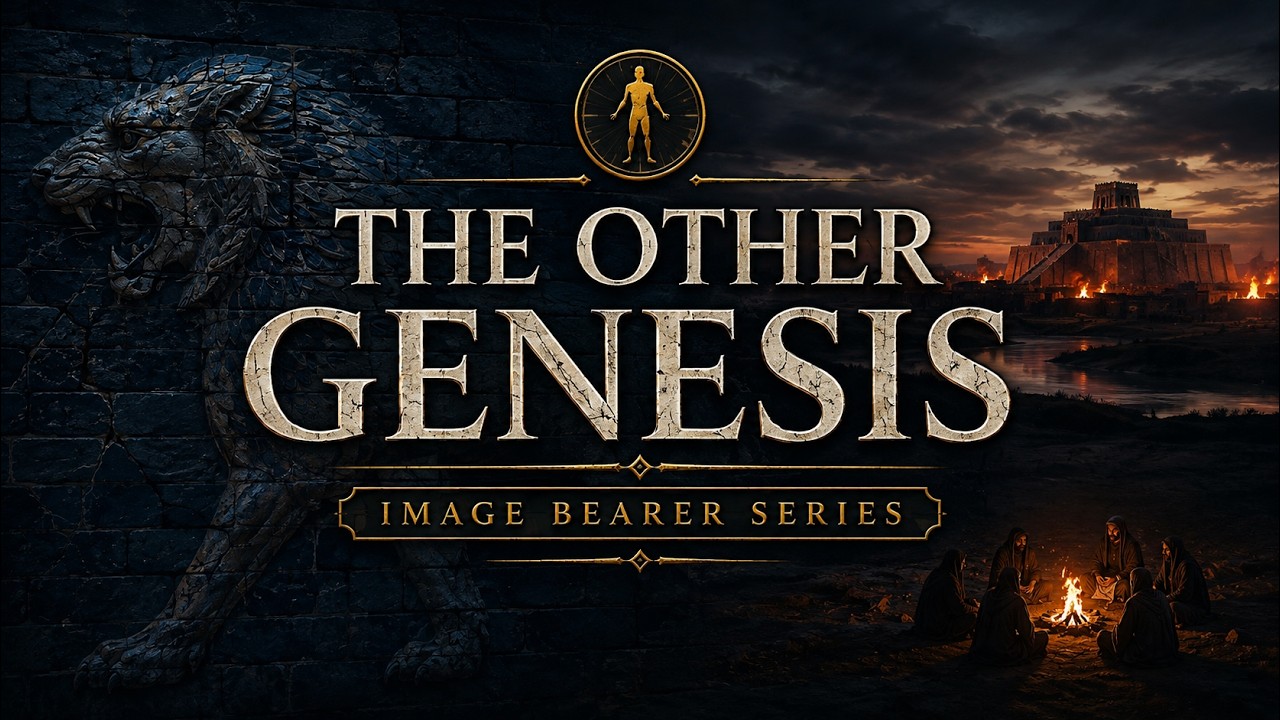
Furthermore, the speaker highlights the unique portrayal of humanity in Genesis 1. Instead of being created as slaves to work for the gods, as in other ancient Near Eastern creation myths like the Babylonian Enuma Elish, humans are created in God's image (the Hebrew word "Selim") to be His representatives and even to co-rule over creation. This sets a stark contrast where the biblical God desires relationship and shared dominion with humanity, rather than servitude.
The Sabbath commandment is formally introduced to the Israelites in Exodus 16 in the context of gathering manna, where they were instructed to gather twice as much on the sixth day because the seventh day would be a Sabbath rest. Later, it is included in the Ten Commandments in Exodus 20, with the justification that God rested on the seventh day after creating the world in six days. Deuteronomy 5 provides a slightly different reason, linking the Sabbath to the remembrance of Israel's liberation from slavery in Egypt. Both reasons work together, highlighting God's example and His act of redemption.
Application for Everyday Life:
- Recognize the human need for rest in a society that often glorifies constant work and productivity. The Sabbath provides an opportunity to cease from labor and reflect.
- Find your ultimate rest in Jesus Christ. He is presented as the Lord of the Sabbath, and true spiritual rest is found in a relationship with Him.
- Remember your freedom from spiritual "slavery". Just as the Sabbath reminded Israel of their liberation from Egypt, it can remind believers of their freedom from sin and the burdens of striving for self-righteousness.
- Look forward to the eternal rest promised in God's kingdom. The weekly Sabbath can serve as a foretaste of this ultimate rest.
- View the Sabbath as an invitation to dwell with God. It is a time to focus on spiritual connection and communion with Him.
- Consider the broader implications of Sabbath rest for your life and community. This includes examining whether you are contributing to exploitation or injustice and whether you are caring for the vulnerable. True Sabbath rest should align with God's character of justice and mercy.
- Examine your motivations for observing any day of rest. Is it out of obligation to a past law, or is it an expression of the present reality of rest found in Christ and a longing for the future eternal Sabbath?
To find more Bible Teachings, click the link.
References:
Bible Verses:
Read the transcript (6,772 words)
Automated transcript, lightly edited for readability. Scripture appears as spoken; the video is the authoritative teaching.
Do you ever find yourself searching for something bigger than you? For a community to be a part of? A place founded on truth and love? A place to worship the King of Kings, the Lord of Lords, and the Son of God? Welcome to Founded in Truth, where we're more than just a fellowship. We're a family. So welcome home. Shabbat Shalom, everybody. All right. A logistical request now. If you need to use the restroom during services, the children's teachers have asked that you would not walk down the hallway, but that you would follow the path of least resistance, which is this gaping hole in the wall. The church used to have doors there, and they took them down.
Go out that way, to the right, to the restrooms. So everybody understand, and we're good? And compliance. Awesome. Alrighty. Well, today, guys, I'm super excited to talk about a topic that I love, and to speak about the Bible in a way that I feel like God has revealed it to me, and to dive into the beauty of everything that the Bible is. And so today, we're going to talk about Sabbath — after I mute my phone. Today's message, I hope, will give everyone a better understanding of what the Sabbath day is and what it isn't necessarily, as well as how the concept and theme of the Sabbath in the Bible should not only give you hope, but become hope actualized in the reality of who you are as a human being. A human being that is not ruled by the gods that demand work and production and constant labor to please them.
Not Slaves, but Images
It's a stark contrast with specifically Genesis 1, and the depiction of creation in Genesis 2, to the other creation stories in the ancient world. The gods of Babylon and Assyria and Egypt were portrayed as creating man to be their slaves and to work for them. That's the Babylonian creation account, the Enuma Elish: the gods create man to be slaves, to work, work, work, produce, produce, produce — production, production, production. A concept that I know none of us understand in our nation today, in our economy. And it's a huge contrast to how the biblical authors portray our God in Genesis 1. Slaves?
No — you will be my images. You will be the embodiment of everything I am. The image there, the Hebrew word, is tselem, okay? And tselem means image. It's also used in the book of Joshua. When Joshua runs to the mountains and destroys the pagan tselem, the images of the gods — we would call them idols. Yahweh has no idol. When you walk into his tabernacle, there's nothing there. Mankind was meant to be his images, tselem. Wow. And then he goes on to say he creates his images so that they may rule and reign over creation. So it's like co-ruling. That is an amazing contrast from the gods of other nations and the other creation stories.
The Torah as a Story
So, the Sabbath in the Bible. I believe the intention of the biblical story, the Bible itself, was to be just that. It was to tell a story — a narrative intentionally crafted and edited and molded to show forth the reality of who our God is, and a story that leads us to the person of Jesus. And when we dive in specifically to the first part of the Bible, known as the Torah, the first five books of the Bible, we find it is filled with a lot of laws, right? Especially when you start going into Leviticus. We're all excited about Leviticus, and then we start to read it, and it's like, gosh. And there's a method to the madness.
There's a reason why Leviticus is crafted that way, but that's for another time. So we find the first five books of the Bible filled with laws, commandments. We have statutes. And because of this, we tend to view the Torah as just that: a law book. The fact that later on it became known as "the law" did not help that perspective. And today, instead of looking at the Torah as a book of legislation, a law book, I want you to view it as a story that is unfolding. Because I believe that's how it's written. Even with the laws — the laws are part of the story. I'm convinced that's what it is. And today's message is not necessarily going to orbit the intricacies of the weekly Sabbath and how to keep the Sabbath, because we know there's a thousand and one opinions on every aspect of how to keep the Sabbath day, right?
Don't work. What is work? That's a debate, right? Don't light a fire. What does that mean? There's tons. The scriptures do not specify. It's very vague on some of the ways it presents the commandments, and I believe that's intentional as well. But today, I want to view the Sabbath as a literary theme, an element that helps us understand what the trajectory of God's plan is. So, we're about to dive in. Everybody good? We're good so far?
The What-Is-It Bread
The Sabbath was a commandment, of course, given to the Israelites in Exodus chapter 16. That's where we first see the commandment, and that's the first place the Sabbath appears as a statute, if you will. And it's regarding manna, and the food that they gather every single day. They go out and gather the food. But God says, hey, on the sixth day of the week, I want you to go out and gather twice as much, and bake what you need to bake and boil what you need to boil, because tomorrow is a Sabbath rest. I love that. Go out and gather the what-is-it bread double on Friday. A couple people understand the what-is-it bread.
You guys know what that means, right? The Israelites walked outside and there was all this stuff on the ground, and they're like, "What is it?" And that's what the word manna means. Manna — it's Hebrew for "what is it?" I'm not joking, okay. Now I want you to observe something. And we're going to look at the Torah again as narrative here. If that's a hard lens to adjust to, just try seeing how it's structured from this perspective. We're reading it as a story, and we're following along as a story — because we tend to look at the Bible as Bible verses, right? We tend to take Bible verses out and read these Bible verses, and forget that there was a time when there were no numbers, okay?
There was a time when there were no spaces between it. Try reading the Bible like that. It is all one continuous story. So we're reading it from beginning to end, and we begin to develop themes, right? And it takes 66 chapters — 16 chapters in Exodus, 50 chapters in Genesis — 66 chapters for the commandment to keep the Sabbath to become an object or element of the story. Just take that in. That's a good dent into the story before Sabbath is ever commanded. And then four chapters later, we have the explicit commandment of the Sabbath in the Decalogue. The Ten Commandments are given. And God gives a reason for why he gives the Sabbath.
If you read Deuteronomy 5, there's a reason there. And then in Exodus 20, there's a different reason. They both work together — they're not contradictory — but we'll get to that later.
Why God Gives the Sabbath
So why does God give the Sabbath day to Israel? This day of rest — that's what Sabbath means. It means to cease, to stop. Stop. Exodus chapter 20, starting in verse 8. He explains it in the Ten Commandments, and he says this — here we go, here's the reason: "For in six days the Lord made heaven and earth, the sea, and all that is in them. And he" — you can say it — "rested on the seventh day. Therefore the Lord blessed the Sabbath day and made it holy." Shabbat, Sabbath, means rest, ceasing. But you have another Hebrew word here that is actually translated as "rested," and it is nuach. So you have the Hebrew word Shabbat, which means to cease.
And you have — what is it? There's a guy in the Bible that has a boat that's named the same thing. It's the rest, because he will bring... and we'll get to that. If you're reading the story, and not just studying verses, what's the reference to why God is giving the commandment? What's the reference? Where in the Bible does he refer back to, to justify giving the commandment of the Sabbath? Genesis 1, at the very beginning. Genesis 1 and 2. Genesis 1, this retelling of God creating everything. And here is how that section of the creation account ends. Genesis 2, starting in verse 1: "So God blessed the seventh day and made it holy. Because on it God rested from all of his work that he had done and created."
The Day With No Conclusion
So God rested. Now, the inference here is that during this whole retelling of the story, we have God producing all of these things. On the first day, he produces some stuff. The second day, he produces some stuff. And what's it say? On the first day, there was morning and evening — or evening and morning — and that was the conclusion of day one. And on day two, three, and four, what's it do? And thus, this is the work of the Lord, and evening and morning, there was day two, and three, and four. There's a conclusion. The day ends and a new day starts. And a day ends and a new day starts. But there's no conclusion on the seventh day.
There is no effort put forth to say, yep, and evening and morning — or morning to evening — it was done. The seventh day was done, and that concluded it. Now, that's beautiful. Because the biblical authors didn't have to put this in there. It's not really relevant to the creation story. I know — heresy, I know — I'm just saying. It doesn't really provide any more. It's kind of just capped at the end, and I think it's intended to be there for the future of the story. Guys, we have a depiction here: unlike the six days, the seventh day never comes to completion. It continued forever. It continues eternally.
That's, I believe, the assertion. And the author of the book of Hebrews picks up on this as well, in chapters 3 and 4.
Where Have I Seen That Before? That eternal rest that has been around since the beginning, that we only find in the person of Yeshua — all believers have entered into that rest. So at the very beginning of the story, you're introduced to this concept of Sabbath, the divine rest, this eschatological rest. And the story goes on for 66 chapters. Through the story of violence filling the world, we have the flood, the story of Abraham and his faith and all the struggle there, Joseph and Israel being enslaved in Egypt and the Exodus. And now we come to Exodus 16 and 20. Through this journey of Israel already struggling with their calling and status of being the elect and the holy people, we see the Sabbath again.
Something is happening in the story. The author did not have to give us a clue, a pointer, in Genesis chapter 2. I believe it's intentional in the way the story is flowing. You're supposed to say when you get to Exodus chapter 16, "Oh, the Sabbath. Where have I seen that before? I remember that." You guys remember that movie Titanic? All the under-20s and under-25s looking at me. Y'all seen the Titanic? Yeah, have you? No? Okay, that's fine. Yeah, all the millennials, they're like, "Oh yeah — I'm old." Okay, y'all remember Titanic? And that was a controversial film, right? How does it start? It starts with a necklace.
Remember? The Heart of the Ocean, big blue thing. And the necklace made no sense to you as the audience. You had no clue what the necklace meant. They found it on the ship. And we keep moving forward in the story, and we get pretty far into the story, and then what happens? The dang necklace pops up again. This manipulative, chauvinistic boyfriend gives it to Rose, right? And then Rose ends up wearing it for a drawing. And so when we see the necklace — when he presents it to her, it's a gift to her — what do we do? We say, "Aha, that happened before. That was significant in the beginning of the film, and now I'm seeing it in the middle of the film.
I wonder where it's going to end up by the end of the film." It's a signal in storytelling to tell you that there's something bigger now coming. And how does the film end? The whole movie wasn't about a dang boat, right? It was about a love story. Right? And the struggle. And how does the movie end? She drops this dang thing in the water. She throws it overboard. And it represented a type of release for her, a jubilee for her, from everything that she went through with her boyfriend early in the movie. And then she dies, and she's happily ever after with Leo — king of the world. So, it's storytelling.
Israel being commanded to keep the Sabbath takes us back to the beginning and then prompts us with its relevance and says, "I wonder where this is going to take us now." And we see God taking a Sabbath, and then the story shifts to another retelling in Genesis 2 of him making a human being. And what does God do with the human? What does he do? He forms a human, and then what happens to the human? He breathes life into him. Genesis — where does he take them? So the Lord God took the man he had made and settled him, or put him, in the Garden of Eden to cultivate and keep it. He settled the man. The Hebrew word there is nuach.
He rested the man in the garden. He rested him there. It's a form of the word nuach. So you have God taking a Sabbath right at the beginning of chapter 2, and then man finds rest in the land where he's enjoying the Sabbath environment with God. Does that seem like a theme that we see later with Israel and the land with the presence of God? Psalm 95 — they did not obey; therefore, they didn't go into the land. They stayed in the wilderness. They did not enter my rest. God leads by example as he rests from work, Shabbat, and then dwells together with his people. How will the rest of the story go? I know, that was horrible. How will the rest of the story go?
The Seven Keeps Popping Up
Well, you have seven days. You have Noach, whose name means rest. He gets in a boat while God causes the waters from above and the waters below to crash back together, inducing kind of this new creation with dry land appearing. And he's trying to bring rest after man savagely corrupted creation with his own will and violence. And how many animals were in the story of Noah? It's a trick question. There's two of every unclean animal, and then according to Genesis 7:2, there are seven pairs of clean animals. Later in the story of the Bible, we get to Leviticus, and we find the significance of clean animals.
Clean animals have something to do with relating to holiness and drawing near to God in his tabernacle, where he rests and where you also rest when you come together — the meeting place. Leviticus 23 says God ordains seven religious festivals, or feasts, starting with the Sabbath at the beginning and then seven other festivals to be kept every single year: Passover, First Fruits, Shavuot — Pentecost — Day of Trumpets, Day of Atonement — Yom Kippur — and the Feast of Tabernacles. The festival we just celebrated on Sunday was Shavuot, Pentecost, right? And it takes place how many weeks after First Fruits during Passover week? Seven.
Man, the seven keeps popping up. And where was the first place we saw seven? In Genesis 1. And the seventh day was the culmination, where God introduced the Sabbath for himself. He is the God that rests, and he invites us to join him. So Shavuot, Pentecost — seven weeks. Seven times seven. In Leviticus 25, God commands Israel to reap and to sow the land when they enter into the land of Israel, the promised land. He says reap and sow, reap and sow for six years. But in the seventh year, you are to give the land a Sabbath. The land gets a Sabbath. And what's neat is when you read Leviticus 25, you're not to cultivate the land — you let it rest.
It says something about giving the land solemn rest, and that land will then provide food for you and for your servants, right? You are not to work it, because it's the year of rest for the land. And as a result, it's going to feed you without you working it. It's a flashback to the garden. And so we continue. Right after this, God speaks in the same chapter about an even bigger model of the Shabbat, of the Sabbath concept — an even bigger time of rest, of ceasing, time of dwelling there. Nuach, resting. So you have a land Sabbath, which is every seven years, and here you have every seven land Sabbaths — seven times seven again — you shall have a year of Jubilee.
Everything resets. This is a big one. Every 50 years, everything resets. The land goes back to its original owners. All of the debt that you've accrued is forgiven. We've got some students in here — yeah, right? That would be great. And all servants and slaves are released. Captives are set free in the year of Jubilee. Absolute freedom is proclaimed, and so you experience the culmination of all of the symbols of Sabbath coming up together: freedom, rest, and the land feeds you without you working it.
Bigger Than a Command Not to Mow Your Lawn
Sabbath is bigger than a simple command not to mow your lawn on Saturday. It's an invitation into the story of what God is calling all creation to arrive at. Dwelling, settling. Ceasing and resting alongside him. Joining the God that rests, and you experience the overwhelming blessing that comes with that. The weekly Sabbath has all of that baggage on it. And it's awesome — if Israel listens, walks out their vocation to be his image bearers, if they carry his name and do not display it in vain. Again, Psalm 95 concludes with remembering the generation that rebelled and died in the wilderness. It says they did not enter his rest.
The promised land becomes synonymous with nuach, being overshadowed with the theme and the flashbacks to the story of the Garden of Eden. Leviticus 25 speaks of that ultimate divine rest and jubilee year. So what do you think Leviticus 26 speaks about? The inverse of everything in that. It starts out with the words: do not create idols. Do not put anything above me and the rest that I offer. Don't create stone idols or anything else. You shall keep my Sabbaths and reverence my sanctuary. I am Yahweh. So that's how it starts out: you shall keep my Sabbaths and reverence my sanctuary. Don't create idols.
What does a Sabbath have to do with God's sanctuary? It's where he dwells among us. That's why they go together. Sabbath is the environment where we dwell with the God of rest.
Put Your Genesis 1 and 2 Glasses On
And if you think some of these connections that go back to Genesis 1 and 2 are just kind of me reading into it, let's read a little bit of Leviticus 26. You guys ready? And I want you to put your Genesis 1 and 2 glasses on. Here are some of the verses. Leviticus 26:9 — I will turn to you and make you fruitful and multiply you and will confirm my covenant with you — if you are obedient, if you enter my rest. Fruitful and multiply. The chapter continues. God speaks and says, but if you do not listen, if you walk away from this, if you don't want to dwell with me and not obey my commandments, all kinds of calamities will occur.
Now look at this language of the curses that will come if Israel chooses not to obey. Verse 19. Verse 22. Verse 33. Verse 34. Do you guys see the elements from the story of the Garden of Eden after the fall of man? You're going to try to work the ground, but it's not going to produce. Nothing's going to be yielded. You're going to lose your dominion over the animals. And you will be exiled away from the place of rest. It even goes on to say your land will be a desolate waste. Desolate waste. Kind of gives you flashbacks of formless and void, right?
The Inverted Jubilee
It is the inverted jubilee that will occur if you refuse to enter into the rest and obey God. That's what you have between Leviticus 25 and 26: captivity and bondage, dwelling away from God, instead of the rest that occurs when you walk with God. But there's a sign of hope in verse 40 of chapter 26, and it says this: but if they confess their iniquity and the iniquity of their fathers, if then their uncircumcised heart is humbled, then I will remember my covenant with Jacob, and I will also remember the land. The land is the place of rest, right? It all orbits around this essential thing. If they can circumcise their heart, if they will come back to me, if they will humble themselves.
The story — the film that is directed here to help you understand what is coming — you've seen the heart of the ocean. Now where is the story going to go from here, as Israel enters into the land and begins this journey of rest with God? What happens next in the story? The Titanic hits a stupid iceberg, breaks in half, and sinks, right? Israel goes into the land, into the rest of God, and he dwells among them in the form of the tabernacle, but they don't obey. They don't keep the ethic of the Sabbath close to their hearts. The book of Judges is about Israel forgetting the character of their God. It starts out, and then it starts to do a downward spiral, right, until it ends with that horrible chapter in Judges 19.
So, Samson is not a role model. Please don't teach that — no. He's not a role model. Gideon flipping the fleece like a hundred times and doubting God was not a role model. It's not prescriptive; it's descriptive of his lack of faith, and that's what it says. I used to be the guy that would flip coins and do the fleece and pray to God, and that's not what the point of the story is. It's showing you how far Israel has gone from knowing who their God is, from truly resting with him. You lack of faith. Why are you throwing that? I did it — we'll do it again. I did it again — we'll do something else. Finally, Israel progresses through the time of the judges, and they want to be like the other nations.
So they want a king. They set up a monarchy: Saul, King David, then Solomon. These selfish leaders — well, Solomon essentially — selfish leaders that create an economy that is driven by consumerism, wealth, and success through exploitation of weaker classes and minorities. That peaked in Solomon and continued after. That's what the whole book of Amos and all of the condemning prophets are about. This is what King Solomon did with his wisdom, when you read 1 Kings. The people find no fulfillment under King Solomon, and all of the things that they're doing to make him rich are bringing in 666 talents of silver every year.
They revolt, because they're doing all this work but they're not attaining the Israelite dream that was sold to them, that they were promised. So the kingdom splits, and now there are two nations that are wicked but claim to worship God. One nation, the north, gets invaded by the Assyrians and is sent into exile, and the southern kingdom of Judah gets invaded by Babylon.
Acting Like They're in God's Rest
Why? Well, the prophets tell us it's because of their idolatry and their exploitation of the weak. Isaiah 56 is a call for repentance, and it's an amazing, amazing prophetic chapter. But it's also a chapter that many zealous Sabbatarians kind of cherry-pick a single verse out of to misuse in an apologetic platform. The chapter is the prophet calling the Judeans hypocrites — how they act so zealous when they keep Yom Kippur, this day of atonement, and they're fasting the Sabbaths. And he says that this people, they seek God daily. They delight in knowing his ways. And they act as if they're actually a godly nation.
They wear the t-shirts and the bumper stickers. And yet the chapter goes on to say that they act like they haven't completely turned their backs on God. And at this point in the prophets, the idea of the Sabbath rest and the Jubilee and the land resting — and even the numbers associated, seven and seventy — become symbolic of something much bigger that is beginning to form in the story. Something big that's coming. And here you have the Judahites, or the Judeans. They're accused of acting like they're resting on the Sabbath, but they exploit their workers in this chapter. They use violence with their fists.
We're going to pause on that for a second. Is that you today? Do you exploit and shroud the Sabbath around you, fasting and acting righteous with the commandments of God, like good Christians, only to fight with others and become quarrelsome? Are you known for being quarrelsome in association with your faith? They act like they are in God's rest, but they do not share their bread with the hungry. They do not support the poor or the homeless. But if they only knew — if they only broke the yoke on their hearts, the slavery to their flesh — it goes on, they would experience the pureness of the Sabbath, if they poured themselves out for the afflicted in the world, the marginalized and the poor. And here's what it says in verses 13 and 14. This is the famous verse. You likely find it familiar. It says— Verse 11 says— Did Judah listen? So they experienced the anti, or the inverted, jubilee of Leviticus 26.
The Land Enjoyed Its Sabbaths
Babylon came in and does what Babylon does. They burned the temple to the ground. They took over, wasted the land, made it desolate, killed many, and they exported — they scattered, they exiled — and took the rest of the Judean population to Babylon. How long were they in captivity in Babylon? Seventy years. There's a seven in there, right? Why seventy years? The chronicler tells us in 2 Chronicles 36. Now, what's interesting: the Hebrew Bible, the Old Testament, in Judaism has a different order of books. In the Christian canon, we kind of stick a lot of the prophets and the promises of the coming Messiah, the Messianic passages, at the very end.
So we end with Malachi. As soon as you're done with Malachi, you turn the page to Matthew and it flows — the story flows, and correctly, as far as I'm concerned. But in the Jewish canon, they end with Chronicles 36. Ending with the history. And Chronicles was written after the Babylonian exile, retroactively reflecting on it. Telling the story. Molding the narrative for the people of future generations. And here's what it says, starting in verse 20 of 2 Chronicles 36 — this is like the end of the Old Testament, how it used to be with the Judeans and Judaism: He took into exile in Babylon those who had escaped from the sword, and they became servants to him, to his sons, until the establishment of the kingdom of Persia, who overtook Babylon, to fulfill the word of the Lord out of the mouth of Jeremiah, until the land had enjoyed its Sabbaths, all the days that it lays desolate it kept Sabbath to fulfill 70 years.
So here, it's saying they were in Babylon for 70 years because they never kept the land Sabbaths. One year for every land Sabbath that was not kept. That sounds familiar, because that's exactly what Leviticus 26 says in verse 34: Then the land shall enjoy its Sabbaths as long as it lies desolate while you are in your enemy's land. Then the land shall rest and enjoy its Sabbaths. You see how beautiful and just cool the Bible gets when you stop looking at it as a bunch of random verses and you see it as the story of what God is doing and the story of what God has done, with the trajectory that is moving forward.
A Heart Transplant and a New Exodus
Now, again, here's the issue. The exile in Babylon — the captivity in Babylon — ended, and they returned to Israel, to the land of Judah. But they understood something different now. And here's what the prophets talk about: they understood that they could not truly be free from the slavery of exile from God until they deal with the very thing that got them into exile in the first place, and that is sin and corruption in their own hearts. That's why Jeremiah talks about how he's going to write his law on your hearts. Ezekiel presents the solution as a heart transplant: God's going to cut your chest open, remove your heart of stone, and give you a beating heart of flesh that will be filled with his spirit.
These are what the prophets are trying to say. There's something bigger that has to happen in order for you to truly be free, in order for you truly to be released from captivity, or else it's just going to be a repeating cycle. And the prophets begin to prophesy about a coming king that's going to somehow fulfill this. They begin to prophesy of the anointed one, the anointed king, the Mashiach that's coming. A Mashiach, a Messiah that God would send — a new king, a new David, a new Moses, just like the first — would lead a new exodus, not out of Egypt, but out of exile, once and for all. Somehow, this Messiah was going to establish a kingdom of God in a way that would right every wrong, where justice would overflow, and that would bring the eternal rest that the seventh day was always supposed to bring.
Isaiah 61 speaks about this specifically. And here's how Isaiah 61 starts. You guys good? We're covering a lot of ground. It's a big story, right? It's a big, big story about the skull crusher who finally comes and crushes the skull of the snake. Isaiah 61: The spirit of the Lord God is upon me because the Lord has anointed me. To bring good news to the poor, he has sent me to bind up the brokenhearted to proclaim liberty— So Isaiah here is speaking of a figure, this "me" character, who is anointed — the Mashiach, the Messiah. And if you read the previous chapters, it's made synonymous with Israel, just like Daniel 7, where the Son of Man is made synonymous with Israel, the people of God, because one represents the other — just like we see where Jesus, Yeshua, represents the people of God.
It's beautiful. This Messiah will usher in the proclamation of release to the captives, the final eschatological Sabbath, the Jubilee.
An Eternal Sabbath
Not one that is bound with the clock, that happens every fifty years — the concept here is one that would transcend time and overwhelm the darkness, the corruption, and the devastation that humanity's sin and transgression has caused. The prophecy here is saying that the eternal Sabbath at the end of the creation account — the one that never had an ending — we're going back to that. Sabbath, the sign of hope, when everything will be okay. An anointed one, the Messiah, a king is going to come, and this king is going to take humans once again and he's going to settle them back into his rest. God and man dwelling together in a continual, eternal Sabbath.
No more chaos, no more desolation, no more slavery, no more chains, no more shackles, no more captivity — freedom, liberation, and nuach. And then we turn to the New Testament, and we see Luke telling his story of Yeshua. In Luke chapter 4, it speaks about Jesus, and it says that he came to Nazareth where he had been brought up. As usual, he entered the synagogue on the Sabbath day and stood up to read. The scroll of the prophet Isaiah was given to him, and unrolling the scroll, he found the place where it is written. And he read this — verse 1. And he began to say to them, "Today, as you listen, this scripture has been fulfilled."
The king has come. The jubilee is being inaugurated, and it is still unfolding. It is still moving and overtaking creation. But for some — those who believe, as Hebrews 4 says — that rest has been found. For others, just like the Israelites, they refused to enter the land, into his rest. Hebrews chapter 4 speaks that message: that Genesis 2 was a marker towards a greater Sabbath rest, that the Israelites disobeyed God in the wilderness. They rebelled against God's invitation to dwell with him, to settle. And they died in the wilderness, not entering the land, not entering his rest. Hebrews 4:3 says, "For we who have believed have entered that rest."
Why Do We Keep Sabbath? Sometimes people ask, why do we keep Sabbath? Why do I keep Sabbath? And you can say things like, because God commanded it in the Bible. It's one of the Ten Commandments, and it's God's will that we keep the Sabbath. We obey that command. And that's great. That's awesome. That's correct. That's what the Bible says. But as we see, the commandment is part of the building of the story. And it's not about a story in the past. It's not about a story in the past. If you're keeping the Sabbath looking back at Sinai, you're going the wrong way. You're going the wrong way. I keep Sabbath looking forward to the garden, embracing the current reality of his rest found only in Jesus, the King of the Jubilees — only in Yeshua, the Lord of the Sabbath.
He says, come unto me, I will give you rest. Have you been looking for rest? Have you been searching? Have you been waiting for rescue? Deuteronomy 5 gives a little bit different version of God giving the Ten Commandments. In Exodus 20, you shall keep Sabbath because that's what God did — emulate him. Deuteronomy 5 phrases it differently, and there a different response is recorded. And do you know what God's response is? It's justification for giving Israel the Sabbath — to remind them that they're no longer captives, that they're no longer slaves. You used to be slaves, and now you're free. That is why you keep Sabbath.
It's a symbol of the rest that you find in me. It is a symbol of your jubilee from slavery. That's why I keep Sabbath — because it's a constant reminder of the eternal rest that is only found in him. The jubilee has been proclaimed. Today, as you listen, this scripture has been fulfilled. Yeshua says, come. Yeshua says, enter in. He says, rest. He says, dwell with me.
Are You Looking for Rest? And so I ask the question today: are you looking for rest today? Are you looking for rest in this world that says hustle, that says produce, that says, you know what, the shackles are good for you, that says take this weight upon you, that says this is what you need to do? Do you want rest from the shackles around your own heart, around your flesh, around the heart of stone? When we read the story of Israel, we can't help but see such a familiar story in our own lives — constantly looking for ways to get ahead, constantly looking for someone that we can push down so that we can get up, constantly having an urge for violence and justifying it with any situation, constantly listening to the voice of the evil one, constantly holding on to our sin and stopping short of the border of the promised land.
Because sometimes we really don't want that rest. Because we enjoy the watermelons in Egypt. The Sabbath was always supposed to be the overarching theme of the entire Bible. And it only truly comes through Yeshua. And so I'd ask you to stand today as we conclude in worship. Worship is a time where you can sing, you can meditate, you can be in prayer. Or if you need prayer today, we have a prayer team on either side of the stage, if you would want someone to pray with you, to lift you up before the Father. Guys, today, if you hear his voice — today, is what the author of Hebrews says. You can find rest, you can find nuach, and you can enter into that Sabbath with the King.
Avinu Malkeinu — our Father, our King — Father, we thank you for this time. We thank you for this day, the Sabbath that you have given to us as a symbol, as a blessing today, to understand the fullness of who you are in your character. Father, I ask in the name of Yeshua today that every single person in this room would experience the rest that only you offer — whether it's from stress or anxiety, whether it's from fear, whether it's from sin, whether it's from not knowing what to do next, whether it's from being in darkness and not knowing how to navigate this world. Father, I ask that you would give us your spirit of rest, so that we would become the light that you want us to become, to illuminate the world — so that we could be the centers of the Jubilee, the ambassadors of the Jubilee, the ambassadors of our King Yeshua, so that the rest would continue unfolding and the new creation would be visible to the world. We thank you, Father, for Yeshua, our King. In Yeshua's name we pray. Amen.
Shabbat Shalom
Shema Yisrael, Adonai Eloheinu, Adonai Echad. Baruch Shem Kevod Malchuto Le'olam Va'ed. Hear, O Israel, the Lord is our God, the Lord is one. Blessed is the name of his glorious kingdom for all eternity. Hallelujah. May the Lord bless you and keep you. May the Lord make his face to shine upon you and be gracious unto you. May the Lord lift up his countenance toward you and give you his shalom, his peace. Hallelujah. Amen. Shabbat shalom. Shalom. I'm Matthew Vander Els, and I hope you enjoyed this message. Founded in Truth exists to build a community that bears the image of God and lives the redeemed life only Yeshua gives. If this message impacted you, or if this ministry has been a blessing to you, we invite you to take part in making sure the message of Yeshua and the truth of God's word continues to reach others. To make
foundedintruth.com/give or by texting any amount to 704-275-0752. Don't forget to like and subscribe for new content every single week. We thank you for your continued support, and we look forward to seeing you next time. Shalom.