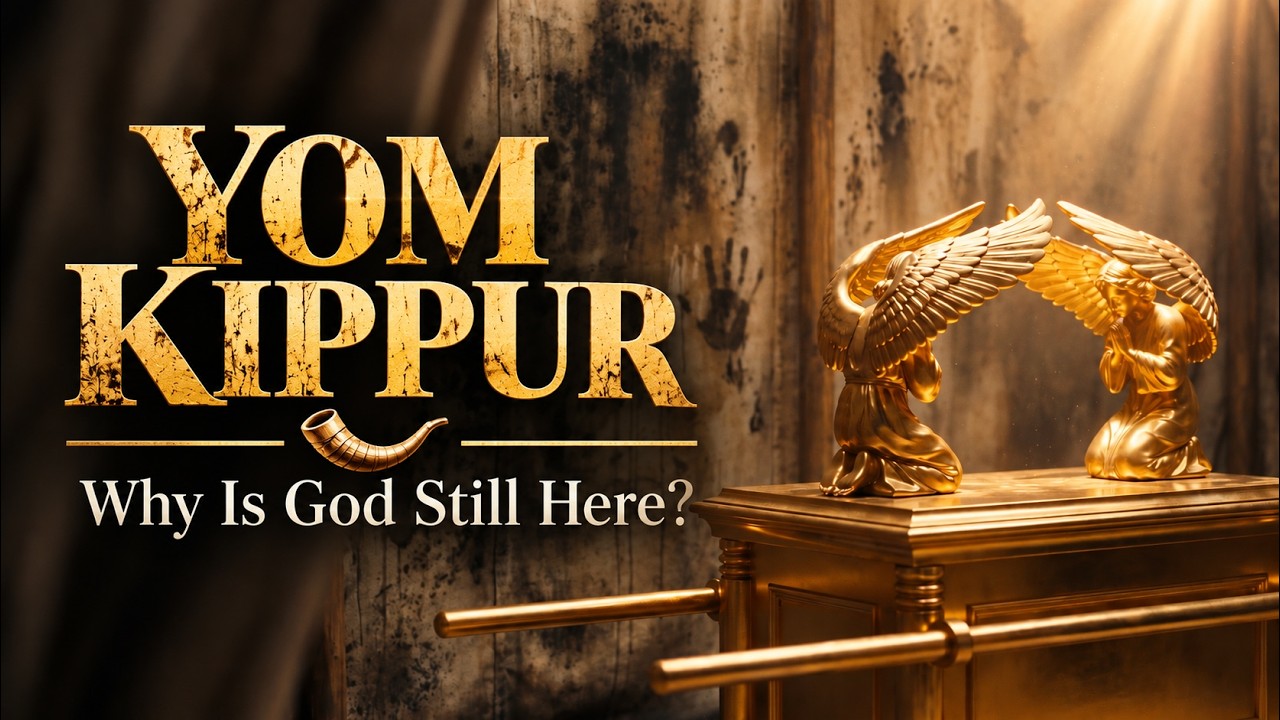
Yom Kippur Livestream - The Day We Face What We've Become
The Day the Mishnah Calls Joyous
Matthew Vander Els opened the Yom Kippur service by pointing to something in the Mishnah that sounds almost contradictory: the rabbis who compiled this document after the Temple's destruction recorded Yom Kippur as one of the two most joyous festivals on the Jewish calendar. A day of fasting. A day of afflicting the soul for twenty-four hours. And yet joyous. According to the commentary — dated between the second and fifth centuries AD but pointing back to the time of Yeshua — once the atonement rituals were complete, once the high priest had come and gone and the scapegoat had run into the wilderness, the young women of Jerusalem would go out into the vineyards in borrowed white garments and dance. The young men would come and choose brides. There was laughter, romance, a sense of new beginning.
But Vander Els was quick to note the order of events. The celebration comes after the reckoning. "If only we could just skip to the joy," he said — but the day itself won't allow that shortcut.
Two Uncomfortable Questions
Yom Kippur, he explained, forces two questions that most people spend the whole year avoiding. The first: who have you become? Not who you think you are, not who you wish you were, but who you've actually become through the choices made over the past year. He described this as a fight against self-deception — people remember their moments of generosity and conveniently forget the rest, constructing flattering versions of themselves that don't hold up to scrutiny. He offered a simple, humbling exercise: try picturing how you look through your spouse's eyes.
The second question builds on what he had taught the previous Shabbat: what contamination have you created? In the biblical worldview, he said, sin isn't merely personal failure — it's cosmic pollution that stains beyond the individual. A harsh word contaminates a relationship. Dishonesty erodes truth. Bitterness sends toxicity into the world around it. It's one thing to say "I've made mistakes." It's another to reckon with having contaminated your environment.
Stillness, and the Traditional Confession
Part of what makes this reckoning possible, he said, is the day's enforced stillness — not just a Shabbat, but a Shabbat Shabbaton, the Sabbath of Sabbaths. No work, no distraction, nothing to hide behind. He pointed to the traditional Kol Nidre confessional prayer, an extensive, alphabetically-ordered acrostic through the Hebrew alphabet listing sin after sin, asking forgiveness for each. He recalled his first exposure to it feeling excessive — until he considered what an honest year actually looks like: small betrayals of trust, words spoken about others that were never meant to be repeated, moments of selfishness, good deeds skipped because they were inconvenient. What first seemed like nitpicking, he said, turned out to be honesty.
Kafar: Covered, or Purged?
Vander Els turned to the Hebrew word behind "atonement," kafar, noting a debate over its etymology. One reading treats it as "to cover" — a stain hidden from view. The other reads it as purgation — a stain removed entirely. He argued the biblical evidence points toward purging: when the high priest sprinkled blood on the mercy seat, he wasn't concealing the people's sin but neutralizing it; when the scapegoat carried sin into the wilderness, it wasn't hidden, it was gone. This distinction matters, he said, because it shapes how believers understand forgiveness — God doesn't leave sin to fester under a cover. When God declares a person clean, they are actually clean.
That cleansing, though, requires facing sin fully first. Vague prayers asking forgiveness for "all my sins" miss the point, he said, because real confession gets specific — naming the exact pattern, the exact excuse, the exact fear that's been steering decisions. The specificity is painful, but it's the only path to real freedom.
Fulfilled in Yeshua
He then connected the whole picture to Yeshua: the high priest who entered the Holy of Holies once a year points to Yeshua entering once for all; the blood that cleansed temporarily points to blood that cleanses permanently (as Hebrews describes); the scapegoat that carried sin away and never returned points to Yeshua, who carried sin away and returned victorious. Believers don't wait 364 days for the next atonement — they can return to honesty, confession, grace, and joy whenever they've drifted. He tied this to the Hebrew word for repentance, teshuvah, meaning "to turn around, to return" — return to honesty, return to confession, return to God's grace, return to celebrating who you are in relationship with Him.
Application
Vander Els asked the congregation to spend the next twenty-four hours getting specifically honest with themselves — writing down concrete ways they missed the mark this year, not vague generalities but real, named failures. When the discomfort of reading those words hits, he said, sit with it rather than avoiding it; it's meant to prepare you for what comes after, not crush you. He urged trusting that God actually means His forgiveness — that when confession is brought to Him, atonement is complete and the contamination is truly gone. Finally, he asked the congregation to prepare to celebrate: when the fast ends, not with mere relief but with real recognition of what Yeshua's finished work represents — and to pray, over the next day, "Holy Spirit, what would you like me to know that I'm trying to forget and not acknowledge?"
Read the transcript (3,114 words)
Automated transcript, lightly edited for readability. Scripture appears as spoken; the video is the authoritative teaching.
Well, good evening everybody and I would say something like hakamea, but it's not quite a joyous time yet. Tonight we begin our Yom Kippur service. We begin Yom Kippur, the day of atonement, and it is a solemn day. It's a day of reflection. It's a day that we set apart—10 days to intentionally prepare for. It's a day that marks a very heavy atmosphere because of everything it represents, which we spoke about this past Shabbat.
But I would like to start with talking about an aspect of Yom Kippur that may surprise you. And in a very special, priceless historical Jewish document known as the Mishna—got to nerd out a little bit—written after the temple was destroyed, the priestly families got together and sought a way to record the protocols of the temple, religious life, the community life, everything that they did, everything they were in charge of. Because they could see that the Romans were destroying everything and they wanted to preserve it. And so we have this priceless document of all the ways, allegedly how things were done in the temple in the first century, and the commentaries about that, and even the arguments among different rabbis about stuff in the Bible that they disagreed with. Judaism is the only religion in the world that canonizes their arguments. I like that.
But in the Mishna, it writes that Yom Kippur was one of the two most joyous festivals in the Jewish calendar. Not the biblical ones, but they had a few extra days, and yeah, it was one of the most joyous days of the year. Yom Kippur—the day of fasting and afflicting your soul for a whole day. Joyous. Yeah.
An Unexpected Joy
So the commentary records, and this is dated somewhere between the second to fifth century AD—several hundred years after Yeshua but pointing back to the time of Yeshua—it says that after the atonement was complete, after the rituals took place, after the offerings, after they watched the high priest come in and out, after the goat ran off into the wilderness, after all of that had taken place, the young women of Jerusalem would go out into the vineyards dressed in borrowed white garments and they would dance. And the young men would come and they would choose brides. There was celebration. There was laughter. There was romance because there was a new beginning. Because when you faced the full truth about yourself and experienced genuine reconciliation with God, the only appropriate response is what? It's joy. If only we could just skip to the joy. The celebration comes after the reckoning.
And tonight begins our hard part of this process, where we stop and we look honestly at who we've become over the past year. And it's kind of one of those things that you avoid doing so much that you don't even think about how much you avoid it. And that thing is self-examination, self-reflection. We avoid it because if you're serious about it, it gets pretty painful if you've been through it before. It's a lot easier to stay busy. It's a lot easier to make sure that you always have something going on. It's hard to sit with your thoughts about yourself.
Yom Kippur doesn't let that happen though. Yom Kippur says, "Stop. Be still. Not just a Shabbat, but a Shabbat. Shabbatan. The Sabbath of Sabbaths. Whatever that means. Just the big one. Stop. You can't go out and work. You can't distract yourself. Sit and stop and be still and look honestly at who you've been this past year."
Forced Confrontation
In a traditional Jewish observance of Yom Kippur and their Kol Nidrei service, they would have a confessional prayer. It's very long, and it's an acrostic. It lists all these sins in an alphabetical order according to the Hebrew alphabet. If you do the alef all the way through, it's a very long extensive prayer that basically says, "Please forgive me for this sin, please forgive me for this sin, please forgive me for this sin." It goes down this huge exhaustive list.
And the first time I did it a long time ago, I remember this exposure well. This seems excessive. All these little nitpicking things and just lists. I didn't do all this. But then when I considered what an honest year actually looks like for most of us—the small betrayals of trust, the times that we speak about others in ways that we would never want repeated, the moments where we live out of complete selfishness, the opportunities to do good and righteous things, but they were just a little bit too inconvenient. By the end of examining yourself, we go through that long list of sins that everybody prays at a synagogue. And maybe it wasn't too excessive at all. Maybe it was just too honest.
And so, as we come into this day, Yom Kippur asks us two very, very uncomfortable questions. The first one is: Who have you become? Not who you think you are, because that's always easy to play as reality, right? Not who you wish you were, but who have you actually become through the choices that you've made over the past year? We are excellent at self-deception. We remember the times where we were generous throughout the year, but we forget about the times where we weren't. We construct very flattering versions of ourselves many times that just aren't accurate.
Has anyone ever sat down and actually tried to picture who they look like through their spouse's eyes? That's an awakening. Very humbling when you take yourself out of the picture as the main character of the movie. Yom Kippur strips that away. It looks at the actual evidence. It forces you to ask yourself these questions. Look at what you did when no one was watching. Look at what you did when you were just too tired. Look at what you did when you allowed your real character to poke through.
The Contamination We Create
The second question plays off of the message that we spoke about on Saturday, and it's: What contamination have you created? Sin is not simply a personal failure in the biblical worldview in the Scripture. It's a cosmic pollution. It stains. It stains outside of your bubble. Every harsh word contaminated the relationship and the environment around you. Every act of dishonor, dishonesty erodes truth. Every moment of bitterness sends spiritual toxicity into the world. It's one thing to say I've made mistakes. It's another thing to say that I've contaminated my world and I really need to deal with it.
In Hebrew, the word that is translated as atonement is kafar. And it has two definitions, two trains of thought. What it actually means, depending on the etymology of it, comes down to pretty much a debate between two definitions. The traditional, which is kafar, atonement, means to cover something, right? So if there's a spot on the floor, you cover it up and you can no longer see it. And the other approach is that no, it means to purge, purgation. It's not the day of atonement. It's the day of purging. It means just what it is. If there's a spot on the floor, it sucks it out. It's not there anymore. It's cleansed.
Purging, Not Covering
And the biblical evidence points to—yeah—purging. When we see that word—atonement, purging, wiping away, cleaning—when the high priest sprinkled blood on the mercy seat, he wasn't covering up the contamination of the sins of the people. He was neutralizing it. He was purging it. When the scapegoat carried the sins into the wilderness, they weren't just hidden or covered up. They were gone, banished. And the reason why I point that out is because it affects how we think about God and it affects how we think about forgiveness. Because God doesn't simply cover your sin while it continues to fester underneath. God purges it away completely. When God declares that you are clean from contamination, you're actually clean. The contamination is gone.
But biblical atonement requires facing sin fully before that can happen. That's one of those stipulations. You have to face it. If you want it gone. And boy, does that stink. And there's a reason God designed it that way—it's so we could grow. We could become more mature. And that requires doing hard things. This is why vague prayers like, "Lord, forgive me for all of my sins today in Yom Kippur," just one swipe, I mean, kind of misses the point because real confession gets specific. I betrayed myself by continuing patterns I should have stopped a long time ago. Or I chose comfort and convenience over obedience. Or I've let fear take control of all of my decisions to the point where, God, I'm just unusable. I will not. The more specific you get, the more painful it becomes. But that's the only true path to freedom.
From Confession to Celebration
The beauty of Yom Kippur is that although confession is involved and reflection is involved and facing yourself is involved, the thing about Yom Kippur is—it doesn't end with confession or self-examination. It moves through affliction to atonement to joy. After the high priest confessed the sins of Israel and sent the scapegoat into the wilderness, he sprinkled the blood on the mercy seat. And after the contamination was purged, cleansed, and guilt removed, there was that declaration: It is finished. It's done. You're clean. Not you will be clean from this contamination of sin if you just try harder. No, it's done. It's done.
And when people heard the declaration, when the high priest emerged, when the goat was no longer seen, the ancient Israelites didn't simply feel relief. Although I imagine that's one of the many feelings that they had, but they celebrated, as we all would, as we all should. They danced. It's recorded. They even started to look for marriage partners immediately. What? Because this was a day of new beginnings. What better moment than right now? Let's not get too far in the future. It's going to happen? No, let's do it right now. We know our status now. We know the graciousness of God now. We know what a new beginning looks like now. So, let's go to the vineyards. I don't know, go pick. I don't know. Think about that. These young women were dancing in white garments after they had just spent the entire day fasting, confessing, and facing their failures in life.
But because they knew they were genuinely clean, that God was good, genuinely forgiven, they could dance with pure joy. That's the scandalous grace that's behind Leviticus chapter 16. Yom Kippur—you face the full truth. All of the ways that you failed, all of the contamination that you have contributed to—and then God says, "Okay, it's dealt with. You're forgiven. Now dance. Dance."
Scandalous Grace
And then of course, as believers, this should take on a much larger, bigger, new significance for us, because everything that Yom Kippur pointed toward, Yeshua fulfilled completely. The high priest who entered the holiest of holies once a year—Jesus entered once for all. The blood that cleansed temporarily, as Hebrews speaks about, Yeshua's blood cleanses permanently. The scapegoat that carries sins away, never to return—where Yeshua carried our sins away and then came back victorious. The joy the ancient Israelites felt when declared clean, when it was done—that's available to us constantly through the work of Yeshua.
We don't observe Yom Kippur the same way because we're on the other side of the cross. The work is finished. But that doesn't mean we skip the whole honest self-reflection part. If anything, it's given us less excuse to do that. We're learning to live as a people who dwell permanently in God's presence, as we spoke about a few weeks ago. And that requires a higher level of attention.
And the difference is that we don't have to wait 364 days till the next atonement. We can return to honesty. We can have confession. We can experience grace and joy whenever we've drifted.
Get Honest With Yourself
But we're here tonight. And here's what I'm going to ask you to do for the next 24 hours. I'm going to ask you to get honest with yourself after you leave here. Really honest. Take time to write down ways you may have missed the mark this year. It's a great place to start. Oh, it's scary. Reflect. It's just you. And not the whole "I've been impatient sometimes with the kids." No, come on. How about this: "I spoke harshly to my spouse when they were just trying to help me out." Get specific. Get concrete. Don't be scared of yourself.
Second, when that happens, I encourage you: when you feel any type of discomfort as you read your own words, feel the weight. Process it. When you see yourself clearly, it should bother you a little bit, but you don't have to stay there. We were meant to move through affliction, not be crushed under it. It's meant to prepare you for what comes after.
Trust the Atonement
Third, some things—it's amazing how the followers of Yeshua will be so zealous to take hold of certain aspects of our faith, and then sometimes we'll let the biggest things just neglect. One of those things is trust. Trust. Sometimes it's hard to trust that God actually means it, right? Maybe. I mean, is he really going to forgive me? Do I really trust him to mean what he says? Yeah, that's what Jesus told you to do as well. You trust. You trust. Don't doubt. Trust. Trust the atonement completely.
If you're able to sit with yourself and write down the things of this past year that have made you who you are, and maybe things that don't need to continue, and you confess those things in a time of prayer to God, trust that God actually heard them and that atonement's complete. Trust that he's not hesitating. Yeshua's already dealt with it. Contamination's cleansed. The guilt's carried away. Trust that it's finished. You're clean. Believe it.
Dance and Celebrate
And when you get this far in this process, then the next step would be to prepare to embrace the reconciliation and celebrate. When the sun sets tomorrow night, don't just sigh with relief—I know nobody does at the end of Yom Kippur as they go out and get way too many Mexican burritos. Don't just sigh with relief. It's good. It's over. No. Celebrate everything that it represents. Yeshua's work has done and is doing and will do.
This is an echo of everything that's already taken place and is taking place and is to come. That's what the feast days are about. Yom Kippur specifically—it's a celebration. Everything that Yom Kippur is about is why we are believers. That's the reason: because we believe that God says yes. "Thank you for coming back. Yes, I'm the Father. I hug you. Yes, you're forgiven. Yes, it's not on you anymore. You walked away from it."
Celebrate because you know that you're genuinely reconciled with God when the contamination is gone and guilt is removed. That's the dancing in the vineyards that they spoke about. That's the looking for new beginnings kind of joy that took place.
The Rhythm of Return
Again, we know the ultimate Yom Kippur, the ultimate day of purgation, day of atonement—that's already happened. Yeshua made atonement once for all. But we're not yet in a fully restored creation, and we're still struggling ourselves, even though we know the ending and even though we have all the tools.
So we practice this rhythm every year with the feast days. The same cycle—every year we practice the Yom Kippur rhythm of entering, preparing ourselves, and coming out. The Hebrew word for repentance is tshuva. It means to turn around. It literally means to return, to change direction.
Return to being honest with yourself. Return to getting comfortable with confessing to God and yourself. Return to getting comfortable with the measure of God's grace that he gives to all. And return to being comfortable with celebrating who you are in relationship with God.
The Pattern
Tonight we practice that rhythm of return. Come back to the God waiting with open arms. Come back to the truth about who you are in his eyes. Come back to grace that's bigger than anything you've done, any type of failure, any type of blemish or contamination, and come back to the joy that follows genuine reconciliation when you've chosen not to carry something any longer.
Face what you've become and grieve what needs grieving, because that happens more often than you think when you begin to be honest with yourself. Trust God's love and measure of forgiveness. Trust what atonement means. And when you've done all that, get ready to dance. That's the pattern. That's how we grow. Don't keep old patterns disrupting the rhythm. Your God has never left you.
If there's static in this relationship, go spend some time with yourself and ask yourself honestly: "Holy Spirit, what would you like me to know that I'm trying to forget and not acknowledge?" That's the prayer I dare you to pray over the next 24 hours.
Closing Prayer
So please stand as we dismiss from services. Avinu Malkeinu, our Father, our King. Father, we thank you for this opportunity to have the freedom to come together and worship you, entering into this great day where we remember your forgiveness, your atonement. We remember how you even taught the ancient Israelites that there's a way that you're going to implement that's going to wipe all their sins away from your sight forever. And we know what the ultimate fulfillment of that is—that is our King, your Son Yeshua.
And I ask you, God, over the next day, as we practice this Yom Kippur rhythm, that the Holy Spirit—the Spirit you say is within us now, that has the same power, the same Spirit that raised Yeshua from the dead, that is in us now—that we would trust it to remind us of the things we don't want to remember, to remind us of the things we need to deal with. To remind us of the things we need to say: "I confess, Father, forgive me." That we would not be scared but would be strong, entering into that so that we can dance.
In the name of Yeshua, our mighty King, we pray. Amen. Guys, I pray that you have a peaceful fast over the next 24 hours if you're participating in that. And I hope you're dancing tomorrow evening. We'll see. We'll see you at Secope.