Yom Kippur
Yom Kippur – The Day of Atonement 2022
The Biblical Basis of Yom Teruah
Read the transcript (7,104 words)
Automated transcript, lightly edited for readability. Scripture appears as spoken; the video is the authoritative teaching.
Good evening. Welcome to Founded in Truth, to our Yom Kippur observance. I invite you to stand with us as we reverence our King, as we worship our King, as we declare His goodness and His faithfulness, and we remember His atoning sacrifice that set us free. Amen.
There Is a King Seated Among Us
So feel free to worship. There is a king seated among us. Let every heart receive him. Where there is praise, he will inhabit. There will be grace and mercy all around. And every burden will be lifted in his presence. Every trophy will be laid down at His feet. There reigns above Yeshua, the King above kings. Unto the Lamb, honor and glory. Worthy is He who overcame. Buried in shame, risen in power. He is alive. The stone is rolled. All our worship will belong. Death is conquered and our Savior holds the key. It reigns above all of the kingdom. We worship you. We lift you high. It won't be long. We will behold him.
And every tear. The war will be over. Soon we will meet our Savior face to face. And every man will be lifted in his breath. Every trophy will be laid down at his feet. There is a name that reigns above Yeshua, the King above all. And all our worship will belong to Him. For all eternity. Yours is the name above all others. Yeshua, the King of all kings. Thank you, Yeshua. Those forgiven much did not forget your touch, cannot withhold your praise. For there is no other seated at the Father's right hand. Yours, God, with the proof of what you chose to lose. So grace was mine to gain.
Holy is the Lamb
Jesus, Jesus, Jesus. Come with eyes of blazing. On your thigh, the name of a name, interceding Son of Christ, the risen one who's slain and worthy Lamb. He rides to end the battle in eternity already won. Praise and put down the victory, the sound. Heaven on earth, the same King Jesus. Worship King Jesus. We love and King Jesus. Oh, we praise you Lord. Oh, let our praise arise. Praise and glory to the Lamb. Oh, let it rise tonight. Oh, we praise you Lord. We praise you Lord. We sing, let it rise. Praise and glory to the Lamb. Let it rise, praise again, glory to the Lamb. Let it rise, praise, ascend, glory to the Lamb.
Let it rise, praise again, glory to the Lamb. Let it rise, let it rise, praise, ascend, glory to the Lamb. Let it rise. Praise the Lamb. Glory to the Lamb. Let it rise. Praise the Lamb. Glory to the Lamb. Let it rise. Praise again. Glory to the Lamb. Holy is the Lamb. Holy is the Lord. Worthy. Let's sing worthy. Sing worthy. Sing worthy. Sing holy is the Lord. Hallelujah. Sing worthy. Sing holy, holy. Sing holy. Oh, you are worthy, worthy. Sing worthy and worthy. Hallelujah. Sing holy, holy, holy. Sing holy. Oh, and we sing holy in the Lord. Worthy, worthy. Oh, we sing worthy, worthy, worthy is the Lord.
And we sing worthy in the Lord. Yeshua, King. Is you? Oh, we sing. Oh, we praise you. Worthy is the Lord. Worthy are you, Lord. Hallelujah, love you. Hallelujah. Hallelujah. Hallelujah. Sing that bridge one more time. Sing. Oh. Oh. Oh, we sing a word. Hallelujah. You're so holy. Sing holy. Yes. Holy. Hallelujah. One more time. Oh, and worthy, worthy is the Lord. Oh, and worthy, worthy is the Lord. And worthy is the King Yeshua, King Yeshua, King Yeshua. We worship you. We worship you, Father. We praise you. Thank you. There is none like you in all the earth. You and you alone are worthy. You and you alone are holy. And we worship you, Father.
Lord of All, I Bow Down
Lord of all, I bow down at your feet. To you, Lord, I give of me. My soul longs to behold where there is torn. Oh, Lord, we lift our voice and sing. To you, our King, worthy, Lord, our worthy. We lift our voice and sing. To you, our King. Lord of all, I bow at your feet. To you, Lord, I give up my soul. I long to behold the world is torn. With our voices aloud, we've come to sing it out. Nobody like you. Nobody like you. With our voices aloud, we've come to sing it out. Nobody like you. With our voices aloud, we've come to sing it out. Nobody like you.
Holy is the Lord of Glory
Holy is the Lord of glory. Lift our voice and sing. To you our King. You alone are worthy. To you our King. Is the Lord of glory. Lift our voice and sing. You alone are worthy. Lift our voice and sing to you our King. We delight in you. Would you glory fall in this place? The glory of the Lord is filling this place. The glory of the Lord is filling this place. Have your way, have your way. And the glory of the Lord is filled in this place. And the glory of the Lord is filling this place. And the glory of the Lord is filling this place.
Exalted in the Highest
Exalted in the highest. The Lord in worship is free. Exalt the Lord, our worship is free. For he is holy. For the Lord is holy. He is holy. Exalt the Lord in worship at His feet. Exalt the Lord our God in worship at His feet. He is mighty, for He is mighty. Our God, he is. He is. He is holy. He is holy. Yes, the Lord. He is holy. He is holy. Yes, the Lord. He is worthy. Oh, he is worthy. Oh, yes, the Lord. He is my. For the Lord. He is holy. He's holy, holy, holy. Oh, yes, Lord. Oh, how He is worthy. Worthy, worthy is the Lamb. Worthy, worthy is the Lamb. Oh, God. Oh, He is mighty, mighty, mighty. Powerful. You're powerful. Oh, yes, Lord. Oh, how God is worthy. Worthy, worthy. Oh, yes, Lord. Oh, yes, Lord. Holy, you are holy, you'll be. You'll be holy, holy. Who was and is and is holy, holy. You are holy, you'll be holy. You are day and night and day. No wonder the angels adore you. No wonder creation bows before you. No wonder the angels cry holy. Day and night, night and day, day and night. Holy you are. Holy. Holy you are. Holy you'll be. Holy you are. Holy. Holy you'll be.
Holy, Holy, Holy is the Lord
Oh, Abba, we thank you. We stand in awe of your holiness. We stand in awe of your mercy. Your great love for us. Your atoning sacrifice for us, Yeshua. That we can freely and boldly approach your throne of grace. We worship you. You're holy, holy, holy. Holy you are, holy you'll be. This is what eternity is going to sound like. Holy, holy, holy is the Lord God Almighty. Who was and is and is to come. Holy, holy, holy is the Lord God Almighty and is and is to come with all the saints and the angels. Holy, holy, holy is the Lord God Almighty and is and is to come. Oh, thank you, Father. Thank you for a glimpse into the heavenlies.
We praise you, Abba. We worship you and we thank you, Father. Our hearts are full of gratitude. Father, I just ask that you would continue to have your way, that you would continue to speak to our hearts, continue to draw us to yourself in this time of turning and repentance and coming before you, Father, laying our souls bare before you. I thank you that we come as those with great hope because of Yeshua. So we worship you, Father. We praise you, Lord. We give you all glory, all honor. You and you alone are worthy. And we bless your name this evening. And we praise in Yeshua's name for the glory of the Father.
Amen. You may be seated.
What This Day Is Really About
What a way to usher in this evening. So, I suppose, Shabbat Shalom. Tonight we enter into a time of the year in the Bible that was known as the day of atonement, the day of purification, or purging. It was a sacred day. It was the day when God showed his character by speaking about a ritual that symbolically cleansed all of the trash and the wickedness and the muck that we would cause on his creation. It would expel it from before his eyes, purifying the dwelling place that he had as well as us. And we could do some liturgy tonight. We could do some really cool religious stuff. Lots of prayer, which we're about to pray. But we got 24 hours. You guys have plenty of time to do some liturgy tomorrow, to reflect, to read some scripture. We're going to focus on what this day is really about—not only in the Old Testament and in the story of the Old Testament, but what it looked forward to and what we now know has happened through the Christ, through the Messiah, Yeshua.
Traditional Practices for Yom Kippur
So some things you can do tomorrow. I know that many of us have done this year after year. Typically, we deny ourselves. We fast. Make the day serious by refraining from food, if you will, to reflect on the gravity of sin and on the mercy of God. Another traditional thing to do is read the book of Jonah. Everyone's like, "Oh, the book of Jonah? A whole book of the Bible?" It is 48 verses. The book of Jonah is super small. It's designed to teach a lesson, and it's very entertaining if you read through it. Lots of explosive action. Everything's big. Big city, big boat, big sea, big fish. Everything's big.
Very driving points home. But it's about a man who feels like judgment should come to people that deserve it while wishing mercy on himself, and how backwards of an attitude that ends up being compared to God's character at the very end. And so if you decide to partake in reading Jonah tomorrow, it's a super fast read. When you get to the very last verse, God's going to ask a question to Jonah, and that's where the book ends. We never hear what Jonah's answer is because at that moment in the story, it's no longer about Jonah. It's about the reader. And that question is asked to you, and it's for you to answer.
So it's a very compelling, very convicting way to participate in memorializing Yom Kippur. Join me in prayer. Our Father, our King, we thank you for your graciousness, your character, your mercies. We thank you for your holiness that you invite us into, your forgiveness and your promises of a new spirit and a new heart that we know only come through our King, your Son, Yeshua. Father, I ask as we enter into memorializing and honoring this ancient day, that conviction would come, that areas of our life that we don't like to acknowledge but are so destructive would come to the surface, and you would cause us to make a decision not to ignore it anymore, but to drop it before we enter into such appropriate time for that.
Allow us to remember our mission and who we are in you, and allow us to remember who we're called to be. In Yeshua's name we pray. Amen.
Who Loves Leviticus? So who loves Leviticus? So some of you I know are serious. Some of you I know are lying. Yom Kippur, holy day. None of that, right? Leviticus, that's right. Your favorite human. Leviticus is a very bloody book, but it gives us a glimpse into the cult of ancient Israel and how they viewed interaction with God and how God revealed interaction with him through lots of dead animals and blood and guts and barbecues.
The Concept of Sin
And one of the concepts in Leviticus that I most appreciate is the concept of sin and transgressions and iniquities. Because when we think about sin, sometimes we think about, okay, that's bad behavior, and we shouldn't do that. You did something bad, and that's pretty good. Sometimes we think about offense. Okay, you did something, yes, offense. Pretty good. Maybe it's crossing a line of some sort that you now have to make a payment for, right? So you've done something and now you have to pay for it. You owe, maybe. And Leviticus really gives the portrayal of sin in a fantastic metaphor. And that's just trash. Trash.
Trash in the Trash Can
Now the thing about trash is we all have a lot of trash, right? Every day at trash day, you got the trucks that come. Some of you live in the county. You just take it all to the dump. You get a big pickup truck. In the city, we pay a little $5 a month and a big truck comes every Tuesday or Wednesday. And we don't put the little trash cans out, do we? How many of you guys have the big trash can that takes two hands to wheel down? Now, how many of you fill this thing up every single week? I pulled my trash can down yesterday along with my big recycling bin because we like to feel all crunchy, whatever.
And I felt disgusted because every week the lid doesn't close. We've got lots of trash. But it's appropriate for trash to be in the trash bin, right? Why? So it can be taken away. It's not appropriate for trash to be all over the floor in your kitchen or all over the floor in your kid's room or all down your driveway, right? Not appropriate, right? It's messy, it's unsightly, it's trash. It belongs in the trash can so it can be taken care of and removed. And that's how Leviticus portrays sin.
Leviticus, chapters 1 through 15, portrays sin as a type of force that we allow to break loose from the corruption of our hearts, from our pride and our arrogance and our lust. And the concept was that the trash we produced with our sin and transgression and iniquities was magnetically attracted to the house of God, the tabernacle. And it filled God's presence or the place of God's presence. Our trash didn't stay in our house, it went to God's house. And that's why when you see in Leviticus, if you ever unintentionally sinned, you had a whoopsie, you would take a goat or a bull. And you would take it and they would kill it.
And the blood would be spilled. And then the blood would be intentionally manipulated where? They would put it on the altar as a type of cleansing rite, purgation, atonement. That's what the word means, to purify. Symbolically showing the weight of your sin, but that it doesn't just affect you. It affects the entire community. And in their eyes, it made the place where God was trying to dwell, which is with you, an issue. And so it was very serious. You never wanted that to get too big,
When Sin Overflows
You never wanted the trash can to overflow or else you have what happened in Ezekiel's vision when the sins of Israel were mounted so high and God kind of left the temple and looked around and no one saw him. So he walked through the court and no one saw him. And he finally went to the Mount of Olives and no one even noticed because he couldn't dwell there anymore. He was pushed away because of the sins of his people. That's the gravity of sin, how it's symbolically portrayed, if you will, in Leviticus. It's weighty when you kind of catch the concepts. Stains God's house and pollutes it. And again, unintentional sin. Sin is just a bloody mess in Leviticus.
Yom Kippur: The Day of Atonement
And so we come to the middle of Leviticus, and it is the entire chapter that is devoted to the rites and rituals of how ancient Israel performed or celebrated Yom Kippur, the Day of Atonement. Right in the middle. It's a big deal. It's a culmination of the symbolic right to clean out all of the trash that Israel had accumulated. Yom Kippur is about cleansing us, but it's about cleansing God's house. So I invite you to read through all the details, Leviticus 16, maybe tomorrow, and you'll notice that. That's why it says it atones, it purges the holy place. It purges the most holy place, as well as us.
And Yom Kippur is about cleansing. Not the trash that is unintentional, the whoopsies. Man, I'm so sorry. I didn't mean to do that. I acknowledge that. It's about the trash that actually makes it into the tabernacle. It's about the trash that is so weighty, so wicked, again, symbolically powerful, that it penetrates the first veil. It penetrates the holy place. It penetrates the second veil. And it finds itself splattered on the throne of God itself. The intentional transgressions. That sounds like a big word, right? We don't do any of that. The secret sins that we develop and we love to nurture in our hearts.
The sins that we know are destructive either to our health or financially to other people, our minds. The sins that we are very intentional, almost skillful at harboring. This is what Yom Kippur deals with in its symbolic rituals, cleansing the very mercy seat of God. It's the epitome of everything that opposes good that we force onto the world, the things that push away the presence of God. And so that's the point of Yom Kippur. And I'd love to, without getting too nerdy, which is difficult, I want to walk through what took place and what this big day really showed forth. And spoiler alert, it shows forth that God will not allow anything to stand in his way.
He will always make a way no matter how bad, how ugly, how weighty, how awful, how death-producing wickedness we reveal and pour out. He makes a way to wipe it away from his sight.
The High Priest's Preparation
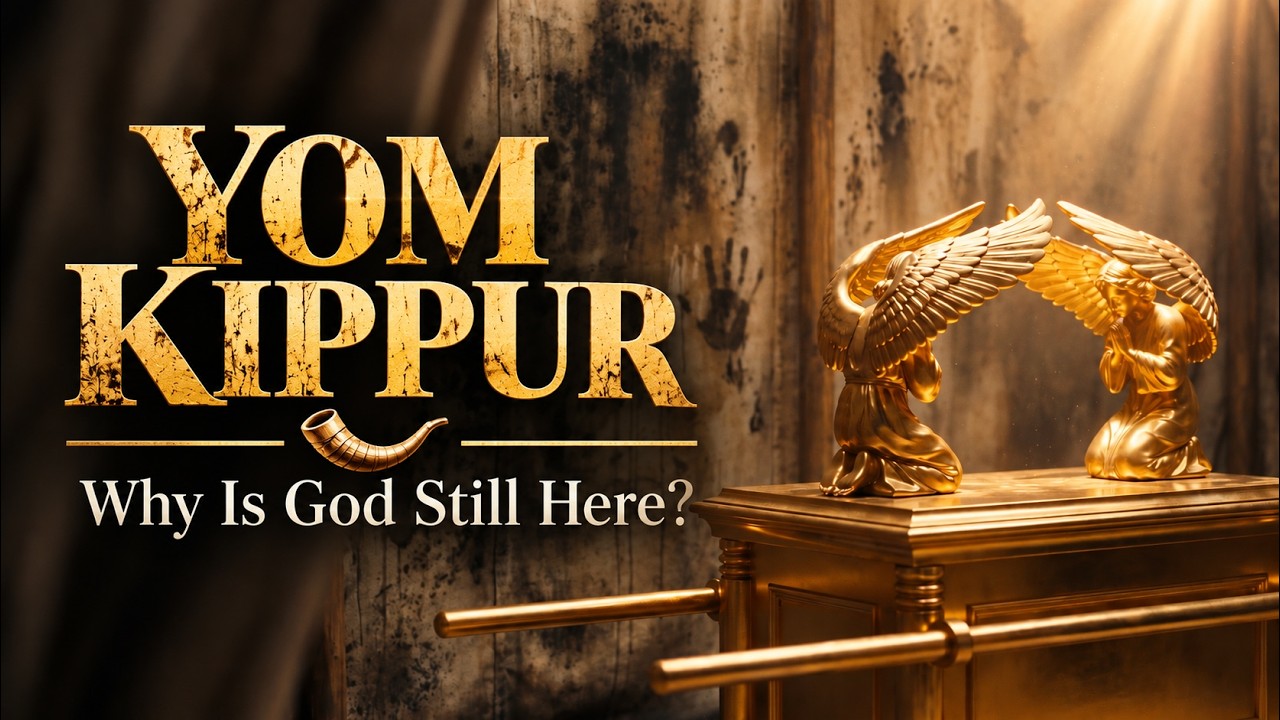
And so Yom Kippur begins. This is the one day of the year where the high priest gets to walk into the holiest of holies, the central most sanctum in the tabernacle, the place where the Ark of the Covenant was, the place where no one else could go. This one day he gets to do it. The high priest normally is decked out in this beautiful attire, robes and bells that jingle, jingle all the time. And he has a crown that he wore. He looks like a king. He looks like a king. A king unto Yahweh is what it says on his crown. And on his chest is a breastplate that has 12 stones that represent Israel. So he's this mediator that is representing Israel to God and God to them.
And he looks like a king. But on this day, he takes his crown off. And he takes all the jewels off. And he puts on a simple white linen tunic, humbling himself. And he gets a bull. And he gets two goats that look alike. And he gambles. Right? He casts dice. And the fate of each goat depends on where the dice land. One goat is going to be killed while the other one is going to stay alive. And he takes some coals from the altar outside and he takes them in with some incense and he lays it in the holiest of holies and he puts the incense on the coals to produce a plume of smoke to shield himself from the glory of God's presence that would kill him.
Right? That's the idea. Yeah. But then he would take the blood of the bull and the blood of the goat, and he would enter into this place beyond the veil. And there would sit the mercy seat of God, right? The ark, the throne of God where mercy comes forth. And he would take his finger and take the blood, and he would sprinkle it seven times on the mercy seat of God. And blood acts as a type of agent or symbolically a connection of purging, right? It does something where it pulls trash out. So he sprinkles it seven times and he walks backwards to the next place, the holy place, Tent of Meeting. And he sprinkles it seven times in there as well.
In verse 19 it says, and this is how he atoned for the holy place. He's cleaning, he's cleaning, he's pushing outward. And then he goes out into the courts. There's the big altar, brazen altar outside. And he takes the blood and he sprinkles it seven times. Seven. Where do we get seven? What does seven remind us of in the Bible? It's the holy number, I know. But where do we see it first? In the beginning. In the beginning, creation story. The story where God said, I want my dwelling place to be with man, so I'm going to make it. That's the point of Genesis 1. God wanted to do everything he could to formulate and create a place that he could dwell with man and they could dwell together.
That's the whole pursuit of what the tabernacle is. Seven times takes us back. And the temple always faced eastward. The door to the tabernacle would face eastward. And that's the same direction that Adam and Eve were exiled out of the garden, right? The midst of the garden, Eden, and then the world. And because of their transgressions and their sin, they had to leave the presence of God and walk out.
The Symbolic Reversal
And here in Yom Kippur, we get a glimpse of God cleansing Eden to dwell with us again. And we have the high priest pulling out the trash and the sin going outward. Instead of mankind being exiled away from God's presence because of sin, sin is being exiled away from God's presence and man remains. It's a symbolic reversal. And then the high priest turns and there's a goat that's still alive. And he takes his blood-soaked hands from sprinkling all the blood and he places them on the head of the goat. And some type of symbolic transfer takes place. He confesses the sins and transgressions, the wickedness, the trash of Israel onto this living goat.
It's as if somehow this mediator between people and God took the trash—the sins from God's presence—upon himself and carried them to the goat and laid it on the goat. And the goat was dispatched and sent away from the presence of God and the people outside the camp. And it says he's sent to the land of the cutoff. That's how it reads in Hebrew. The cutoff place away from God and man. It's gone. The sins, the trash of the people of Israel have been taken away. And it's a beautiful, beautiful account of the goodness of God. I love that.
The Problem with Our Hearts
But we have a problem. And the problem is with our hearts. With our hearts. Because they emptied the trash can, symbolically, but what happened the next year? What got full again? The trash can's full again. Why did the trash can get full again? And the year after that, and the year after that, and the year after that. The problem the prophets speak about is with our hearts. That we, through our own vain pursuits and arrogance and our pride and self-seeking agendas, our hearts, somehow, we're just in the business of trashing God's house, the place where he wants to dwell. We're in the business of tearing apart God's good creation. That's the story of the Bible. And there's always a cost. There's always a cost. And although the ceremony cleanses the sins away from the presence of God, it was never an actual solution to the problem of sin and wickedness that we like to produce. But it was always a pointer to something that would come. It was always a pointer to Eden being reestablished where God and man walked together, where there was nothing that would separate them.
A Shadow of Good Things
And as believers in Yeshua, surprise, we know how that came about, through his blood. Hebrews chapter 10, the author of Hebrews overlays the gospel of Yeshua on the Yom Kippur service in chapters 9 and 10 specifically. But here's what Hebrews chapter 10, verse 1 says: the law is only a shadow of good things that are coming. It was a pointer. Otherwise, would they not have stopped being offered? Would the trash can not be emptied and the problem not be solved? We wouldn't need to do this again. For the worshipers would have been cleansed once and for all and would no longer have felt the guilt and the weight of their sins. But those sacrifices are an annual reminder of sins, for it is impossible for the blood of bulls and goats— the animals used in Yom Kippur—to take away sins. Yom Kippur became an increasing reminder that there is a problem and that we can't just keep taking care of the effects of it.
The New and Living Way
And Hebrews goes on. The man who hooked the leash to the goat that carried all the trash had to wash himself when he returned after sending the goat away. Somehow the pollution was there. And Hebrews draws from this aspect: "By a new and living way opened for us through the curtain that is his body. And since we have a great high priest over the house of God, let us draw near to God into his presence." Let us come back to Eden. Let us come back to the intimacy of walking with God with a sincere heart and with full assurance that faith brings. Having our hearts sprinkled to atone, to cleanse us from the guilty conscience and having our bodies washed with pure water.
The author here seems convinced that Jesus has done something about the source, something about the heart. Ezekiel speaks about one day God's going to come and he's going to take the hearts of stone that reside in us, the hearts that don't beat with life—they just don't. He's going to take that heart out and give us a heart of beating flesh. And not only that, he's going to put his spirit within our heart so that we can be revitalized as the fully human beings we were created to be, to act out as his images in the world.
The Power to Change
And I believe Yeshua has done that. I believe he's given us the power to do that. The power to stop, the power to put things down and say, I don't want that anymore. The power to say and understand, "I want the presence of God closer to me," but I have a choice to make because I can shove him away. God's side of the field is, "Hey, I'm doing everything. Nothing is too great for me to push out of the way." But if we're pushing it, it's a choice on our side. But God's solution is always greater than our problems. And that's what Yeshua does. Yeshua is the offering that does not just fix the effects of sin, but fixes the source.
The Promise of Cleansing
And at the very end of Leviticus 16, there's a promise. And it's found in verse 30. And it says: "It's this promise that's coming forth. Not only is the tabernacle going to be cleansed, not only is the trash going to be picked up, but even you will be cleansed somehow from all your sins before the Lord." And we see that fulfillment in and through Yeshua. That's the promise. God's always there. He's always willing, always ready to forgive, to pour mercies out, to demonstrate his grace if we are willing. And so today on Yom Kippur, we memorialize this ancient day that's a testimony of God's character that we've seen and claim to see fulfilled. And we meditate on God's willingness to forgive us. If we are willing to repent and turn, if we're willing to say that about the one that I nurture here, "I do have the power and assurance and the faith that's been given to me by my king to not be held captive by it anymore. It doesn't have to go with me anymore. It can stay right here."
The Temple Within Us
We leave the things that trash the place of the presence of God, which is allegedly among us as the temple, right? I love the metaphor of trash laying around. Jeez, if we are the temple, if we are the temple, the place that God's spirit now resides, almost makes you wish you're still back in the old days. At least it's over there in Jerusalem. No! What a greater realization of my sin now. We sometimes feel like the trash we create. And this is how, you know, we all have experience with that, right? Secret sins. If no one else sees them, then surely God doesn't see them. Does anyone else believe that lie before?
Right? So that's how we get into complacency and we entertain sins—and not only that, but wickedness, prejudice towards others, arrogance, pride, and bitterness. And we get comfortable with it because as long as no one else sees it and we convince ourselves that God doesn't see it, then we don't even feel guilty about it anymore, right? Why is it so quiet? I mean, there's no... We don't even feel guilty. It's just part of who we are. And we've allowed it to take residence in our hearts.
Splashed Up on His Throne
And if any place in the Old Testament reveals that's a lie, it's Yom Kippur, it's Leviticus 16. God not only sees it, it's splashed up on his throne. It's all over the place where he yearns to dwell, and that is with you. But we have a way to clean it up once and for all. Just like the blood of the goat gathered all the trash up, just like that high priest, the mediator of Israel, carried it out symbolically, just like that other goat—he thought he had something good, at least I'm alive, right?—the priest confesses the sins on the goat. And the goat is exiled. Our sins are exiled away from the presence of God, the reversal of Eden. We have that through the blood of Yeshua. And I'm talking to the choir because each and every one of you knows that already. We know that. We know that. I don't have to do this super big message for you to know that. Praise God for that. That's why Yom Kippur is a celebration of the character of God.
The Intentional Structure
Now, nerdy moment. The way the book of Leviticus is laid out and structured is very intentional. So here you have a whole chapter, the peak of Israel, the peak of Leviticus— Leviticus 16, right in the middle, showing forth the character of God and grace and mercy. There's a way that Israel can be forgiven, cleansed, and the tabernacle can be cleansed. No trace is found before the eyes of God. And it ends with the promise: "The priest shall make atonement for you, cleanse you, and you may be cleansed of all your sins." Yes, hallelujah, Israel. This is wonderful. Chapter 17, right at the beginning, Israel's not doing what they're supposed to be doing, utilizing the blood to benefit them in the tabernacle. No, they're out manipulating it out on their own and they're worshiping goat demons.
The Goat Demons and God's Mercy
It's like the story peaks and then it doesn't just curve—it's the illustration of the mercies of God and forgiveness: "I have a way, and this is who I am." And then ironically, they're worshiping goat demons in the wilderness. Goat demons.
Sometimes we love to cheer on God's forgiveness. Sometimes we love to stand in awe of his mercies. Sometimes we love to just raise our hands and proclaim his grace. And then we love to sneak out and try to go be with that goat. We love to try to catch up with that goat that was sent out of the city because we love what it carries. Israel proclaimed the goodness of God in Leviticus 16, and the very next chapter, they're running after what that goat's carrying. Because in their hearts, they like it. They like the trash. It feels good. And I know this was really cheesy, but I had to do it. I wanted the illustration because I feel like it's true to the story.
Yom Kippur: A Day to Leave Behind
Guys, we're about to enter into a day: Yom Kippur. And we can reflect on our sins and our transgressions. We can reflect on the mercies of God, where we're at with God any day of the year. But there's something about today that just seems appropriate. It seems appropriate. And so the worship team is going to come up here and they're going to lead us in a few songs. And I guess the one thing I want to tell you is you can leave something here tonight before you enter into this day. You don't have to take it with you. What an appropriate place and time to leave it and say, you know what? I reflect on the mercies of God.
I know what Yeshua has done and I'm tired of chasing the goat and everything that it's carrying away. And so I invite you to stand and spend this time meditating and reflecting on where are you with God on this day of atonement? Where do you find yourself? Maybe you find yourself intimately close to the Father. Maybe you find yourself just a little bit too far away from where you'd like to be. If there's anything that's learned here in Leviticus of all places, it's that God's not going to do anything to push you away. He's doing everything to get you close. Get the trash out now. Today, tonight, get the trash out.
And as we have a prayer team, I need this out of the room. If you need prayer, if you want to talk to somebody, highly confidential, you can talk to them. You can have someone pray over you today. Maybe you can reflect in your seat. That's fine. Search your hearts. Today of all days, search your hearts. Or maybe you just need to step out and get away from everyone else and come down and symbolically place something on the altar to leave here tonight, ironically. All these things are acceptable. But the one thing I want to impress on you is search and evaluate what type of trash you have and whether you're going to allow God to take care of it or not.
Prayer for Purging and Atonement
We thank you, Father, for this day of purging, atonement, cleansing—a reminder of the work of your son, a reminder of forgiveness, a reminder of mercy. Father God, the scriptures tell us that the same spirit that raised Yeshua to life dwells in us right now. The same spirit—life-giving spirit, devil-defeating spirit, powerful and authoritative spirit of your kingdom—dwells in us. Father, I ask in the name of Yeshua that that spirit would go to work, make changes, and allow us to open our hearts to it so that we can draw near to the place where you want to dwell, and that's with us. We thank you, Father, for this opportunity to reflect on your mercies and grace revealed in Yeshua. In his name we pray, amen.
Worship and Blessing
If the altar's where you meet us, take me there, take me there. What you need is just an offering. It's right here, my life is here. And I'll be a living sacrifice for you. You'll find the refiner. I want to be consumed. I want to be tried by fire. Purified, take whatever you desire. Lord, here's my life. I want to be tried by fire. Purified, take whatever you desire. Lord, here's my life. Your glory wants to come. Let it fall. We want it all. Fill this place. Set it ablaze. And I'll be a light for you. You're a fire, a refiner. I want to be consumed. I want to be tried by fire. Purify. Take whatever you desire.
Here's my life. Purify my heart. I want to burn for you, be for you. Take my life as a sacrifice. I want to burn for you. Clean my hands. Purify my heart. I want to burn for you. Only for you. Take my life as a sacrifice. I want to burn for you. Holy for you. Clean my hands. Purify. I want to burn for you. Take my life as a sacrifice. I want to burn for you. Holy. Purify my heart for you. Take my life as a sacrifice. I want to burn for you. Only for you. I want to be consumed by fire. I want to be consumed. You're fire. I want to be confident. I want to be tried by fire. Take whatever you desire, Lord, here's my life.
I want to be tried. Purified. Take whatever you desire, Lord, here's my life. Burn me beautiful, burn me lovely, burn me righteous, burn me holy. Burn me beautiful, burn me lovely, burn me righteous, burn me holy. Burn me. Burn me beautiful, burn me lovely, burn me righteous. Burn me righteous. Burn me holy. Burn me beautiful. Burn me lovely. Burn me righteous. Burn me holy. I want to be a refiner. I want to be consumed. You're a refiner. Purified, take whatever you desire. I'm returning to the secret place. Just an altar and a flame. Love is found here in our sacred space. I hear your voice. I see your face.
You're still my first love. You're still my one. You're still my first love. You're still my own. There's a table just for you and me. Break the bread and wine. Perfect union. Nothing in between. I am yours and you are mine. You're still my first love. You're still the only one. You're still my first love. You're still the only one. Sing it to him. You're still my first love. You're still only you. You're still my first love. You're still. I feel my heart out of my chest, aching for it. And I, my chest, made of fire always for it. You're still my first love. You're still. You're still my first love.
You're still. I feel my heart out of my chest. Would you burn me beautiful? Burn me love. Burn me righteous. Burn me holy. Burn me beautiful. Burn me lovely. Burn me righteous. You're still my first love. You're still my own. You're still my first love. You're still the only one. You're my own. Would you burn us, brand us with your love? Brand us with your love, my beloved is mine. Oh would you burn me beautiful? Would you burn me love? Would you burn me righteous? Oh holy. Burn me beautiful. Burn me lovely. Burn me righteous. Burn me holy. Oh, Father, do you hear the cries of the next generation? Thank you, Father.
Thank you, Father. You're still my first. You're still. You're still my first. You're still my all. Thank you, Father. Thank you that you hear the cries of your people. Abba, may this praise lay down on the altar before you, be a sweet-smelling incense before your nostrils. I thank you, Father, that you are calling us back, and that your grace, your mercy, your faithfulness are sufficient. We thank you, Abba. Thank you for this dedication. We worship you, Abba. Thank you for the work that you have done in hearts and minds and lives, and the work that you will continue to do as we move into the fullness of this day.
I pray your power would fall on each and every person, that your spirit would invade the private spaces of each and every person, that homes would be transformed, that your glory would reign and fall, and that we would begin to move in the fullness of who you have created us to be—that we would embrace the authority and the power of the resurrected Christ that lives in us through the power of the Holy Spirit. And I thank you, Father, that you have activated that in each one of us. So we bless you, we praise you, we thank you for the transformative work that this day brings. We thank you, Yeshua, that your ultimate sacrifice renders us free to move in the fullness of who you designed us to be. So we bless you, we honor you, we worship you and you alone.
All glory and power and honor belong to you. And we ask all these things, we dedicate all these things in the mighty name of Yeshua. Amen.
It's probably fitting that we sing the Shema. Anyway, we got it from memory. Let's go. Hear, O Israel. The Lord our God, the Lord is one. Blessed is the name of his glorious kingdom for all eternity. Shabbat Shalom. Shalom. We pray this message has blessed and encouraged you and your relationship with God. And we hope that it has made the Bible more beautiful and more powerful in its impact in your life. Founded in Truth Fellowship exists to build a community that bears the image of God and lives the redeemed life only Yeshua gives. If this message has blessed you, or if you see God working in and through this ministry, we invite you to prayerfully consider partnering with us so that the message of Yeshua and the truth of God's word continues to reach all nations.
Supporting the Mission
If you would like to take part in this mission, then you can do so at foundedintruth.com slash give, or you can scan the QR code on the screen. These offerings go toward providing resources for both our local fellowship as well as our online ministry, but also our many outreach ministries, including our foster care and adoption ministry, local charity outreach ministry, our international online children's ministry, and any future ministries that the Lord would allow us to walk through and walk in to impact the world around us with his love and blessings—the bold proclamation of the gospel of King Yeshua. We thank you for your continued support and we look forward to seeing you next time. Shalom.