Here’s the truth: leading a Bible study doesn’t require a seminary degree. It requires preparation, humility, and a genuine love for God’s Word and for the people in front of you. This guide will show you exactly how to do it well.
The Leader’s Mindset: Facilitator, Not Expert
The biggest mistake new Bible study leaders make is thinking they need to be the expert who has all the answers. You don’t. Your role is to be a facilitator — someone who guides the group into the text and creates space for the Holy Spirit to teach.
Your job is to:
- Prepare thoughtful questions that lead people into the passage
- Keep the discussion focused on Scripture (not just opinions)
- Create an environment where everyone feels safe to share
- Point the group toward application and action
It’s okay to say “I don’t know — let me look into that and get back to you.” Honesty builds more trust than bluffing.

How to Prepare for a Bible Study Session
1. Study the Passage Yourself First
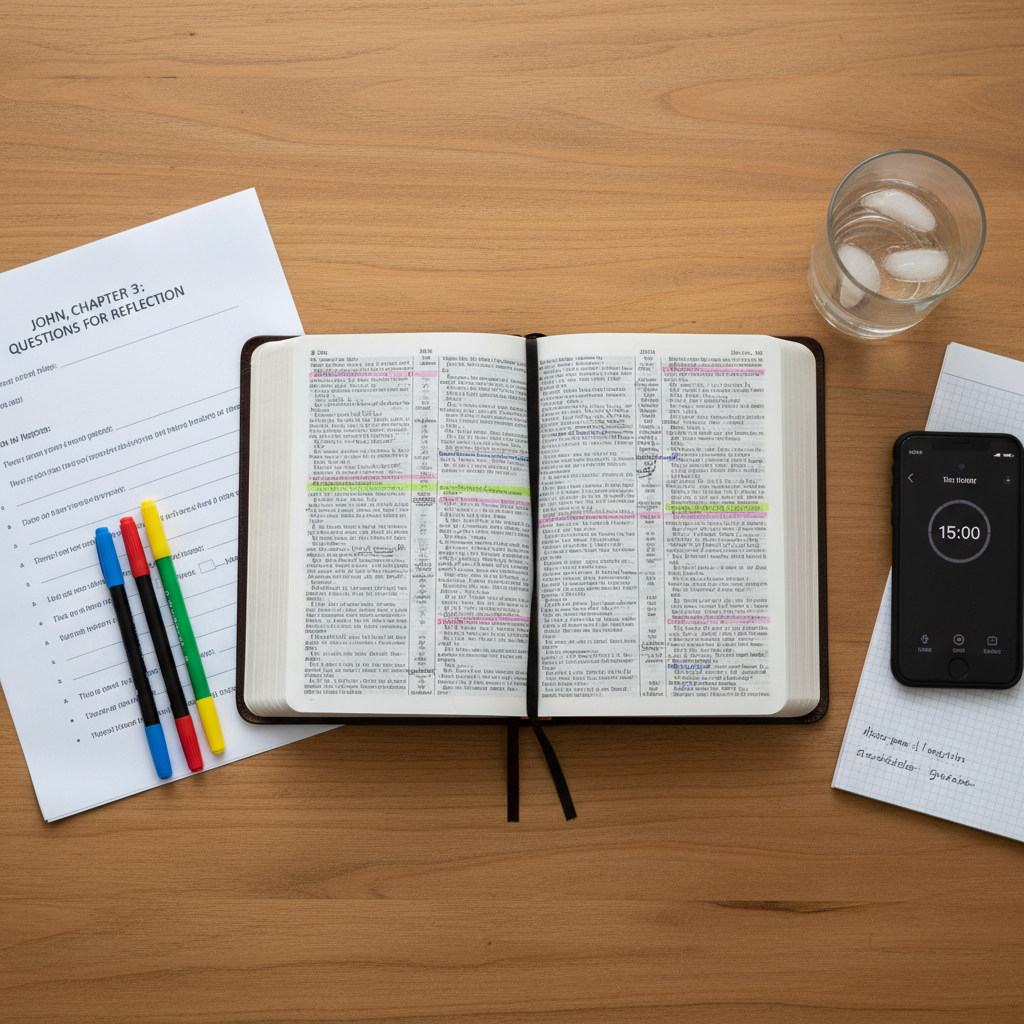
Before you prepare for the group, study the passage personally. Read it multiple times. Use the SOAP method or inductive study approach. Let God speak to you first — your personal engagement with the text will come through when you teach.
2. Understand the Context
Read the surrounding chapters. Know who wrote the book, who the audience was, and what the historical situation was. A study Bible or Bible dictionary makes this quick.
3. Prepare 5-8 Discussion Questions
Prepare more than you’ll need (you may not use them all). Follow this pattern:
- Opening question — A warm-up that connects to the topic (not about the Bible yet)
- Observation questions — “What does the text say?” (2-3 questions)
- Interpretation questions — “What does the text mean?” (2-3 questions)
- Application questions — “How does this apply to us?” (1-2 questions)
4. Anticipate Difficult Questions
Think about what might confuse people or generate debate. Have a few cross-references ready. It’s fine to redirect: “Great question — let’s look at [related passage] for additional clarity.”
5. Plan the Flow
A typical 60-minute session:
- 0-10 min: Welcome, opening prayer, icebreaker question
- 10-15 min: Read the passage aloud together
- 15-45 min: Discussion using your prepared questions
- 45-55 min: Application and personal commitments
- 55-60 min: Closing prayer (invite members to pray)
How to Ask Good Discussion Questions
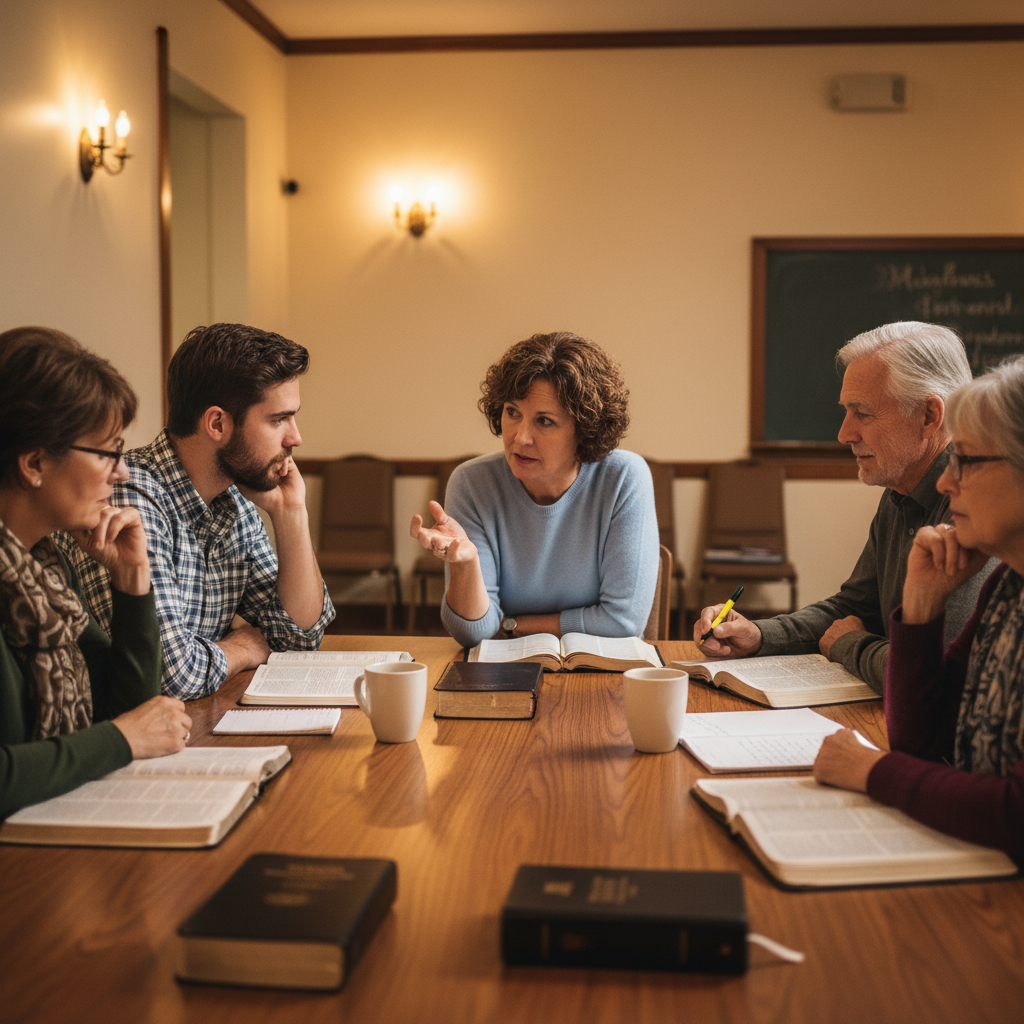
The quality of your questions determines the quality of your discussion. Here’s what separates good questions from bad ones:
Avoid Yes/No Questions
Bad: “Is Paul saying we should pray more?”
Good: “What does Paul say is the relationship between prayer and peace in this passage?”
Ask Open-Ended Questions
Bad: “Jesus healed the blind man, right?”
Good: “What surprises you about how Jesus interacts with the blind man?”
Use “What” and “How” More Than “Why”
“Why” questions can feel confrontational. “What do you think motivated…” or “How do you see this applying…” feel safer and generate better responses.
Include Personal Application
“Where in your life are you tempted to worry instead of pray?”
“What’s one specific thing you can do this week to apply this passage?”
Common Problems and How to Handle Them
The Dominator (One Person Talks Too Much)
Redirect gently: “Thanks, [name] — great thoughts. I’d love to hear from someone who hasn’t shared yet.” You can also talk to the person privately and enlist them as a co-facilitator: “You have great insight — can you help me draw out quieter members?”
The Silent Group (Nobody Talks)
Don’t panic during silence — people may be thinking. Wait 10-15 seconds. If silence persists, rephrase the question or share your own brief answer to model vulnerability. Breaking into pairs for discussion can also help shy members open up.
The Off-Topic Tangent
Acknowledge the thought, then redirect: “That’s interesting — I’d love to discuss that sometime. For today, let’s focus on what this passage is saying about…” Write down tangent topics as potential future study topics.
The Theological Debate
If two members disagree on a secondary issue, don’t take sides: “There are thoughtful Christians on both sides of this. Let’s look at what this specific text says and discuss the broader question another time.”
After the Study: Follow Up
- Send a brief summary or key takeaway to the group within 24 hours
- Pray for each member by name during the week
- Check in with anyone who seemed to be struggling or was unusually quiet
- Review what worked and what didn’t, and adjust for next time
Frequently Asked Questions
How much time should I spend preparing?
Plan to spend 1-2 hours preparing for each session. This includes personal study, question preparation, and planning the flow. As you gain experience, preparation becomes faster.
What if I make a mistake or teach something wrong?
Correct it as soon as you realize. Send a follow-up message to the group: “After further study, I want to clarify what I said about…” People respect honesty and humility far more than pretend perfection.
How do I handle difficult or controversial topics?
Stick to the text. Let Scripture speak. Acknowledge that faithful believers can disagree on secondary issues, but be clear about what the Bible plainly teaches. When in doubt, consult your pastor or a trusted commentary.
Do I need special training to lead a Bible study?
No formal training is required, but it helps to be mentored by someone who has led before. Most churches offer leadership development. At Founded in Truth Fellowship, we equip and support Bible study leaders — contact us if you’re interested.
Frequently Asked Questions
How much time should I spend preparing?
Plan to spend 1-2 hours preparing for each session. This includes personal study, question preparation, and planning the flow. As you gain experience, preparation becomes faster.
What if I make a mistake or teach something wrong?
Correct it as soon as you realize. Send a follow-up message to the group: “After further study, I want to clarify what I said about…” People respect honesty and humility far more than pretend perfection.
How do I handle difficult or controversial topics?
Stick to the text. Let Scripture speak. Acknowledge that faithful believers can disagree on secondary issues, but be clear about what the Bible plainly teaches. When in doubt, consult your pastor or a trusted commentary.
Do I need special training to lead a Bible study?
No formal training is required, but it helps to be mentored by someone who has led before. Most churches offer leadership development. At Founded in Truth Fellowship, we equip and support Bible study leaders — contact us if you’re interested.
Feel called to lead? Founded in Truth Fellowship is always looking for people with a heart for God’s Word and God’s people. Let us know how we can support you.
Continue Your Bible Study Journey
Ready to Go Deeper?
Join Founded in Truth Fellowship for weekly Bible study and authentic community.
Visit Founded in Truth Fellowship
Join us for Bible study and worship in Rock Hill, SC
Address: 1689 Springsteen Rd, Rock Hill, SC 29730
Phone: (803) 627-8623