The answer depends on your goal. Are you exploring faith for the first time? Are you a new believer wanting a foundation? Or are you returning to Scripture after time away? Let’s break down the best starting points for each situation.
The #1 Recommendation: Start With the Gospel of John
If you can only read one book of the Bible first, make it the Gospel of John. Here’s why:
- It was written specifically for people who don’t yet fully understand who Yeshua (Jesus) is
- John states his purpose clearly: “These are written so that you may believe that Jesus is the Christ, the Son of God” (John 20:31)
- It’s deeply theological yet accessible — no prior Bible knowledge required
- It contains some of the most well-known and powerful passages in all of Scripture (John 3:16, John 14:6, John 1:1-14)
- It can be read in a few hours

After John: A Recommended Reading Order
Once you’ve finished John, here’s a strategic reading order that builds understanding progressively:
Phase 1: The Foundation (Weeks 1-4)
- Gospel of John — Who Yeshua is and why He came
- Genesis 1-12 — Creation, the fall, the flood, and God’s covenant promises
- Exodus 1-20 — Israel’s deliverance and the giving of the Torah (Law) at Sinai
Phase 2: The Gospel in Context (Weeks 5-8)
- Gospel of Mark — The fastest-paced Gospel, focused on what Yeshua did
- Romans — The most systematic explanation of salvation and grace
- Psalms 1-50 — Learn to pray and worship through Scripture
Phase 3: Going Deeper (Weeks 9-12)
- Acts — The birth of the early church after Yeshua’s resurrection
- Proverbs — Practical wisdom for daily life
- Ephesians — Your identity in Christ and how to live it out
- Gospel of Matthew — Yeshua as the fulfillment of Old Testament prophecy

Why You Shouldn’t Read the Bible Front to Back (at First)
Many well-meaning readers start at Genesis 1:1 and try to read straight through. The problem? They hit Leviticus by week three and give up. Here’s why a strategic approach works better:
- Leviticus, Numbers, and Deuteronomy contain detailed laws and regulations that are deeply meaningful but require context to appreciate. They’re better studied after you understand the bigger picture.
- The Prophets (Isaiah through Malachi) reference events and covenants you need to understand first.
- Revelation is filled with imagery from the Old Testament — reading it first creates more confusion than clarity.
A strategic reading order isn’t “skipping” parts of the Bible. It’s building the foundation so you can eventually understand all of it more deeply.
Best Starting Books by Life Situation
If You’re Exploring Faith
Start with John, then Luke (which has the most detailed account of Yeshua’s life). Follow with Acts to see what happened next.
If You’re a New Believer
Start with John, then Romans (for doctrinal foundation), then James (for practical Christian living).
If You’re Going Through a Hard Time
Start with Psalms (raw emotional honesty before God), then Job (suffering and God’s sovereignty), then Philippians (joy in all circumstances).
If You Want to Understand God’s Big Story
Start with Genesis, then Exodus, then John, then Romans, then Revelation. This gives you creation, covenant, Christ, the gospel, and the consummation.
Tips for Getting the Most From Your First Reading
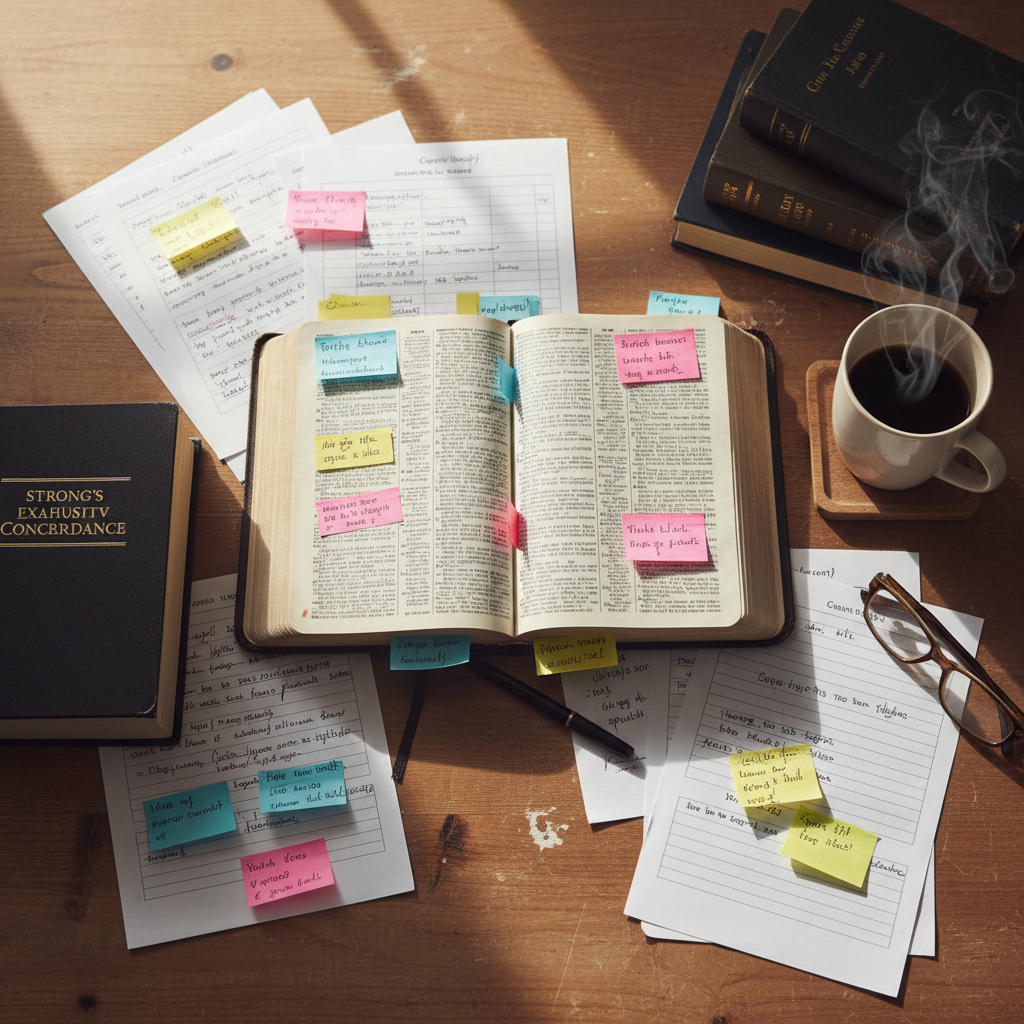
- Read with a journal. Write down what strikes you, confuses you, or moves you.
- Don’t rush. One chapter read carefully is better than five chapters skimmed.
- Use a study Bible. The footnotes and introductions to each book provide invaluable context.
- Read in community. Share what you’re learning with a friend, spouse, or study group.
- Pray as you read. Ask God to reveal Himself through the text.
Frequently Asked Questions
Is it wrong to skip books of the Bible?
Not at all. A strategic reading order isn’t “skipping” — it’s building context. Eventually, you’ll want to read the entire Bible, but starting with the most accessible and foundational books sets you up for success.
Should I read the Old Testament or just the New Testament?
Both are essential. The New Testament can’t be fully understood without the Old. At Founded in Truth Fellowship, we teach the whole counsel of God — Torah to Revelation. Start where it’s accessible, but don’t stop there.
How long does it take to read one book of the Bible?
It varies greatly. The Gospel of Mark takes about 90 minutes to read aloud. Genesis takes about 3.5 hours. Most of Paul’s letters (Ephesians, Philippians, Colossians) take 15-20 minutes each.
What Bible translation is best for first-time readers?
The NIV and ESV are excellent for readability and accuracy. The NLT is very readable but less literal. For serious study, the NASB or ESV are preferred. The most important thing is to start reading — any solid translation will serve you well.
Frequently Asked Questions
Is it wrong to skip books of the Bible?
Not at all. A strategic reading order isn’t “skipping” — it’s building context. Eventually, you’ll want to read the entire Bible, but starting with the most accessible and foundational books sets you up for success.
Should I read the Old Testament or just the New Testament?
Both are essential. The New Testament can’t be fully understood without the Old. At Founded in Truth Fellowship, we teach the whole counsel of God — Torah to Revelation. Start where it’s accessible, but don’t stop there.
How long does it take to read one book of the Bible?
It varies greatly. The Gospel of Mark takes about 90 minutes to read aloud. Genesis takes about 3.5 hours. Most of Paul’s letters (Ephesians, Philippians, Colossians) take 15-20 minutes each.
What Bible translation is best for first-time readers?
The NIV and ESV are excellent for readability and accuracy. The NLT is very readable but less literal. For serious study, the NASB or ESV are preferred. The most important thing is to start reading — any solid translation will serve you well.
Not sure where to start? Reach out to us at Founded in Truth Fellowship — we’d love to help you begin your journey through Scripture.
Continue Your Bible Study Journey
Ready to Go Deeper?
Join Founded in Truth Fellowship for weekly Bible study and authentic community.
Visit Founded in Truth Fellowship
Join us for Bible study and worship in Rock Hill, SC
Address: 1689 Springsteen Rd, Rock Hill, SC 29730
Phone: (803) 627-8623