Christians, first time
The subtitle is “A Christian Haggadah For Passover,” and it assumes you are coming to this as a believer in Yeshua rather than as someone who grew up with it. Nothing is assumed knowledge.
Free download
A free, printable 33-page PDF that walks your table through a Passover seder from the opening prayer to the last cup, with Yeshua (Jesus) at the center of the story. Written by Matthew Vander Els and published by Founded in Truth Fellowship in 2019. No sign-up, no cost.
What is inside
It opens with four pages on what Passover is: Israel enslaved in Egypt, the lamb, the blood on the doorposts, the sea, and then the night Yeshua picked up the bread and the cup and called them His body and His blood. The Haggadah puts it plainly: this is “a festival of freedom,” not from Egypt but from slavery to sin and the power of death.
Then it gets practical. A section on clearing leaven out of the house, with the reminder that if you get every crumb out and still carry arrogance and unforgiveness, you have achieved nothing. A section on setting the table. A walk through the five items on the seder plate, the matzah, the four cups, the hand washing, and the salt water, with what each one is for.
The rest is the seder itself, written out as a script. Leader lines, the lines everyone says together, the Hebrew blessings spelled out phonetically, the four questions for the youngest child who can read, the ten plagues, and Psalm 118 and Psalm 98 to sing at the end. It closes the way a seder closes: “Next year in Jerusalem.”
The plate
Tap any number. These are the five elements the Haggadah asks you to set out, in its own order, with its own explanations. If you do not own a seder plate, use a regular plate.
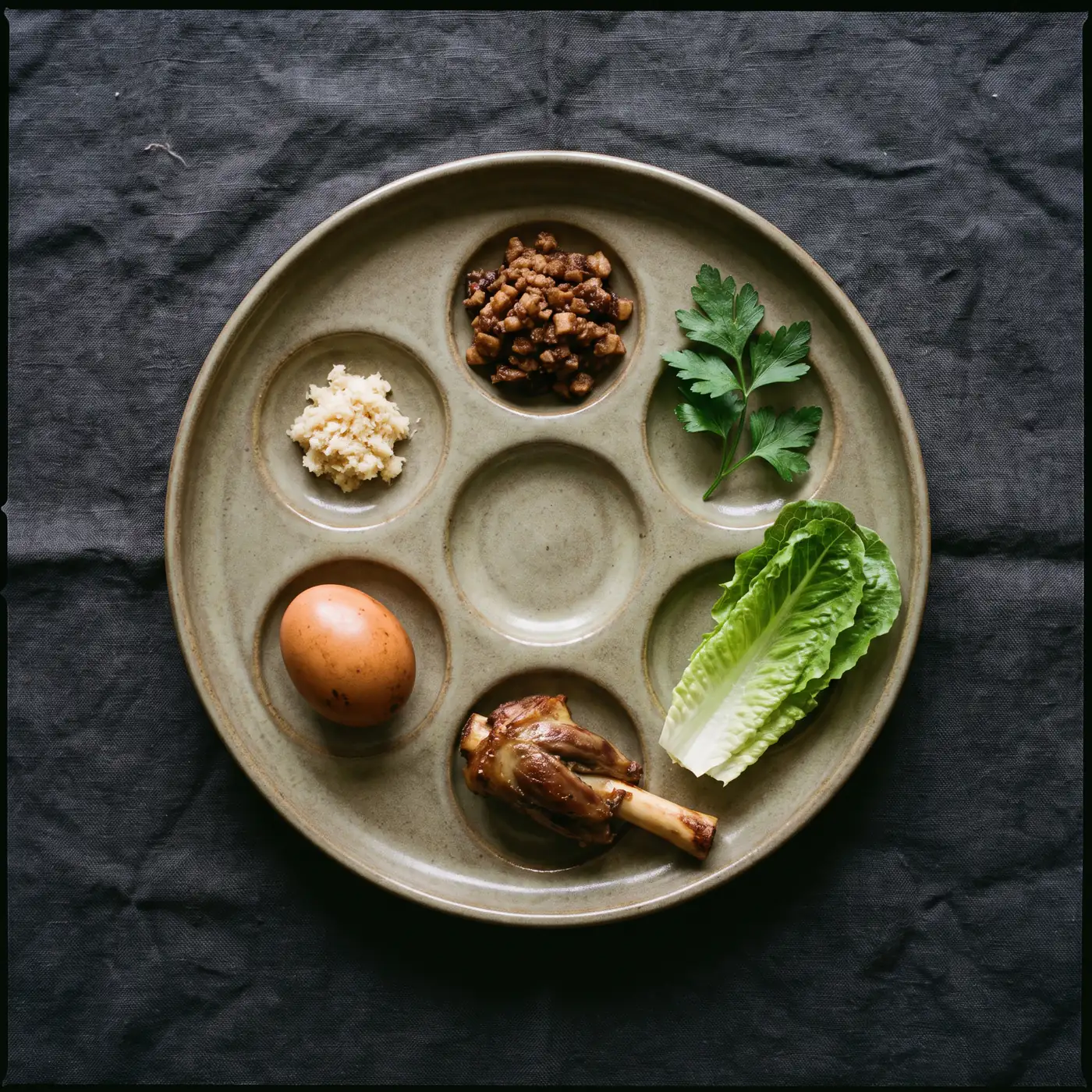
Tap a number on the plate to read what it is and why it is there.
The order of the evening
This is the summary page of the Haggadah. Every one of these steps is then written out in full, so the leader never has to improvise.
Who it is for
The subtitle is “A Christian Haggadah For Passover,” and it assumes you are coming to this as a believer in Yeshua rather than as someone who grew up with it. Nothing is assumed knowledge.
The telling of the Exodus story is marked “intentionally simplified for children,” and the four questions are given to the youngest child at the table who can read.
If you do not have a seder plate, the Haggadah says use a regular plate. The elements are reminders, not the main course, so you cook a normal celebration meal.
How the evening runs
There is a companion video where Matthew hosts the seder for you, page by page, telling you when to pour, when to eat, and when to pause. It was made for exactly this Haggadah: “follow along in the free Haggadah available on our website.” The video runs about 53 minutes, not counting the break for the meal, which comes at step ten.
Matthew ends the walk-through hoping you will not need it next year: that you will take charge and lead your own. That is what the printed Haggadah is for.
Take it with you
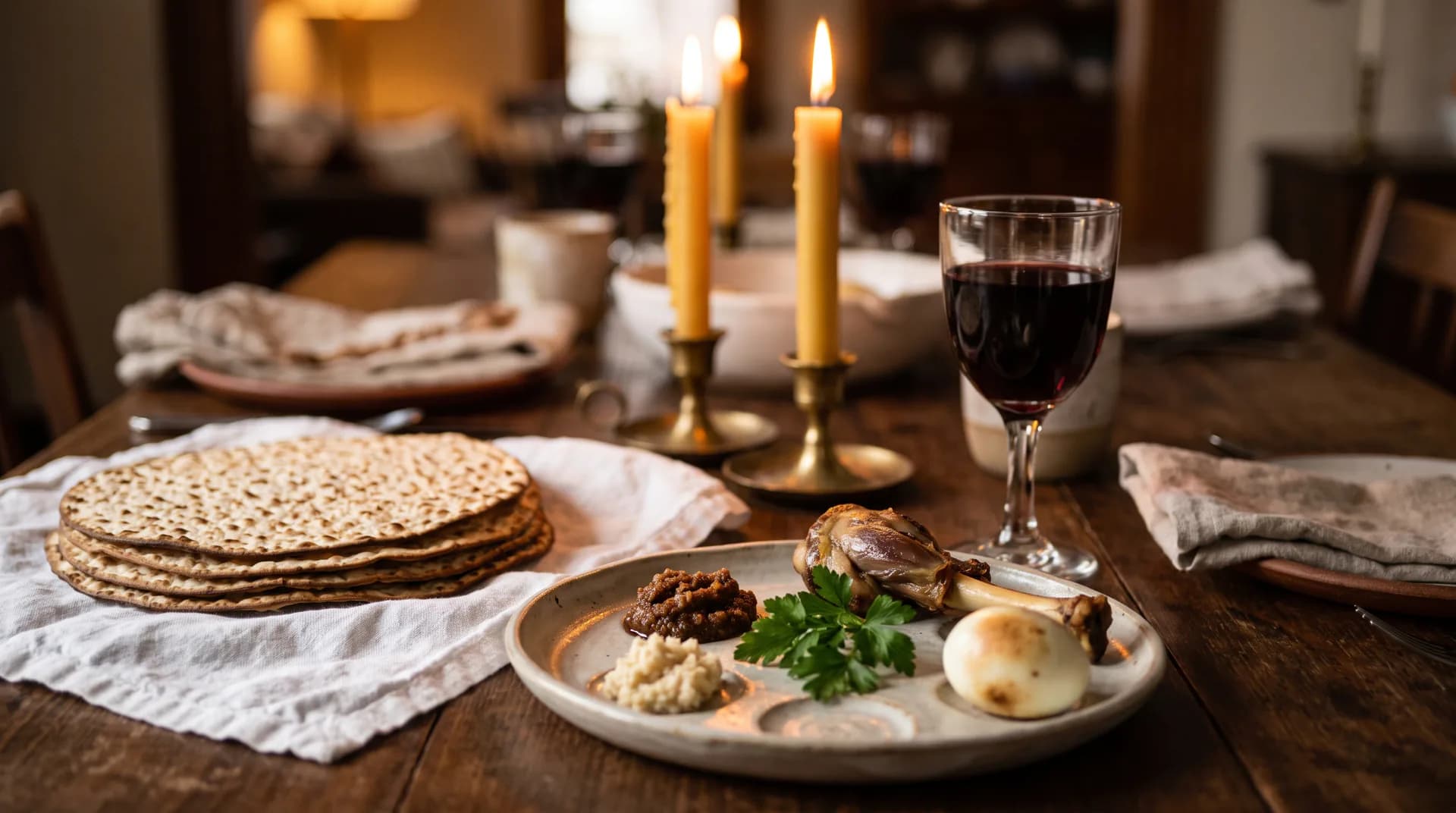
The next Passover seder falls on the evening of Wednesday, April 21, 2027. Print the Haggadah, invite your people, and lead it yourself. If you would rather do your first one with a room full of others, come keep it with us.
