Revelation – Nonviolence and the Divine Warrior
In this insightful Bible teaching from Founded in Truth Fellowship, Matthew Vander Els explores the often-misunderstood theme of violence within the book of Revelation. He argues that a proper understanding of Jesus' teachings and the practices of the early church reveals a powerful message of nonviolence as the means through which believers overcome the empires of the world. Vander Els challenges the widely accepted notion of Christian violence, particularly in the West, and proposes a new lens through which to interpret the apocalyptic visions of John.
The Paradox of Violence in Christendom
Vander Els begins by questioning the comfort many have with the idea of Christian violence, contrasting it with Jesus' direct commands to turn the other cheek and love our enemies. He highlights the common tendency to readily resort to violence in situations beyond physical assault, particularly within certain cultural contexts. The core of the teaching is that understanding Jesus' life and teachings, as well as the beliefs of the earliest Christians, reveals a consistent emphasis on nonviolent resistance rather than violent retaliation.
Jesus' Example of Nonviolence
The teaching emphasizes several key moments in Jesus' ministry that exemplify nonviolence. When a woman faced stoning, Jesus intervened with the truth of his word, not physical force, to defeat her accusers. When his disciples sought permission to call down fire on the Samaritans who rejected him, Jesus rebuked them. Furthermore, when Peter used his sword to defend Jesus at his arrest, Jesus not only rebuked him but also explained the consequences of such actions. These instances underscore Jesus' commitment to a path of nonviolence in the face of opposition.
The Early Church's Focus on Loving Enemies
Vander Els points to the historical witness of the first and second-century believers who arguably prioritized loving their enemies above all else. In a time of intense persecution by the Roman government, these early Christians chose to respond with love and prayer, seeking to persuade their persecutors through their peaceful lifestyle rather than engaging in violent resistance. Quotes from early church fathers like Justin Martyr (circa 155 A.D.) illustrate this commitment, noting how Christians, who once held prejudices against foreigners, now lived among them as family, praying for their enemies and seeking to overcome hatred with healing actions. Tertullian (circa 197-208 A.D.) further emphasized this principle, stating that Christians are forbidden to retaliate against injury, lest they become as bad as those who harm them. He also described how early believers were likened to sheep, willingly yielding rather than fighting in self-defense. This historical context is crucial for understanding the intended message of Revelation.
Reinterpreting Revelation: Nonviolence in a Book of Violence
Acknowledging the graphic violence depicted in Revelation, Vander Els proposes that this imagery should be interpreted through the lens of Jesus' nonviolent teachings and the early church's practices. The word "blood" appears frequently in Revelation, but when it refers to a specific entity, it is consistently associated with Jesus' blood or the blood of the saints.
The Lamb as the Conquering Divine Warrior
A central point of the teaching is the interpretation of Jesus as the Lamb in Revelation 5. Despite John hearing of the "Lion of Judah" conquering, he sees a Lamb that appears to have been slain but is standing victoriously in the throne room of God. This imagery is paradoxical, as the Lamb conquers not through violent force like a lion, but through its sacrificial death. Jesus is referred to as the Lamb 28 times in Revelation, contrasting with the single indirect reference to him as a lion, suggesting a deliberate emphasis on his vulnerable yet victorious nature. The followers of the Lamb are called to conquer in the same way, through self-sacrificial love.
The Army of God and the Color White
The imagery of the army of God in Revelation, such as the 144,000 in Revelation 7, is also reinterpreted through this nonviolent lens. While described using militaristic terms, this army is depicted as clothed in white, holding palm branches, and worshipping, not wielding swords and engaging in battle. The color white, prevalent throughout Revelation, symbolizes the victory of those who conquer like Jesus. The 144,000 who follow the Lamb in Revelation 14 are shown standing in the throne room, having overcome through self-sacrificial love. They are those who have endured great distress, washed their robes white in the blood of the Lamb – a symbolic act representing forgiveness and ultimate loyalty to Jesus' way.
The Battle of Armageddon: Word as Weapon
The climactic scene of the return of the king in Revelation 19, often interpreted as a violent battle, is presented differently. While armies of heaven follow Jesus, he himself is not depicted as holding a physical sword. Instead, a sword comes from his mouth to strike down the nations. This is understood as the power of his word and testimony, the same weapon wielded by the two witnesses earlier in Revelation. Vander Els critiques interpretations that envision Jesus and his followers literally slaughtering their enemies, pointing out that Jesus' robe is already soaked in blood before the battle begins – his own blood, shed sacrificially, not the blood of his adversaries. The armies following him, dressed in white, simply follow. This scene reinforces that victory is achieved through Jesus' sacrifice, not through a future violent conquest by believers.
Application for Everyday Life
- Embrace nonviolent resistance: Following Jesus' example, respond to opposition and injustice with truth and love, rather than retaliation.
- Love your enemies: Actively seek the well-being of those who oppose you, praying for them and seeking to overcome hatred with kindness.
- Bear witness faithfully: Hold firmly to the testimony of Jesus, even in the face of persecution and hardship, understanding that this faithfulness is a form of victory.
- Recognize true power: Understand that true strength lies not in physical force but in self-sacrificial love and unwavering loyalty to the Lamb.
- Stand against evil: Call out evil and injustice boldly, but do so in a way that reflects the values of God's kingdom.
- Believe in Jesus' victory: Trust that Jesus has already overcome the powers of darkness and live in light of this reality.
- Put down the "cup" of sin: Recognize that indulging in sin ultimately leads to God's judgment and choose to turn away from it, embracing the forgiveness offered through Jesus.
- Endure with hope: Be encouraged in times of trial, knowing that God is with you and that your endurance is part of his plan for redemption.
To find more Bible Teachings, visit our website.
Books and Resources Mentioned
- First Apologies by Justin Martyr - Justin Martyr First Apologies
- Works by Tertullian - Tertullian
- Relevant Magazine - Relevant Magazine
- Podcast about Mark Driscoll - podcast Mark Driscoll
Links to books are provided for convenience. As an Amazon Associate, Founded in Truth earns from qualifying purchases.
Read the transcript (7,611 words)
Automated transcript, lightly edited for readability. Scripture appears as spoken; the video is the authoritative teaching.
Do you ever find yourself searching for something bigger than you? For a community to be a part of? A place founded on truth and love? A place to worship the King of Kings, the Lord of Lords, and the Son of God? Welcome to Founded in Truth, where we're more than just a fellowship. We're a family. So welcome home. Awesome. And so today I wanted to explore the theme of nonviolence in the book of Revelation and how Yeshua calls us as his followers to enact holy war on the empires of the world. In a book of monsters and blood and sharp sickles being swung through the air, I hope that we can see the power of the gospel instead of the power of death.
And it's a strange thing, especially in the West, this idea of violence within Christendom throughout history. It's widely accepted in the West. We have no problem with Christian violence, and we have no problem with the idea that if we're slapped across the cheek, yeah, we don't slap someone back. But anything other than that? We pull our guns out, right? That's how we roll in the South. A couple people get it, laughing. That's my background. Okay, everyone else, this is gonna be great. And the reason why I want to hit this theme so much is not just an application in our everyday lives, but as a new lens to look at the book of Revelation that I believe will help some of us understand what it's actually saying and what it's trying to portray.
So when we look at what Yeshua actually taught and lived out, as well as what the earliest generations of the church seem to believe, we just don't see this idea or excitement about responding violently to enemy offenses. Jesus says things like, turn the other cheek. He says, bless your enemies, love your enemies. When a woman is about to be stoned, he stands between the abusers and the woman, and he defeats them with the truth of his word, not throwing bricks at them. When the disciples requested permission to call down fire from heaven so that they could watch the Samaritans that rejected Yeshua burn alive, Yeshua rejects them.
It's like, what are you doing? Have you missed it? Peter uses his sword against the party coming to arrest Yeshua unjustly. And Yeshua rebukes him, explaining what his fate will be if he continues to justify harming others. This same Peter, many years later, from what we know, writes in 1 Peter 2 that Christ left us an example. He left me an example. He left us an example to not resist persecution. And he left us an example when he did not revile those who reviled him. What a transformation of the guy trying to take off half the face of the high priest servant.
What Jesus Taught
And when we continue looking in history, in the first, second, and third century believers, it could be argued that this aspect is what they focused on more than any other aspect of their faith: loving their enemies. In a time when the government was literally looking for any excuse to torment them, exile them, rob them, tear their families apart, and kill them. We don't know, guys. We just don't know. We have absolutely no clue what the depth of living out the faith of Yeshua looks like in contrast to the first believers that took it up and said, we're going to do this in a serious manner. But I have a few quotes here from some of the early church fathers or writers.
And we'll just get into them because we're jumping to Revelation. So here we go. Here's Justin Martyr, First Apologies. This was written around 155 A.D. And here's what he says. Speaking about diverse cultures, people of different tribes, all those people that look different than you and act different and speak different. So Justin, he's given an account here of what the Christian communities look like. This is what they look like. And he says before they used to see immigrants and foreigners and people that were not like them. I don't want to be around them. And now they live among them as a family.
They realize everybody is part of God's family. But this is how they act. They pray for their enemies and they try to act in a way, in a lifestyle that persuades the people wanting to kill them to join them, to destroy our enemies through healing them. We have another quote here. It's written around 176 A.D. It says, let's move on from that one. It's got to be a better one. Tertullian, written around 197 A.D. Again, speaking on behalf of his own experience of the Christian faith. If someone injures you, we are forbidden to retaliate, lest we become as bad ourselves. In other words, responding to evil done to you causes you to emulate that same evil.
Move on. We gotta be a better one. Here's another one from Tertullian written around 208 A.D., and here's what he says. The Lord will save them in that day, even his people like sheep. But guys, no one gives the name of sheep to those who fall in battle with arms and hands or those who are killed when repelling force with force. Rather, it is given only to those who are slain, yielding themselves up in their own place of duty and with patience rather than fighting in selfdefense. This was the attitude of believers for the first few hundred years, at least until Jesus became weaponized by Constantine. And even after that, the legacy continued.
A Third Option
There has to be a way that we can respond to the evil in this world that doesn't look like the evil in this world. No matter how radical it looks, there has to be a third option. Not to run away, but not to fight like they do. Not to harm like they do. There has to be a third option. And that's hard. It's hard. Again, the reason why I bring this up is because we're studying what book of the Bible? And I feel like this is important context as we see in the society of Christians during this time to try to understand some of the things Revelation talks about. Everybody good? Very good. Clutching your guns.
The audience for Revelation was written to understand this as a lens. And I also believe it's significant for us today to help us understand the impact of this and how we can live John's letter out fully in our lives. So let's just jump in. I named this message Nonviolence and the Divine Warrior. Thought it was a cool name, but in reality, what we're really going to be exploring is the motif of the extreme, bloody, gory violence that we see so often in Revelation. When you guys did your homework, for those of you who don't know, I told everyone to read the whole book of Revelation in one sitting out loud because I believe that's how the first audience of the letter heard it, right?
How many of you guys stopped a couple times and were like, that is a lot of blood, right? That's a lot of blood. That was graphic violence. So we're going to explore that. The word blood is used 19 times in the book of Revelation. And when it's used in the sense of actually belonging to someone, it's always related to Yeshua's blood or the blood of the saints.
The Lamb and the Lion
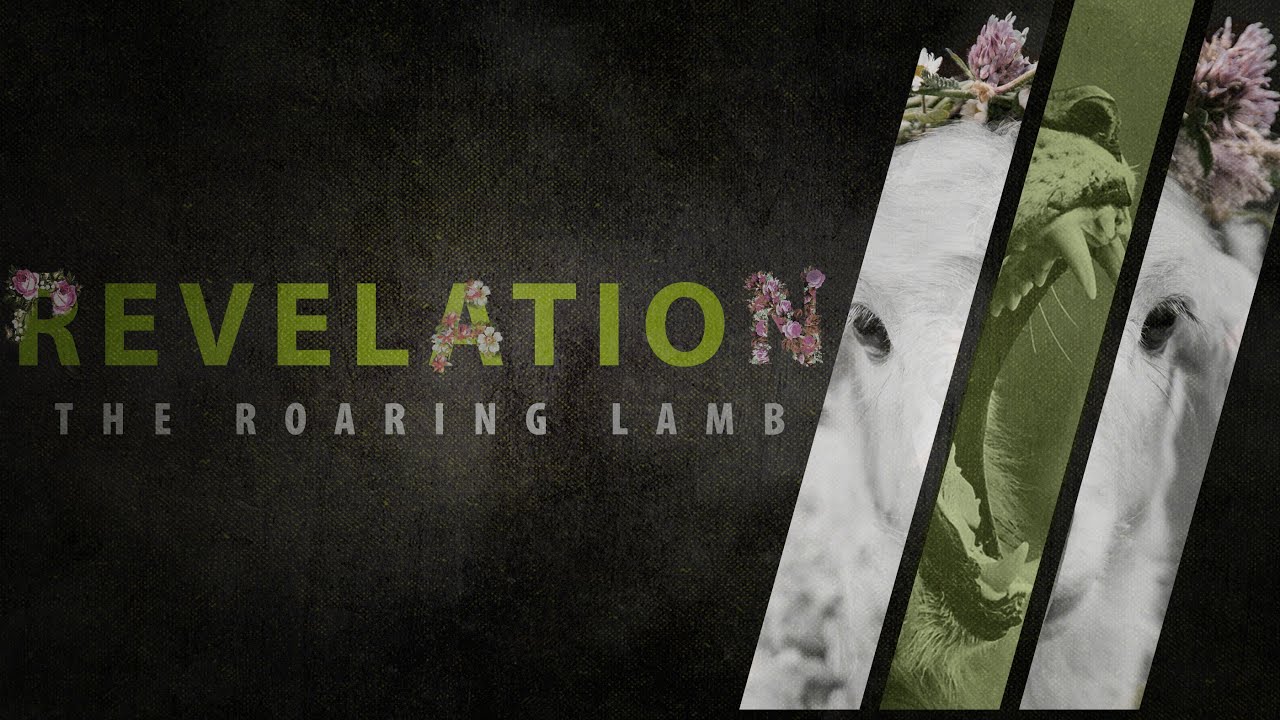
In Revelation 5, my favorite scene, right? We have the throne room scene. And John hears that the lion of Judah has conquered. And John hears this. You can almost hear like Jurassic Park, boom, boom, boom. I like to imagine John hearing this lion behind him, boom, boom. But when he turns around to look at the lion, he doesn't see a big, strong, big-toothed lion. He sees a lamb with its throat cut, covered in blood, standing in victory in the throne room of God. This is how the lamb conquers. This is how he conquers. He does not conquer like a lion that disembowels its prey with its long, sharp claws or tears flesh from bone with its teeth.
This is the only place that Yeshua is indirectly referred to as a lion in the entire letter. He's referred to as a lamb 28 times in the book of Revelation. And I say that because when we love to pick up Christian shirts and bumper stickers, we love to have the big lion. And lamb, ah, that's not cool. That's not vicious. We love the big lion, right? John's trolling you. It's a lamb. He's a lamb that roars like a lion. And this is how the lamb fights. Not to prey on people, but to be willing to become the prey. This is how you conquer. It's so backwards, isn't it? This is not a fun message to hear. Matt, why can't you preach something that's motivational?
Put some pop culture in it. Quote some movies. Do something like that. Give me some feel-goods. Ain't nobody want to do this. It's so backwards. But this was the radical message. This is what ticked people off about the believers. Aren't you going to fight? Aren't you going to show power like the whole world shows power? Aren't you going to do anything? And looking up after being beaten, can I offer you some water? I have a fish in my backpack. Just make you so mad. Revelation 3, verse 21, it says, this is a flashback to Daniel 7. Daniel 7, there's a beast, and the beast is killing the people of God, but there's also a son of man figure, which represents Yeshua, and the son of man figure and the people of God are made synonymous.
Both of them, the Son of Man goes up in a cloud of heaven and receives an eternal kingdom, and the people of God also inherit the eternal kingdom. So this is a flashback to that. I will give the right to sit with me on the throne just as I was victorious and sat down with my Father on the throne. We're called to be victorious and to conquer like Yeshua did. We're gonna follow Yeshua, yeah.
That's a Theme Throughout Revelation
Revelation 5, that's how we do it. And guess what those who conquer in battle like Yeshua dress like? Revelation 3, verse 4. That's a theme throughout Revelation. White, white, white. In Revelation 7, we saw the army of God as all believers gathered together in a military census, the 144,000. It's this theme, of course, of the 12 tribes of Israel being counted in the military census that was the same pattern as the book of Numbers. And we have 12 times 12 times 1,000, right? 144,000, generally speaking, is an apocalyptic number that just means innumerable, just long, big number. Big, big, big, big number. A massive amount. And again, before in Revelation 5, John hears something and then he turns and he looks and he sees something different, right? Here he hears 144,000, 12, 12, 12, 12, 12. It wasn't exactly the 12 tribes of Israel people were missing, but that's the theme. And then he turns and looks and he doesn't see 144,000. He sees more people than he can ever count from all nations and tribes and tongues and cultures and everything.
The Army of God
This is the army of God. And this army is clothed in white, holding palm branches, not swords. They are worshiping, not killing. This is how the army of Yeshua fights, is the scene here in the letter of John. They fight through worship or giving worth to the king, not just in songs and dance, but living out a lamb-like lifestyle, imitating. In Revelation 14, the 144,000 are described as following the lamb wherever he would go. Where did the lamb go? To the cross. And here in Revelation 14, guess where they are standing. Where was the lamb standing in Revelation 5 after he became victorious? Throne room of God? 144,000 are now standing, dressed in white, in the throne room of God. They have overcome through self-sacrificial love as an example of the strength of God and their faithfulness towards the lamb. John even asks the angel—even it's messing with him. He's the one writing it down. And he says, okay, angel, who are they? Who are these guys? What's the angel tell them?
Washed in the Blood of the Lamb
These are the ones that came out of great distress. They endured through this great tribulation. And it says they washed their robes and made them white in the blood of the lamb. That makes no sense. You don't even have to be a scientist. You just have to live. It makes no sense. If you get blood on something white, it does not stay white. It is now soiled, right? Unless you're OxiClean. But this is so impactful. The garments are washed, soaked in the blood of Yeshua, and they're made white. This represents, of course, the forgiveness of sin, but also the pinnacle of loyalty to the way of the Lamb, following the Lamb into battle.
Revelation 3 depicts those who have compromised in their way of the Lamb. They go to church and they claim they're faithful, but when it comes down to it, they're not really following the lamb. They're not willing to give up anything or everything to the lamb. They're not willing to actually mimic what he taught. And this is what it says, back to Revelation 3, 4. Yet you have a few people in Sardis who have not soiled their clothes, for they're dressed in white. What does that mean about everyone else who has compromised? They've soiled their clothes. They're not wearing white clothes. Again, so many militaristic terms throughout all the passages we just read. And so I want to jump into the first bloody scene that we come to in the book of Revelation, the apocalypse of John. It's found in Revelation 5, starting in verse 6.
The Lamb Looking as If It Had Been Slain
And this is, of course, John seeing the lamb. And here's what it says. Then I saw the lamb looking as if it had been slain, but standing in the center of the throne room. And the occupants of the throne room, they sang a new song saying, listen to these words. You are worthy to take the scroll and open the seals because you were slain. And with your blood, you purchased for God persons from every tribe, language, people, and nation. You have made them to be a kingdom and priests to serve our God, and they will reign on earth. There's that terminology. In a loud voice, they were saying, worthy is the lamb who was slain.
To receive power, wealth, wisdom, strength, honor, and glory and praise. Now verse 12 is fascinating because the terminology that John uses, wealth. This is how the lamb got rich. No one ever, nothing, wealth, power, wisdom, strength, honor, glory, and praise. These are attributes of what empire seeks out, right? The whole theme. And you're sure what John's saying here is worthy is the lamb. This is how you actually acquire the things, not literal wealth. But if you want the prize, this is how you win the battle. This is how you win. It's through the shedding of his blood that he conquers the dragon.
His own blood being spilled is what gives him ultimate authority to reveal, crack open that scroll and reveal the mysteries of God's plan all along. Spilling his own blood purchases people of all nations, tongues, and tribes. A lamb appearing as slain, blood-soaked—this is the image of victory that is recognized in the throne room of Yahweh. And we see later that the followers of the Lamb overcome in the exact same way. Pick up your cross and follow.
The Return of the King
How about the battle of Armageddon? Revelation 19. Let's jump over there. Starting in verse 11, it says, Oh, man. Oh, man. What a climactic scene that is erupting. The return of the king, right? Right? Who's following him? The armies of heaven. S-U, S-U, S-U, armies of heaven. Kind of neat, right? Armies of heaven are following him. And here we go, military terms. Armies, what are they wearing? Linen, white and clean. Coming out of his mouth is a sword to strike down the nations. He treads the winepress of the fury of the wrath of God. And he has a tattoo, which is kind of neat, on his thigh. It's a joke. So the thigh is typically where you wear what? It's your sword. It's where you wear your sword. He doesn't carry a sword. He just carries a testimony of who he is. King of kings and Lord of lords. Here, his power is his sovereignty. It's the testimony of the sovereign king of creation. This is the same weapon that is used throughout Revelation, the testimony of King Jesus.
When We Get Revelation Wrong
Some take this scene and they paint it as Jesus coming to kill all the nations that are following the beast, right? And guess what? If this is the case, Jesus is coming back to kill everybody, guess who gets to kill everyone alongside with him? The army, right, of the conquering believers, us, yeah. We're the army, right? And so we're going to join Jesus in slaughtering all of our enemies. Has no one ever thought about that before? If you grew up in an evangelical background, was not something that you kind of fantasized about in the back of church when the sermon was boring? I'm going to come back.
I'm going to fight. No one. Okay. Little Timmy that bullied me in school. He's mine. A great example of this idea being portrayed actually appeared in Christian Magazine, Relevant Magazine, in 2007, and it was penned by Mark Driscoll. If you don't know who he is, he was a pastor of a very large church, and I think there's a podcast that's really popular about him right now available. But Relevant Magazine was asking pastors a series of questions, seven questions, and one of the questions was, what is the greatest hurdle for young people in the church over the next 10 years? And Mark had a rant that he posted, he published, essentially stating that the church is getting weak.
And he even mixed political terms in there, stating that the church is looking weak like the left, right? And here's what he wrote in the middle of that to fuel his example. He says, in Revelation, Jesus is a pride fighter with a tattoo down his leg, a sword in his hand, and the commitment to make someone bleed. That is the guy I can worship. I cannot worship the hippie diaper halo Christ because I cannot worship a guy I can beat up. And he received a lot of criticism, of course, for this. And his point was not to make a concrete commentary about Revelation. I want to point that out. His point was his concern of young people looking left and not his idea of what right is and therefore being weak.
But this attitude toward who he thinks Jesus is and what Jesus does should bring concern. I cannot worship a guy I can beat up like the Romans and the Judean authorities beat him up. Like how him being beat up was the very sign of him conquering.
The Sword from His Mouth
First, in the return of the king scene, Yeshua is never holding a sword. He's never holding a sword throughout the entire letter of John. Never. He's not holding a sword. The sword comes forth from his mouth. How does he strike the nations? Through his word. Through his word. Like the two witnesses did when we reviewed that. This is not an image of Yeshua cutting someone in half or ripping appendages off of his enemies or slicing heads off or shoving a blade through someone's guts. This is his judgment being poured out through his testimony. He will rule with a rod of iron, it says, Psalm 2.9. We discussed this in the message, the apocalyptic nativity a few weeks back.
The Christ child is going to conquer and inherit all nations by defeating the dragon. He's wearing a robe soaked in blood. So in the scene, he's riding toward the nations, right? He's fixing to attack them and strike them down. The church writer, Origen, noticed this early on in the early church, and he got really excited because he noticed something. He noticed that he's already covered in blood before he even begins the battle. He's not covered in the blood of his enemies. He's covered in his own blood. This is how he defeats his enemies. That's the theme throughout Revelation. He's already covered in his own blood, and that is how he conquers, not by spilling the blood of his enemies.
And the armies behind him dressed in white, they do nothing but follow along. This is not a literal vision of Yeshua's return and the slaughter of everyone who is our enemy. It's a reinforcement of the battle that has already been won.
Will You Believe the Victory Is Yeshua's?
And the question, and what John is pushing the original audience—the seven churches in Asia Minor—is will you believe it? Will you believe that victory is Yeshua's? That's the blanket point of all of this. Will you believe that Yeshua is the lamb that overcame? Will you believe that the dragon has been defeated? Will you believe that the good news is for everyone? And will you resist being deceived into thinking that the dragon has all authority and power? And if you believe in the testimony of Yeshua—Messiah means king, king Yeshua, king Jesus Christ—then it should change the way you live and interact with the world out there.
And this doesn't mean that you just roll over and let people abuse you and step on you like a doormat. No, that's nowhere in the gospel of the early church. No, it means that you call out evil and you stand boldly. Because if new creation has begun, overtaken the old creation, as Paul says at the resurrection, then evil no longer has a home here. So we call it out. We get in the way of it. And we do that now by responding in a way that looks like the kingdom that we claim we're a part of. Just like Jesus, it means you stand between people who are about to throw stones and the marginalized, and you fight them with the truth and with the testimony.
The victory has already been won. The king reigns now. The only remaining battle is, will you believe it or not? Will you be deceived into thinking that Yeshua is not king, that he didn't conquer Satan, that God is not as powerful as we think? The battle's already been won. Do you believe it and do you live it out? That which looks like weakness is actually strength in the kingdom of God. What did Paul say? He says, guys, I know. The gospel looks like foolishness. Foolishness is a thing, an attribute of fools, stupid people. The gospel is a representation of stupid people doing stupid things to those who are perishing. It is foolishness in the eyes of those who are perishing.
The King Comes on a White Horse
Yeshua comes riding in on a white horse, wielding the word of his testimony from his mouth, and he strikes down the enemy nations. And he does this by spilling his own blood, not theirs. The most gruesome scene, in my opinion, in Revelation is found in reference. It's actually referenced in the chapter that we just reviewed, but it's laid out in detail in chapter 14. This is where we're going to make our camp here. Revelation 14, starting in verse 14. You guys ready? Are you good? Are we good? Okay. I looked and there before me was a white cloud and seated on the cloud was one like the son of man with a crown of gold on his head and a sharp sickle in his hand.
Then another angel came out of the temple and called with a loud voice to him who's sitting on the cloud, take your sickle and reap because the time to reap has come. For the harvest, think grain, the harvest of the earth is ripe. So he who was seated on the cloud swung his sickle over the earth and the earth was harvested. Okay, we're good so far. Nothing too graphic. Another angel came out of the temple in heaven and he too had a sharp sickle. Still another angel who had charge of the fire came out from the altar and called out in a loud voice to him who had the sharp sickle, take your sharp sickle and gather the clusters of grapes from the earth's vine because its grapes are ripe.
Two Primary Views
This section of scripture is often read as—and despite where you land on this image, because we can talk about this image, we can talk about this scene, we may not all agree. That's fine. There's two primary views here, and we're going to talk about one. It isn't literal. No matter what your view is, it ends the same way. It is talking about judgment, and it's not literal, just like anything else in Revelation. It's all symbolic, apocalyptic, hyperbolic language to give a greater overview of the story of what's actually taking place in this world beyond the lens of what you see and the world is showing you—that God is in control and not the empire, and the empire has been defeated, and it's on its way out.
Just endure. So, anyone else read that and wonder? And maybe this is not appropriate. Well, we'll just talk about it. So anyone ever read that and wonder in the back of their mind? Okay, 1600 stadia, and this is a bunch of people that are being squashed in a wine press, and their blood is coming out. It's going to be about five or six feet deep. I wonder how many people had to be squashed in order to create that much blood. Did anyone ever wonder that, like reading through this? Y'all are sick, sick. So I wondered this too. And what's beautiful about the day and the age that we live in is we have math.
So if we have a tank that's about five feet deep, and a diameter of 180 miles, we will have this number, this many gallons of liquid. 26,497,700,202,124 and eight-tenths. That's how many gallons of liquid, water, a big fish tank, right? Mm-hmm. The human body holds around 1.3 to 1.5 gallons of blood. Let's cut it down the middle, 1.4. If we divide this number by 1.4, we get this number, 18,926,928,715,803 and 4 and 43 hundredths. That's how many people it would take. Apocalyptic poetry. You either love it or you don't. It's a very hyperbolic number. It's meant to be that way. Lots of blood in this judgment scene. But what if the images in this scene actually paint a little bit of a different picture?
What If These Are Signs of Salvation? The chapter before this warns believers—this is one we just visited—warns believers not to take the mark of the beast. Do not yield to worshiping the beast and the dragon. Resist the beast and endure until the end. Endure. Push through. You have the power of God. You have the strength. Push through. The following chapter after this, chapter 15, we see the same people now standing in victory. They are conquerors. They did it. They overcame the beast and his mark, and they are singing a new song standing on the sea of glass. How did they get from point A of being warned not to be entrapped by the beast to point B of standing in victory over the beast?
What if—and I do say that as a question—what if the images of Jesus reaping the harvest and the vintage, the grapes, are signs of salvation and not judgment? With images like the harvest being ripe, we can't help but to think about Israel, right? And even the 144,000 are referred to as the first fruits of the harvest. It's a sacrifice. It's an offering to God. Grapes, wine, vines, and vineyards throughout Scripture are frequently images of Israel, God's people. And it's never negative except for when they go and become wild grapes like in Isaiah 5. And that's the chapter when Isaiah does his Hebrew poetic rap song that we've spoken about before.
Could this be God's people? And if it is God's faithful people, why is God throwing them into a wine press of God's fury? Because the crushing of the grapes in the winepress isn't the wrath itself. It's where the wrath is prepared.
The Wine of God's Fury
Just a few verses before this scene in the same chapter, Revelation 14, 9, it says this. A third angel followed them and said in a loud voice, if anyone worships the beast and its image and receives its mark on their forehead or their hand, they too will drink the wine of God's fury, which has been poured full strength into the cup of his wrath. This calls for—what's it call for? —patient endurance on the part of the people of God who keep his commands and remain faithful to Jesus. Verse 13. So all of this takes place. You know what the very next verse is? And John had a vision about the Son of Man with a sickle.
This is the wine within the cup of wrath in which Babylon and the followers of the beast are made to drink. John drives this home by incorporating imagery from Joel chapter 3, which has almost verbatim the same image of God's wrath coming with a sickle and harvesting the harvest and the vintage at the same time and crushing them in the winepress, overflowing. Isaiah 63, where we have the messianic figure that's been developing for many chapters now—chapters 9 and 11 and chapters 53—except here God's wrath is being poured out and we have this divine figure stomping, trampling grapes, representing God's wrath in the process, and the juice is splattering all over his garments. It's making his garments dipped in blood, turning them red. This is where John gets the image of Jesus' robe being soaked in blood when he comes.
The Lamb Conquers Through His Own Blood
Remember, the New Testament authors frequently reinterpret Old Testament passages in light of who Yeshua is, in light of the clarity of God revealed to them through Yeshua, as Hebrews 1 says. Isaiah 63 has a vision of this messianic figure stopping the winepress of wrath and getting the blood all over them. And in Revelation 19, we see the return of the king is already covered in his own blood to defeat his enemies. How does the lamb conquer in Revelation? Over and over and over again, he conquers through his own blood, his sacrificial death. And how do his followers conquer? How are his followers supposed to conquer?
The same way, following the lamb. Carrying the cross and following. Bearing witness is another way that John puts it. Witness in Greek is martyr. It means to bear that witness even unto death. Revelation 12, 11, what's it say? They conquered by the blood of the Lamb, not loving their lives even to the point of death. It seems John wants to get a point across to a generation and generations of people that are facing nothing short of persecution and danger every turn that they take because of their faithfulness to Yeshua. And he's saying, the world cannot take anything from you. Push through. They might kill you.
So what? We know the promise. We know the resurrection. We know God is still with us. We know they can't take anything from you. We have the assurance of the testimony of the Christ.
The Day of the Lord in Scripture
Throughout the Old Testament, the term day of the Lord is used frequently, right? The dreadful and awful day of the Lord. And when we read through the scriptures, we see that this day doesn't represent a single day in the far future. It occurs every single time God intervenes. God does something. God steps in. And Isaiah 13 makes reference of the day of the Lord being present when Babylon was destroyed. It goes on to say that the sun was darkened and the earth quaked with God's wrath. Day of the Lord is when God's wrath is manifest. Limitations two, the day of the Lord is when God will destroy the most formidable enemies of Israel that enslaved them.
In Ezekiel, the day of the Lord is threatened when God is going to step in and allow Israel to drink the cup that they themselves have poured. You guys realize that? The cup of wrath? Throughout Scripture, it's generally the cup that the wicked pour themselves. They want it, and it turns in on them. Joel 2 speaks of the day of the Lord as well, where he defeats the enemies of his people, and his spirit is poured out to all humanity, and the sons and daughters will prophesy, and old men will have visions. This is what Peter was quoting in Acts chapter 2 at Pentecost. You've seen it today, the fulfillment of the day of the Lord. The day of the Lord is when God steps in Joel 2 continues saying that the sun will be darkened and the earth will quake.
The Passion at Calvary
Matthew. I love how Matthew directs his film of the account of Yeshua. He tends to intentionally point out things happening at the passion scene at the cross. When Yeshua is crucified, the elements of the day of the Lord are present at Calvary. The sun darkening, the earth quaking. This is when God steps in and does something. And we get a glimpse, some which way or another, of his wrath being poured out. And that's the thing, there's something about the wrath of God and the salvation of God that intersects at the cross. And if somehow the way God works salvation and wrath finds their meeting through the prism of the cross, then they also meet in the martyrdom of the followers of Yeshua, carrying their cross and following the Lamb.
The winepress is where the wrath is being prepared. But the wine itself, I would submit, is the victorious lifeblood of the saints. John takes it a step further and he makes the point of saying the wine press is being pressed, pressing the grapes where? Outside the city. If the wrath was Babylon, you'd expect it to be inside the city of Babylon or Babylon itself, just squishing the whole... No, these grapes are crushed outside the city. In Hebrews chapter 13, the pastor reminds us that Yeshua was crushed outside the city. Or that Luke reminds us of when Stephen, mimicking and following the lamb to his own death, was stoned outside the city.
Water and Blood
A river of blood flows out from a city. Man, that just seems gruesome, doesn't it? Icky. Awful. But where else in Scripture do we see liquid flowing out from somewhere, overtaking just this huge volume over the world? It's in the apocalyptic temple of Ezekiel, in Ezekiel 47. The waters of life start running out from the threshold of the temple. And the angel takes Ezekiel. He's like, there's a leak. Angel takes Ezekiel a third of a mile away and the water's not subsiding. It's getting deeper. It's up to his ankles. Angel picks him up and takes him another third of the mile. It's up to his knees. Another third of the mile is getting farther away from this magnificent apocalyptic temple, which I believe represents Yeshua. And it's to his waist and he keeps going and it's so deep that he can't cross it. And this life-giving water gives life to all of the land. And it even says that fruit trees start popping up and their fruit gives healing to all the nations, just like how Revelation ends, the tree of life. So we have life-giving water and we have life-giving blood flowing out together.
The Wrath of God
Romans chapter 1, verses 18 through 32, describes God's wrath as being revealed in sin turning in on itself. When God takes his hands off, when his mercy is exhausted, when you just push and push and push, and he allows you to drink the cup of your own sin and wickedness. In Psalms chapter 75, God's wrath is described as a high-gravity alcoholic beverage. Anybody drink alcohol in here? A couple. Okay, yeah, just a few. When we were not so inclined by the image and restored by the image and love and mercy of Yeshua, some of us may have really liked alcohol, right? And when you partied—maybe you never did—did you really want the light beer or did you want something that was more potent? Sometimes we like to chase after the things of the flesh. And Psalm 75 portrays the wrath of God as this goblet that is high gravity. The wine is foaming out of it. College partier wants that. The flesh wants that. And it says that the wicked drink it down.
Babylon and the Nations
Revelation 17.6 says this, speaking about the woman who represents Babylon: Then I saw that the woman was drunk with the blood of the saints and with the blood of the witnesses of Yeshua. When I saw her, I was greatly astonished. Revelation 16.19 speaks about the wrath that's coming upon Babylon, the woman. The great city split into three parts and the cities of the nations fell. Babylon the great was remembered in God's presence. He gave her the cup of the blood filled with the wine of his fierce anger. And what was the wine of his fierce anger? The blood of the saints. That's what conquers the beast. That's what conquers Babylon. That's how we defeat the battle. That's what the whole theme is through Revelation. The woman makes the nations drink the cup of her own sexual immorality, and it says that which brings wrath. Sin and wickedness, no matter where it comes from, are always going to be followed by wrath. It's a steady warning of God's judgment.
Revelation 18 speaks about Babylon being defeated. What's the famous verse? We all have come out of her, my people. Verse five, for her sins are piled up to heaven and God has remembered her crimes. Pay her back the way that she is also paid and double it according to her works. In the cup that she has mixed, mix a double portion for her. She wants to make a cocktail of the cup. She can drink the cocktail. Sin always turns in on itself, always.
The Two Witnesses
Revelation 11, the two witnesses, which represent the people of God, they witness and hold the testimony of Yeshua. And they're killed and judgment is poured out. There's an earthquake. God's judgment is poured out and there is an earthquake. Day of the Lord and the survivors of that do what? They repent and worship God. It's the intersection of wrath and salvation. And the message here again is of hope.
God Will Right All Wrongs
The image is extremely powerful for believers everywhere. God's time will come. We will be taken to the home of Shalom, his home that he's prepared for, his house in his presence of peace. He will right all wrongs and he can take the most wicked and sinful world and transform it into a new song, a song of praise and a means of salvation for his people. And while we wait just a little longer, we are encouraged through our endurance, through suffering, through our bearing of witness, our martyrdom, that it itself will be part of the means where his plan is revealed and his healing is felt through the rushing of new creation.
Judgment Comes with Salvation
But this also includes judgment from God. I'm trying to explain the scene of violence and what it would have represented. Matt, you're shying away from the judgment of God. You're being like the left that Pastor Driscoll talked about. Judgment is here. Have you not read the book? This also includes judgment. Mighty judgment of the wrath of the Lamb is what it's called. To those who would choose to participate relentlessly in the promises of evil of this world, relentless sinners receive relentless judgment. Just like in the Exodus story, every plague sent was a sign of his judgment, but it also heightened his glory of the salvation that he was bringing to his people. Now, you may disagree about the images of the wine press being the blood of the saints. That's okay. It still ends the same way. Judgment is poured out to the wicked and the saints overcome through following the lamb wherever he goes, even to the cross.
Be Encouraged
And so guys, I don't know where you're at today, but know that the day of the Lord is at hand even now. And God is stepping in. God is doing something. And God is not simply standing by as you endure with love, as you endure with mercy, as you endure with bearing witness, having the testimony of Yeshua as your king. Be encouraged. That's what this letter was all about. Be comforted, knowing that Yeshua is with you always. When the world growls, know that the lamb roars. There is nothing to fear in this world. Don't be deceived. Do not yield. Do not compromise in your witness. And put the cup down. Put the cup down. It only gets fuller and fuller and fuller until you're finally allowed to drink all of it. If you have sin in your life today, it's going to turn in on itself and it's gonna take you with it. You will drink of it. There is a way out though. You can put the cup down and walk away.
The Choice Before You
You can put the cup down and walk away with white garments. You can conquer living selflessly. You can leave sin behind. Repent for the kingdom of God is near. Will you accept that invitation? That is the good news. The blood either represents wrath or salvation in the scene of the wine press. Which will you choose?
Prayer Warriors and Encouragement
So please stand as we conclude services through worship and meditation. And guys, if you need prayer today, maybe you need prayer about a cup in your life that you want to walk away from, or maybe it's something that you're going through in your life or you need encouragement. Guys, we have a dedicated prayer team, prayer warriors at either side of the room. I want to invite you to not be afraid to get some prayer and to have an advocate alongside with you. Alvina Malcano, our father, our king father, we thank you for this time of encouragement. Though we go through trials, we go through the valleys of death, the valleys of uncertainty, the valleys of distress and tribulation, the valleys of suffering, that we would be encouraged knowing that is how we conquer, by enduring with the testimony of who we know our King is.
That is how we conquer in the throne room of God. And Father, I ask that the spirit within us that you say is given to all of us, the same spirit that raised Yeshua from the dead, that you would allow it to do its job right now and to search our hearts and to search our lives, that if we are filling up a cup, no matter how slowly, a cup of our wickedness and our sin, that we would have the strength, the conviction, that we would have the opportunity to pledge our full allegiance to Yeshua and leave that cup behind. We thank you, Father, for this time together in your word and this letter of hope written by John. In Yeshua's name we pray. Amen.
Closing Blessing
Hear, O Israel, the Lord is our God, the Lord is one. Blessed is the name of his glorious kingdom for all eternity. And may the God of patience and encouragement grant you to be likeminded with one another in the manner of Messiah, so that together with one voice, you glorify the God and Father of our Lord Yeshua Messiah. Amen. Shabbat shalom. Shalom.
Connect With Us
I'm Matthew Vanderells and I hope you enjoyed this message. Found in Truth exists to build a community that bears the image of God and lives the redeemed life only Yeshua gives. If this message impacted you or if this ministry has been a blessing to you, we invite you to take part in making sure the message of Yeshua and the truth of God's word continues to reach others. To make sure this happens, you can donate through our online giving portal at foundinatruth.com slash give or by texting any amount to 704-275-0752. Don't forget to like and subscribe for new content every single week. And we thank you for your continued support. And we look forward to seeing you next time. Shalom.