Revelation – The Four Horsemen and the Two Witnesses
Introduction to Revelation
Matthew Vander Els, a pastor at Founded in Truth Fellowship, introduces a teaching on the book of Revelation. He emphasizes the importance of experiencing the book as its first audience did: by reading it from beginning to end in one sitting, without immediately focusing on detailed interpretations or preconceived notions. This approach allows for a more holistic understanding of the vision presented to the seven churches in the first century.
Themes in Revelation
Several key themes emerge in Revelation, including prayer, worship, the contrast between compromise and holiness, and the opposition between the Holy Trinity (Father, Son, Holy Spirit) and an unholy trinity (the beast, the dragon, the false prophet). Another significant theme is the concept of allegiance, symbolized by the seal of God on believers' foreheads versus the mark of the beast. Despite various theological viewpoints, the book offers hope for those faithful to Jesus (Yeshua), suggesting that the chaos and judgment are part of God's plan to transition humanity to a new world.
The Lamb Opens the Seals
Revelation chapters 4 and 5 depict John's vision of the throne room of God, filled with worship. A scroll containing God's plan for the future and redemption appears, but no one is found worthy to open it, causing John to weep. However, an angel declares that the Lion of the tribe of Judah, who is then revealed as a lamb with its throat cut, has conquered and is worthy to open the scroll. This victorious slain Lamb, symbolizing Jesus' sacrifice, takes the scroll and begins to break its seals, initiating judgments on the earth.
The Four Horsemen
The breaking of the first four seals in Revelation 6 unleashes the four horsemen, each representing a different form of judgment. The first horse is white, its rider carrying a bow, symbolizing conquest. The second is fiery red, with a rider holding a large sword, representing warfare and bloodshed. The third horse is black, and its rider holds a pair of scales, signifying famine and economic hardship. The fourth horse is pale, and its rider is named Death, with Hades following, indicating widespread death through sword, famine, plague, and wild beasts.
These images are not new; they echo Old Testament prophecies. Zechariah 6 describes four chariots with horses of similar colors, representing the four spirits of heaven sent to punish nations that oppress God's people. Revelation's four horsemen also draw parallels to Ezekiel 14, where God lists four dreadful judgments: famine, wild beasts, sword, and plague. John utilizes these familiar Old Testament elements to show that Jesus, the Lamb King, has sovereignty over these judgments. These events are not random but are under His control for both redemptive and judicial purposes.
The Fifth and Sixth Seals
The opening of the fifth seal reveals the souls of those who have been slain for their faith in Jesus, crying out for justice. They are given white robes, symbolizing purity or victory, and told to wait until the full number of their fellow servants is also killed. This seal highlights the suffering of believers who remain faithful even unto death, mirroring the sacrifice of Jesus. The sixth seal brings cosmic disturbances: a great earthquake, the sun turning black, the moon becoming blood red, and the stars falling from the sky. These cataclysmic events signify the day of the Lord, a time of great judgment.
The Seven Trumpets
Revelation 8 marks the conclusion of the seals and the beginning of the seven trumpets, which also proclaim judgment on the earth. The first trumpet brings hail and fire mixed with blood, burning up a third of the earth and its trees. The second trumpet results in a great mountain thrown into the sea, turning a third of it to blood and killing marine life. The third trumpet causes a great star to fall, poisoning a third of the rivers and springs. The fourth trumpet darkens a third of the sun, moon, and stars.
The fifth trumpet unleashes demonic locusts that torment those who do not have the seal of God. The sixth trumpet releases a vast army that kills a third of mankind. Despite these severe judgments, the rest of mankind does not repent of their evil deeds, idolatry, murders, magic arts, sexual immorality, and thefts. This lack of repentance is a crucial point throughout the trumpet judgments. The severity of the judgments increases from affecting a fourth (seals) to a third (trumpets) of creation.
The Seven Bowls
The seven bowls in Revelation 16 represent the final outpouring of God's wrath. The first bowl causes painful sores to break out on those with the mark of the beast. The second bowl turns the entire sea to blood, killing all living things in it. The third bowl turns the rivers and springs into blood. The fourth bowl intensifies the sun's heat, scorching people. Despite these plagues, people curse God and refuse to repent. The judgments in the bowls echo the plagues of Egypt, further emphasizing God's sovereign control. The progression of the plagues – affecting a fourth, then a third, and finally all – suggests an attempt to give grace and a chance for repentance, yet humanity persists in its unrepentance.
The Scroll and the Two Witnesses
Between the sixth and seventh trumpets, Revelation 10 presents an interlude where John is given a small scroll to eat. It tastes sweet in his mouth but bitter in his stomach, a scene reminiscent of Ezekiel's prophetic calling. This scroll is possibly the same scroll opened by the Lamb, and its content is revealed in Revelation 11 with the appearance of the two witnesses.
These two witnesses prophesy for 1260 days, clothed in sackcloth. They possess power similar to Elijah and Moses, able to call down fire and plagues. They represent the bold and faithful believers who authentically bear witness to King Jesus. The two witnesses are also described as the two lampstands, echoing the seven lampstands that represent the churches in Revelation. Specifically, they seem to represent the faithful remnant, like the churches of Smyrna and Philadelphia, who did not waver in their witness.
The beast that ascends from the bottomless pit kills the two witnesses in the "great city," which is symbolically referred to as Sodom, Egypt, and the place where Jesus was killed (Jerusalem/Babylon). Their bodies lie in the street for three and a half days before God resurrects them, and they ascend to heaven. This mimics the pattern of Jesus' ministry, death, and resurrection. Following their ascension, a great earthquake occurs, and some of the survivors finally recognize God and give Him glory, marking a rare instance of repentance in Revelation.
Application for Everyday Life
- Endure trials with faith: Recognize that Jesus is sovereign even in the midst of hardship and persecution. Like the early believers, choose to yield to His sovereignty.
- Bear witness through actions: Show the gospel through your life, reflecting the self-sacrificial love of Jesus. Be a living testament to His kingship.
- Prioritize true allegiance: Avoid compromising your faith for the attractions and distractions of the world, symbolized by the "empire." Be one of the faithful "two lampstands."
- Repent and turn from sin: Acknowledge God's sovereignty over all things, including difficult times, and examine your heart for areas needing repentance.
- Find hope in God's ultimate victory: Understand that the chaos and judgment in the world are not the final word; Jesus will ultimately reign.
To find more Bible Teachings, click the link.
Read the transcript (9,054 words)
Automated transcript, lightly edited for readability. Scripture appears as spoken; the video is the authoritative teaching.
I love how over the top I just love it. I can't get enough of it. Shabbat shalom, everyone. If you are visiting us for the first time or watching online for the first time today, my name is Matthew Van Der Ales. I'm one of the pastors here at Founded in Truth Fellowship, and we're a Bibleloving, Sabbath-celebrating, Hebraic-emphasizing, eclectic group that only wants to orbit the person of Jesus who we call Yeshua. So welcome to Founded in Truth. It's great to be back together this week as we continue our trek through the book of Revelation.
Homework Update
All right, so homework update. And if you feel guilty, good. Who has completed their homework? Yeah, okay. Little bit of progress. Good job. E for effort. Thank you. Good job. That's good. Our homework that we want everyone to go through is to read the book of Revelation from front to back in one sitting. Taking off any lenses of bias that you may already have, you think you know what the book's about, you think you know some of the symbols, just throw that, just stick a pin in it and just enjoy the beauty of the vision because that is how it was experienced for the first audience, the seven churches in the first century. Someone came with a letter and read it out loud all in one sitting. There was no looking at Greek words or discussing things or symbolism. Their first experience was hearing it all, so I want everyone to enjoy that as well.
Major Themes in Revelation
So some of the themes in Revelation, for those of you who did do your homework, I'm sure you noticed a few. Prayer. Prayer is a big one. History seems to be moved through Revelation through prayer. Worship. Whenever heaven is depicted, what is going on? Worship. That's why we put a huge emphasis on worship here at Founded in Truth, because throughout Christian history, worship was meant to be seen as a sampling of heaven. Isn't that beautiful? It's a sampling of heaven. A demo. There you go, Tara. Let's see here. What else? Compromise versus holiness. You see those themes very clearly throughout Revelation.
You also have the Holy Trinity, the Father, Son, and the Holy Spirit, and the Unholy Trinity, the beast, the dragon, and the false prophet. Lots of opposing objects. You have the seal that is placed in the forehead of the people of God, God's seal in your forehead. And then you also have the mark that's placed in the forehead of those who commit allegiance to the beast, right? 777 as opposed to 666 in the book. And all of it sends a practical message. Despite theological opinions and points of view, everyone agrees that there is a practicality to this ancient scroll that John penned. And I love that there is hope for believers who are faithful to their allegiance to Yeshua as king, and that the chaos and judgment and persecution poured out from above or instigated from below is all part of a plan to move humanity from the old world into the new one, the overlap, as we discussed last week.
And I tell you what, the Torah portion about Ashley this week summed up... Yeah, that was incredible. And I find it amazing how the Holy Spirit tends to work because I don't communicate my messages to the worship team or to those doing the Torah portion. And it's just incredible to see how they tend to overlap or summarize. So that's just encouraging and amazing.
The Victory of the Lamb
So today we're going to jump around, jump up, and get down here with the judgments of Revelation. And what I'm most excited about is the purpose of the judgments in Revelation, but also the tragedy and how they're concluded. And so as we've reviewed, I think we have a graph of the three sections of Revelation so far. Chapters 1 through 3, we know that it's the opening and introduction where John pins the seven letters to the seven churches, or at least he introduces that. He has a doxology of proclaiming Yeshua's enthronement, which is really neat. And don't forget that he's writing this letter to persecuted churches, but he's on an island exiled.
So this is a letter or a scroll written by the persecuted church to the persecuted church. And that's something that I feel like we struggle with today in 2021 in our country. We don't understand that lens to its depth. Chapters 4 and 5, John is taken into the throne room of God. You have creatures everywhere. Worship is taking place. And there's a scroll written that is saturated with echoes from Ezekiel and Daniel. And in those instances, in the prophets where a scroll is introduced that contains some prophetic execution, it represents God's plan of the future of the world and redemptive power or judgment.
And here John is weeping. He's crying in the throne room because there's no one to open the scroll and execute it. How are we going to do this? Who's going to execute this divine plan of the coming age and the redemption of it and the consummation of the new creation, which we are living out now, but not yet. And John is weeping and an angel makes a declaration. He says, wait, wait, wait, wait. Behold, the lion of the tribe of Judah has overcome or conquered. And John turns to look at this lion that's just made this grand entrance into the throne room. It's almost as if you could hear the footsteps, just the footsteps, maybe a little growl coming into the throne room.
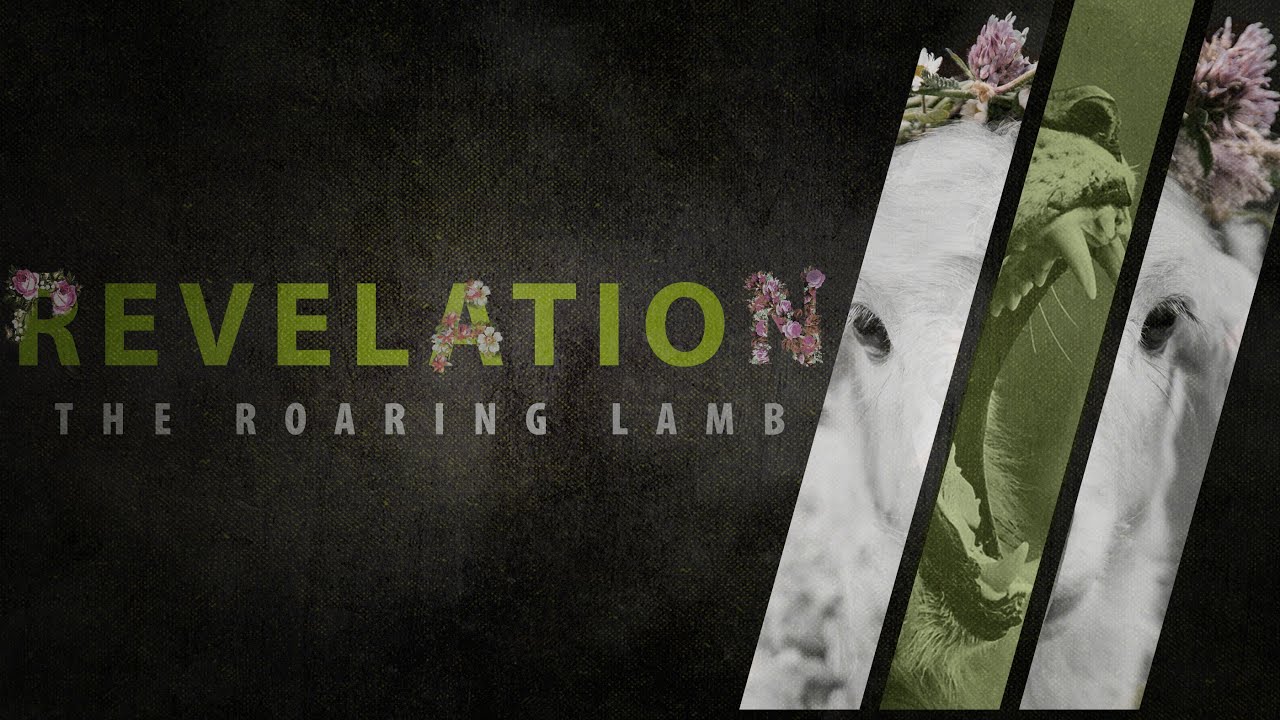
And then John turns to look, but he doesn't see a big masculine lion with big teeth and claws. He sees a lamb with its throat cut, covered in blood, standing in the center of the cosmic throne room of God. And this is what victory looks like. This is what the victory looks like.
Following the Lamb Through Suffering
And we see throughout the rest of Revelation that we are called to imitate that. That's what our image is supposed to be conformed to, the image of Yeshua. This is how the Lion of Judah overcame and conquered, by being a lamb that was slain. And this is what victory looks like. And as we go through, see, we're called to image that because we follow the Lamb. We don't follow the Lamb by looking like Rome, like empire. We follow the Lamb by looking like the cross, cruciformity. And that's an uncomfortable message for us today if we really explore the depth of what that means in the context of what it meant to the believers in the first century.
Because we're not really facing the persecution to any parallel scope of what they were facing when this book was written. And so there is a disconnect. And Paul reminds us here in Romans . He tells us what it looks like to follow the lamb. And he says, who shall separate us from the love of Christ? Shall trouble, hardship, persecution, famine, nakedness, danger, or sword? As it is written, for your sake, we face death all day long. We are considered as sheep to be slaughtered. No, in all these things, we are more than conquerors through him who loves us.
These are the things that facilitate death and are a witness to the world. That's why suffering and persecution was something that Yeshua tried to impress in his followers. It kind of goes along with how we're going to display another kingdom amidst these empires. And it's going to look foolish. It's going to look upside down, but it's going to make a deep impact. It's going to change the universe. We conquer by the blood of the Lamb.
The Structure of Judgment in Revelation
And so going back to our little graph, chapters 6 through 16 are kind of where we're going to jump in today. And we're not going to fully vet it all, but we'll likely have several messages in this section. In this section, we're going to have the seven seals of the scroll being broken, with each seal judgment being poured out on the earth. We also see the seven trumpets and the seven bowls, and they're all tied together with how they conclude. If you did your homework and noticed, they all end with the exact same phrase. They're all tied together with the same ending. And it's, here we go, the next slide.
We have the seals in Revelation 8, trumpets in 11, and bowls in 16, and they all end with the same phrase. There came peals of thunder, rumblings, flashes of lightning, and an earthquake. And this is kind of culminating to this day of the Lord moment, this final moment of time. And so because of this same ending, even though all three sets of seven look very different in how they're arranged and what's in them, many believe they're tied together in some way— whether that's John seeing them from three different angles or something like that. But yeah, we have this stream of three sevens leading up to the day of the Lord.
And I find that neat. These don't seem like linear, one-time events, but rather a recapitulation, I guess, or the same events unfolding throughout history, all culminating with the final day of the Lord.
Diving into Revelation 6
And so, are we ready to dive into chapter 6? Okay. Revelation 6, verse 1. What color? What color? Judgment. Judgment. Remember, these creatures that are speaking, the four living creatures and the voices, they're coming from the heavenly throne room. These are the creatures in 4 and 5. It's interesting. It's important. Pale horse. Its rider was named Death, and Hades was following close behind him. They were given power to kill by sword, famine, and plague, and by wild beasts of the earth. So just so we're on the same page, at least where I'm tracking here, the visions of chapters 4 and 5 are of the lamb that is overcome by being slain and has now ascended into the throne room of God. Now we know who is the lamb, sure. And he was slain where? On the cross. And then he ascended to where? Okay. So has this scene, has this taken place yet?
The Lamb Takes His Position
Has this vision taken place? Has the lamb conquered by being slain and ascended in heaven? Yes. That's where our hope is sourced, by the way. For those of you who are confused about why you're here today, you're here because that's where your source of hope is rooted. So now the lamb is going to open the seals. He has made his triumphant entrance into the throne room. And who's going to unravel the scroll? And he's given the scroll, and the lamb is going to begin opening the seals, which is kind of a funny image because you always picture a lamb trying to do it, and no one else would. You know what I mean?
And it's a good thing that this is symbolic narrative, aka apocalyptic, right? It's not literal narrative. So the lamb has taken his position at the right hand of God. The lion has overcome. It is the grand entrance of the victorious slain lamb king. And he takes the scroll as he stands in the center of the throne room of Yahweh. And he begins to break each seal on this scroll, having the authority to execute the judgments. Now there's some debate on whether the judgments here are within the scroll. This is the contents in the scroll. Or if the judgments come as Yeshua begins to break away before he opens the scroll.
Because the scroll that John eats in Revelation 10, some suggest is this scroll after it's opened. And it's one view. You don't have to die on that hill. But it's kind of neat.
Seals and Suffering Churches
And I know there's a ton of eschatological end time views. But it's clear here that these seals will begin to take place immediately. The lamb didn't wait to open the seals. He's beginning. And this is a continuation of the narrative of chapters 4 and 5. The lamb has overcome. He's in the throne room of God. Now everyone's aware that he did it. And he reaches and he takes the scroll and begins to open the seals. And so what's taking place here, the seals will begin to take place immediately and continue until his return, the day of the Lord. And this makes sense in light of the contents of the seven letters that we reviewed, the seven letters to the churches that were suffering the things that were within the seals. They had already begun taking place. And it was even felt by those seven actual churches in the first century.
Old Testament Echoes in John's Vision
Each seal is broken. And as a result, the lamb king is executing it and the horsemen are dispatched. And also, we see John pulling a lot from the Old Testament. Homework guys, you likely saw a lot of images. It sounded familiar. They were like little echoes, hyperlinks back to the Old Testament. John does this for literally everything in the book of Revelation. From the silence in heaven to the four horsemen to the mountains and islands being removed from the earth and the clouds rolling back as a scroll. Jesus didn't drop a nuclear bomb. It's a reference that is mentioned many times in the prophets, indicating the great day of the Lord, and sometimes even temporal judgment on the nations as well as the future judgment.
The Four Horsemen: Zechariah's Vision
And here we go. So we're going to jump to Zechariah 6 and explore just a few of these hyperlinks before we go further down this theme of witness. Zechariah 6 verse 1, And I looked up, and there before me were four chariots coming out between two mountains, the mountains of bronze. And the first chariot had red horses, the second had black horses, the third had white horses, and the fourth chariot had dappled horses, means spotted, all of them powerful. And I asked the angel who was speaking to me, What are these, my Lord? And the angel said, These are the four spirits of heaven going out from standing in the presence of the Lord to the whole earth. Kind of neat. Almost the exact same color scheme as the four horsemen, right? And they're pulling the chariots. Chariots are a war machine, so it's judgment related. And they represent the four spirits of heaven. And the chapter goes on to say that they're sent out to all the world, all of the nations, all four corners of the earth to punish the nations who oppress his people.
The Four Dreadful Judgments
And this could very well have been seen by the original audience as the political and natural disasters that Yeshua inflicts on nations that persecute Christians, and this is their judgment, right? And this vision of the four horsemen in Revelation is also connected over to Ezekiel 14, where God unleashes what is described as the four dreadful judgments. Sounds pretty dramatic, And if you turn to chapter 14 or make a note, here are the four judgments in Ezekiel chapter 14. In verse 13, says that he's going to send a famine. 15, going to send wild beasts. Verse 7, I'm going to send a sword against every country.
And 19, I'll send a plague to the land. This is where John's pulling from in Revelation 6. He's given power over how much of the earth? Fourth, 25%. to kill by what? Sword, famine, plague, oh, and wild beast, just to solidify the connection back to Ezekiel. John is pulling all of these elements from the story that's already been told. And he's now retelling it through the lens of what took place in the cross and exposing the trajectory of it all, exposing the revelation or the revealing of where we have been heading this whole time. The same four elements that John uses in his vision of the four horsemen are here. And here in the Hebrew Bible, they represented God's judgment poured out in the world, but now they're representing how Yeshua is making these commands as well, or has sovereignty over the judgment.
Judgment's Dual Purpose
This prophecy was meant for any nation that would display their unfaithfulness to God. But also in verse 21 of Ezekiel 14, something interesting happens. So subtle, we miss it. After all of these things happen, just tons of devastation, lots of people dead, amongst the rubble, there are survivors. And it's a remnant of people that have a heart change. Their composure, their character is different. And it tells the witnesses, look at how they are different now. A surviving witness emerges. It's purification. The purpose here is to punish the unbelieving majority of Israel while purifying this righteous remnant that emerges from it. And the same dual purpose is in Revelation 6. At least that's what's most likely in mind. Except now, it's the believing community, churches, along with the rest of the world instead of ancient Israel. The faithful will be purified, but those who compromise through idolatry and do not repent, who become disloyal to the kingship of Yeshua, will be judged by these tribulations.
Jesus Forewarned of Tribulations
We also see in Matthew 24 where Yeshua tells his followers that they too will experience the same thing. War, famine, persecution. And he says, do not be afraid, endure. Stay faithful despite it all. If this is the context of the seals, which I believe it is, it means one thing. What's the theme of Revelation? Yeshua is king. He is sovereign over it all. There's nothing that takes place that is outside of his sovereignty.
A Time of Great Doubt
Man, it's difficult. Imagine living in a time when the original audience read this. What would they be thinking about? If the book of Revelation was written at the end of the first century, 90, 95, 80, what would the original audience be thinking of? Maybe all of the disastrous events that have started to occur since Yeshua resurrected and ascended into heaven. He said there will be birth pangs coming, the destruction of Jerusalem, the massacre of the Jews there, the destruction of the temple there. The mass systematic persecution and torment under Nero's reign. The continued persecution and oppression that they were feeling.
The Jewish wars that arose where Jews were seen as basically what we would define as insurgents or terrorists among our empire. And then you have, of course, Israel. The non-believing Jews turning over Christians and saying, yeah, they're not under us. See, Jews had a special clause that they didn't have to partake intentionally of imperial worship, worship of Caesar. They had a little hall pass for that. And so at the beginning, Christians kind of were assumed by the Romans to blend in with that, but Justin Martyr kind of makes references that, no, they were outing the Christians. They're not one of us.
Caesar Worship and Defiance
And then you have persecution, where then you need to worship Caesar, burn offerings to Caesar, a little bit of wine, incense to Caesar, and the Christians would refuse. Imagine what the first century believers who got these letters were thinking when they read this. All of it would be fertile ground for doubt. If you were going through all that day in and day out, it would be fertile ground to doubt, wouldn't it? no, we are righteous. We would never doubt the hope we found in Yeshua through torment and persecution. It absolutely would. Come on. How can you think Yeshua is king when all of these things are happening? He's stupid. He's not king. He can't be. He wouldn't allow this to happen.
Comfort in Sovereignty
And then a messenger comes to your little home church and reads this scroll and its contents testify to the fact that through it all, Yeshua is sovereign. Yeshua rules over such a chaotic world and that suffering that takes place in it does not happen indiscriminately or randomly. These events, in fact, are brought on by Yeshua for both redemptive purposes and judicial functions. It is Christ that is ultimately in control of everything that happens. These things happening in this chapter, the saints under the altar, the horsemen causing all these things, they are not out of control of Yeshua. And that is a really uncomfortable thing for us here in the West, in a modern individualistic culture in the United States, where we pledge allegiance to a flag in the name of freedom.
And if that freedom is threatened, what do we do? We grab our guns and scream Patrick Henry quotes. Couple of you remember American history in high school. Give me liberty or give me death, right? That's how we respond. And with that caricature, I'm not highlighting the nation that we live in as much as the mentality that we're taught.
The Sovereignty of King Yeshua
It's where our roots are in this country. And when we think about Yeshua being in control of persecution of believers, it makes us uncomfortable, doesn't it? And the reason why is because we don't like to depend on God as Americans. We don't. We like to be in control of what we do. We like to be in control of what happens to us. We like to be in control of how it happens, and we sure like to be in control of what happens to the people that do it to us, don't we? It's a foreign concept, what the early believers embraced about the sovereignty of King Yeshua. Their first audience, in their mindset, chose to bear witness to Yeshua instead of yielding to the Roman identity and all of the freedom that went with it, gladly giving it up.
They chose to instead yield to the sovereignty of Yeshua and whatever he had planned or destined for their life. And they were oppressed. They were persecuted. They went through hardship and they were caught in the middle of the horsemen doing what they do. And they rejoiced. They rejoiced because they knew who was in charge and they submitted to that. Let's meditate on that for like five seconds. They knew who was in charge and they submitted to that.
The Fifth Seal: Souls Crying Out
And we see in the next verse, verse nine. And he opened the fifth seal. And I saw under the altar, the souls of those who had been slain because of the word of God and the testimony that they maintained. They called out in a loud voice, how long sovereign Lord, holy and true until you judge the inhabitants of the earth and avenge our blood. Then each of them was given a white robe. And they were told to wait a little longer until the full number of their fellow servants, their brothers and sisters, were killed just as they had been.
So the fifth seal reveals who bore witness to Yeshua—the souls. And here they are symbolically depicted as crying out under the spiritual altar and being given white robes. White robes signify purity or victory, depending on where you're sourcing it in history. But in a legal sense, the agents of the world who participated in the manifestation of the horsemen—remember, the horsemen are symbolic. They're not, this herd of rainbow colored horses aren't gonna come out with real people on them, right? They represent the elements, and these elements are manifested through the people, through the beast, the people that make up the kingdoms of the beast, the people of the earth.
And they represent the birth pains Yeshua spoke about as well as Jeremiah and Isaiah. Conquests, nations conquering other nations. The sword, people within those nations killing people they don't like. Economic collapse that seems to target the poor. Famine, plagues. And during these times, the nations ruled believers as deserving of persecution. They're guilty. And here God overturns that with a white robe and the safety of his house. And they cry out, how long, Lord? How long? That's an echo. John's echoing from where? Old Testament. It's an echo from Psalm 7910. It's a story that has already been told and it has a trajectory.
This seal symbolizes the suffering of believers who endure and bear witness. The word slain here is the same word to describe Yeshua repeatedly in chapter 5. They're doing what Yeshua did, as they're called to do. It gives the impression that they followed the Lamb even unto death. But I agree with the opinion that this chapter has a bigger point, that Yeshua is still the Lamb King, despite what is happening in the earth outside. He is sovereign. Therefore, whatever is happening in the form of judgment to the nations and the purification of the saints, whatever is happening, what Yeshua told his disciples—the command—doesn't change.
Endure, show yourself. These souls perceived God's sovereignty in the kingship of Yeshua as so solidified, so truthful that anything perceived by the world as negative had to be orchestrated for a greater good that brings glory to God. Again, you walk outside. They say, Deny your Christ. We know you're a Christian. You say no, and they stab you. How tragic, how wasteful of a life. But the context here is, no, this is part of the sovereignty of God. And it's being orchestrated in some way, shape, or form to produce a greater good that glorifies God because it's not about us.
Endurance and the Theme
The first century audience would have seen this as reassurance during their persecution. Not long ago, someone looked me in the eye and said, You really think Jesus is king over the world? I said, yes, with all my heart. When tribulation comes, I'm not called to prepare, I'm called to endure. And I hammer that because it's going to be the theme for the rest of the message, in the scriptures that we're going to speak about—the bowls and the trumpets as well. And we endure so that our faith may be purified as well as reinforce the fact that my salvation is held secure in Christ alone. Man, I thought you said Revelation was gonna be about hope.
This is kind of dark revelation. It doesn't sound hopeful to us, but to them, this was reassurance that no matter what happens, if they take my land, if they take my home, if they exile me to an island, if they put me to death, that is all ultimately for his glory and we will have victory through it. We will be vindicated and we will be given a reward, hopefully so that the nations will come to repentance because that's the goal, right? And what's also interesting here is this question the saints ask: How long? And the voice says a little longer, and then it says something that's uncomfortable again.
A little longer until the full number of witnesses—those slain bearing witness to Yeshua—has been met. It hasn't come yet. That full number hasn't come yet. But when it does, that's when the day of the Lord, that's when the end will come. Anyone else kind of turn their head a little bit at that? Okay, maybe we should skip this. I'm not asserting anything about what I'm fixing to say, but some would read this and think that we actually participate in the coming of Yeshua. When the full number of those who dare bear witness of his kingship comes to pass, that's how long. And that is a convicting idea.
I don't know if I agree with it or not, but the text caused me to be convicted just by how it was phrased. Because if it's true... And it's one of many opinions of the text. You see, I'm prefacing so much about that. Are you ready for Yeshua to return? Who's ready for Yeshua to return? Then why aren't you bearing witness? Then join the ranks. Chapter 7, the very next chapter, launches into an interlude between the 6th and 7th seal, and we're introduced to the 144,000. And this seems to be an answer to the question that the souls under the altar ask: how long? And here we are. You guys want to dive into the 144,000? Well, we're going to skip it today and go ahead into chapter 8.
The Seven Trumpets and Escalation
And chapter 8 of Revelation concludes with the seals but begins the seven trumpets. And I have just a quick overview here of the seven trumpets, starting in Revelation 8. First trumpet, here comes hail and fire mixed with blood. It's hurled down to the earth. And a third of the earth was burned up, and a third of the trees were burned up. How much? How much?
Second trumpet. Fourth trumpet. The third of the sun was struck and the third of the moon and a third of the stars so that the third of them turned dark and a third of the day was without light. It became dark and a third of the night. Fifth trumpet, scary locusts of torment come out, right? And they torture the servants of the beast. And this was likely seen as demonic forces held back until this point. But who do they ultimately report to? Who's ultimately in control? Now they are dispatched out. Sixth trumpet, an otherworldly cavalry kills a third of mankind. Verse 20 here is important. The rest of mankind who were not killed by these plagues still did not repent of the work of their hands.
They didn't stop worshiping demons, idolatry, making gold and silver and bronze idols, worshiping such things. And they cannot see or hear or walk, nor do they repent of their murders, magic arts, and sexual immorality and their thefts. What's amazing is that little phrase is so subtle at the bottom, we miss it. We're so overwhelmed with the scary locusts and the tails of scorpions and all this stuff and stars and bitter waters. Many of us miss that, this subtle thing. And they did not repent. So did things escalate a little bit with the trumpets versus the seals? Little bit, right? Images get more violent, a little bit more scary.
And did you notice the increase of how much of creation was impacted? How much? It's a third. But with the seals, it was how much? Fourth. A progression has taken place.
The Bowls and Exodus Echoes
What about the seven bowls in chapter 16? Chapter 16, we have the first bowl and sores break out on the servants of the beast, boils. Second bowl, the sea turns to blood and every living thing in the sea dies. Third bowl, turns all the rivers and springs to blood. Fourth bowl, the sun's allowed to scorch everyone and they get really ticked and they curse God's name who had control over these plagues. Who has control over the plagues? God. But they refuse to repent and glorify him. Oh, we see a theme that's hidden in these plagues. Verse 20 here. The rest of mankind who were not killed by these plagues still did not repent of the work of their hands. So first, you notice the same types of plagues here between the bowls and the trumpets sound familiar, right? These are plagues that are in the original Exodus account. You think John realized that? Water turned to blood, hail mixed with fire, sores, locusts, frogs.
The Refusal to Repent
Water is made bitter, which isn't in the Exodus of Egypt, but takes place in the Exodus account in the wilderness. And despite all of this, what is the result? They still did not repent. That's the theme here. And the thing is, we see them all tied together. The seventh seal or the seventh plague of each set ends the same way. Again, that's why many believe that these aren't necessarily chronological in a historical sense because the 144,000 are sealed with spiritual protection from the plagues. But that can't happen after the sixth seal is opened and all the plagues are done in the previous chapter, right?
You also see a progression of the plagues. First plague is 25 percent, or a fourth. The second plague is a third. And the third set—the third set of sevens—is all complete annihilation. And if you will, I'd like to think that the bigger picture of what these sets of plagues represent is not an emphasis on the massively intimidating, horrifying images of blood, death, monsters torturing people, big stingers. It's a small hidden detail at the very end of at least two of the sets and scattered through them—just a little detail. They did not repent in chapter 9 and scattered throughout 16. John points out that repentance did not result from the experience of these judgments.
It seems—maybe I'm stretching here—but John expected them to repent, and it didn't happen. And each plague progresses. Fourth, third, all. Why? Why did God progress the plagues in increasing waves as judgment on the nations? Why would you ever do that? Give them a chance. Okay, if you keep talking back to me, I'm going to take away your iPad for a day. No. Okay, you've lost it. I'm going to take it away for a week. No, I'm going to throw it in the trash. No. Highly oversimplifies things, but anyway—grace. There was an attempt to give grace, to give them a chance. God's grace in the plagues. John emphasizes repentance.
That's why John is surprised they didn't repent. After all of that, you are still cursing God and not repenting. And if you notice, the plague set of trumpets— those of you who did homework—it goes up to the sixth trumpet and then separates at the seventh trumpet. And there's kind of an interlude. The channel changes. You're like, wait, I was watching this station. What happened?
The Scroll and the Mystery of God
And John is given a scroll in chapter 10. Remember chapter 10. He's given a scroll, and maybe this is the scroll that was unsealed by the Lamb. He's given a scroll and he's told to do what with it? Eat it. And it tastes like honey in his mouth but bitter in his stomach. And it's the same scenario as what took place with Ezekiel in chapters 2 and 3. When Ezekiel the prophet of God was also given—guess what he was given. Guess what he was told to do with it. And it's sour in his stomach? Or was it honey? It was honey. He's told it would taste as honey. And the scroll that Ezekiel was given was written on both front and back.
Wasn't the scroll that the Lamb had also written on front and back? In Ezekiel, he was told to eat the scroll so that he could absorb the word of God and then express that prophecy to the nations or to Israel. And the same is true with John here. So join me in chapter 10 as we're going to read this section here. Everybody good so far? I know we jumped through the plagues. We can always revisit them, but the theme seems to be repentance —repentance, not what the big monster, is it Apache helicopters or is that a nuclear bomb or is that Chernobyl? The water's being bitter. It must've been the Chernobyl meltdown in the '80s.
The theme here—the important thing—is repentance. And now we have a scroll. The trumpets are interrupted. Verse 2 in chapter 10: "There will be no more delay. But in the days when the seventh angel is about to sound his trumpet, the mystery of God will be accomplished, just as he announced to his servants, the prophets. Then the voice I had heard from heaven spoke to me once more, 'Go take the scroll that lies open in the hand of the angel who is standing on the sea and on the land.' Then I went to the angel and I asked him to give me the little scroll. And he said to me, 'Take it and eat it. It will turn your stomach sour, but in your mouth, it will taste as sweet as honey.'" So many nations and many kings.
The remnant of the survivors of the plagues before this and after—it seems the progressive judgments were not enough for them to repent. And here the angel says, and there's actually a part I cut out that says John heard these seven thunders. So each of the plagues has thunder to announce them. So there's more plagues coming, and the angel's like, no, don't write that down. Don't write it down. We're done. We're done. Don't even worry about it. We're not going to delay anymore. Okay. When the seventh trumpet blows, that's it. That's it. Everything will be accomplished. The mystery of God will have been accomplished by the time we reach the seventh trumpet here.
So the judgments are put on hold for this. And what's interesting—the importance of this chapter—is if this is the scroll that we saw given to the Lamb, and if he's knocking the seals off, what is inside? Something really big must be inside, right? Bigger than the judgments. What if this is the central culmination? What if this is the revelation? What is inside the scroll? What if this is the climactic prophecy inside the scroll? What if this is what John was weeping about, waiting to be revealed—the mystery of God and how he's going to handle everything?
The Two Witnesses Reveal God's Mystery
So he eats the scroll. And then the prophecy that comes forth is on the next page in chapter 11 with the two witnesses. Here's the message—the content of the scroll that the Lamb opened in John 8 is revealed, and you have these two witnesses. And we'll read a little bit. I'm sure we will likely come back to this next week because there's another theme that runs through chapter 11. But it says this, and we're familiar: "I will appoint my two witnesses and they will prophesy for 1,260 days, 42 months, three and a half years, clothed in sackcloth." It's a familiar text. Here's your Ezekiel 37 language.
It's incredible. So Daniel 7. I didn't put this in here—we'll have to review it more in depth. Daniel 7 is a prophecy where the first half is then revealed in the second half of Daniel 7. So if you read it, it might be confusing. It's an interpretation of the prophecy. And the prophecy is of the beasts of the world, which represent entire empires, people like you and me who participate in the ways of the empire, right? And they torment the saints, the believers of God. It goes on to say that essentially the saints are going to inherit this eternal kingdom. And then it goes into the interpretation. Daniel gives the interpretation and kind of flips it around a little bit.
And he's like, these are the beasts of the nations, right? The beasts are going to come. And he alludes to this son of man figure that seems to be killed or tormented by the beasts, but then he's vindicated by coming on the clouds of heaven. So he hops in the clouds and he's ushered in on a cloud up to heaven. And there, this son of man figure is in the throne room of God and he's given all power and authority over heaven and earth. And from him launches an eternal kingdom made up of all nations. Okay. It's Yeshua, right? Coming in the clouds of heaven. The main purpose is to show his enthronement in heaven.
But Daniel 7 also emphasizes the same things happening to the saints. The Son of Man and the saints overlap. Yeshua and Israel overlap. Yeshua and the people and believers overlap. That's why in Revelation it speaks about the believers going up and sitting on his throne with him and ruling and reigning with him. There's an overlap of Daniel 7 here. And so here we see these two witnesses mimicking Yeshua. They had a ministry. They went to a city. The beast killed them. They were dead for three and a half days. Then they were resurrected and then they ascended to heaven. They bore witness by mimicking what Yeshua taught them.
They did what Yeshua told them to do. They were the echo of everything Yeshua was. I love that. It's the pattern of Yeshua. They did all of that. Witnesses to reflect Yeshua's ministry, death, and resurrection in the face of the way of the empire. It's so cool. It's so convicting because who's called to imitate Yeshua? Who's called to bear witness of him? Two witnesses is the Torah standard for establishing truth, right? Their witnesses are also described as what? The two lampstands. Lampstands, yeah.
The Lampstands and the Churches
Can we assume that the Bible is trying to interpret itself many times? Like John is going back to the Old Testament and he's pulling all these things to give extra context for what he's talking about. Okay, so we can do the whole tradition of man thing and make stuff up. That's fine. But if we kind of follow the text, we can— So where have we seen lampstands before in Revelation? When near the beginning? How many were there? Seven lampstands. And they represented what? The seven churches, believers. And of those seven lampstands, how many of those lampstands escaped the accusation of being unfaithful? How many of those lampstands were not called to repentance because they had not wavered in their bold witness of Yeshua? Smyrna and Philadelphia, the two lampstands.
Bearing Witness to King Yeshua
These two witnesses don't represent two individuals. The two witnesses are the bold and faithful believers that authentically bear witness, martyr to King Yeshua. The great city is mentioned, Sodom. So where are they killed? Sodom, Egypt, the great city, the place where Yeshua was killed. It was Jerusalem, right? Jerusalem, because that ties in that they're mimicking the pattern of Yeshua, right? But Sodom and Egypt and the great city, great city. Why does that sound familiar? Oh, that phrase appears eight times in Revelation as describing one city, Babylon, the great city, Babylon, which represents the entirety of the beast in every generation, right?
The way of the empire. The two witnesses, guys, are hopefully you carrying out the message of Yeshua by living after his pattern and him calling you to bear witness of everything he is by acting that out, by following him and showing the world what self-sacrificial love looks like. And what was the result of the two witnesses of this ingested scroll given to John? And we see it in verse 13, Revelation . We have a birth pang, earthquake, just like the earthquake happened at the crucifixion of Yeshua, according to Matthew, Luke, and Mark describe the sun turning black, which are elements of God's judgment throughout the prophets.
And here's his judgment poured out on sin through the flesh of Yeshua, according to Paul. And the result here is the people recognized who God was, finally, and they gave glory. They repented. And it's the only place in Revelation where a sign, an inkling of repentance ever takes place. John was told to give this prophecy or allude to this prophecy again to the nations and the kings, right? Guess where we see them again? In Revelation 21 in the New Jerusalem, verse 24. The nations will walk by its sight and the kings of the earth will bring their splendor into it. On that day will its gates ever be shut.
On no day will that day, the gates will never be shut into this grand city. Always open, invitation, come, for there will be no night there and the glory and honor of the nations will be brought into it. John was told to reveal the scroll to the nations and kings.
All of the Plagues Have One Purpose
All of the plagues and scary images we tend to be obsessed with in Revelation 10 were there for one purpose, it seems. Y'all can disagree, that's fine. Opinions, lots of angles on how to view Revelation. But it seems to me, all of the plagues and the scary images we tend to be obsessed with in Revelation are there for one purpose, to show the readers of the ancient book what actually causes the hearts of men to turn. And it comes through the believers who would boldly and courageously bear witness, be the images of Yeshua to the world today. Because if we follow the Lamb, we become the echo of the Lamb.
And bearing witness doesn't mean go tell people the gospel. It means show people the gospel. Action to your word. Action. As we see the two witnesses of having the attributes of Elijah and Moses. Many people think, oh, it must be Elijah and Moses, but the attributes are shared between them. They're like identical twins. They're not distinguished. They both have this power. The calling of fire, right? Shooting fire, flamethrowers from their mouths, right? They took the challenge, flamethrowers from their mouth. And what did the fire do? The fire consumes their enemies. Guess where that's also found?
It's a reference from Jeremiah chapter five, when God puts his word in Jeremiah's mouth and he says, it will be a fire that you will consume them like wood, right? They have the power to call down all of these plagues, the same plagues that were in the Exodus. Moses, right, the one who bore witness of God's power to the world. And here, the two witnesses are bearing that same witness of Yeshua, God's power to the world.
Called to Sit With the Despised
We become the ones, if we choose to follow the example of the two lampstands, instead of the five, we become the ones who will sit with the Samaritan woman. We become the people who would go in the midst of the lepers. We become the people that would sit and speak to those deemed despicable tax collectors. Those deemed sexually immoral, the ones the religious elite would never think the peace or grace of God would be available to. We're called to be the ones that sit and speak with those who are our enemies. And we are called to be the people that would even forgive them as they nail us to the cross.
John portrays the witnesses as having this massive amount of power, the bold witnesses of God's glory, just like the prophets. And through that, testifying of the blood of the Lamb, slavery is broken and redemption draws near.
The Seventh Trumpet Sounds
After the enemies of God's kingdom repent through the testimony and witness of these two witnesses, guess what is blown? The seventh trumpet, right? So the days of the seventh trumpet. We're in here now, the whole chapter. Here we are, we're gonna reveal what? God's mystery. You wanna see it? Revelation . This happens exactly after the repentance of everybody. The seventh angel sounded his trumpet and there were loud voices in heaven which said, the kingdom of the world has become the kingdom of our Lord and his Messiah and he will reign forever and ever. The mystery of God. Revelation has a lot of cool stuff in it, guys.
All kinds of links and passages and hyperlinks. Those are cool. But there's also an actual applicable point that we don't always like to admit that it has because it hurts or it convicts us or we just don't like hard stuff and we don't like to face the reality that we truly don't always care about. We like to, on social media, click that we're a Christian and kind of put the mask on when needed. But when it actually comes to doing the hard things that will make us seem stupid to the world, I'll just blend in. But there is application in this book, and it should instill hope and reassurance, and it should instill conviction and repentance, because there is a reward.
There is vindication. And we have the knowledge and the faith that our king reigns despite the hell that's outside. It's all for his glory. No big deal. I will endure.
Are You Being Distracted? Are you being mystified by the birth pangs of the world? Are you obsessed with the plagues or the wars or the sword or the famine or the economical reset that the angels speak about? Do you find yourself absorbed by how you're going to protect yourself from these things? The manifestation of the horsemen or the plagues of the trumpets? Are you so worried about these things that you have forgotten the reason of why you're here as a believer? God was sovereign over all of the plagues of Egypt, but the Israelites were only protected by some of them but endured through others.
They endured knowing who was in control. Maybe the message today is not about recognizing who you are called to be as a soldier of Christ, but also what do you need to repent of in the midst of the plagues? What do you need to repent of in the midst of the plagues? Or will you continue finding ways to subvert acknowledging God's sovereignty over it all? You are the witnesses of the power of God. Are you one of the two lampstands? Or are you compromising the vision of how God is going to redeem the world with distractions or attractions of the empire? May fire go forth from your mouth. Why were the martyrs slain in the fifth seal and found themselves under the altar?
Because of the word of God and the testimony that they maintained. What is our testimony as believers today? Are you truly?
Are You One of the Two Lampstands? Only two of the lampstands are identified as those who bear witness. Only two out of the seven. The seven continued claiming that they had the allegiance. They were witnesses. You guys are doing pretty good, but you're compromising. Only two were identified as the witnesses. Are you truly bearing witness to the world that the kingdom of the world is becoming the kingdom of our Lord and his Messiah and he will reign forever and ever? Guys, we need to get it out of our life. We need to get it out. Get it out in the midst of the plagues before it's too late. Get it out today and be reborn. The horsemen purify and they judge. The difference between the two is how you respond.
Make Your Commitment Today
And so guys, please stand. We'll go ahead and conclude worship, worship team. Guys, if you need prayer today, we have prayer teams on either side of the room. You don't have to do this alone. And maybe you're here today and you've never actually fully committed your life to Yeshua as your king. Guys, you can make that commitment today by crying out, confessing to the king that your sins have overtaken you and that you're done with that. And we have a prayer team that will stand with you as you enter into this rebirth. Wherever you are today, in the midst of the plagues, in the midst of the things in this world that even the first century believers went through, the wars and the famine and the sword and the plagues, wherever you are, make sure that you're enduring.
Make sure that you're joining the ranks of those under the altar, given the white robes. Make sure you are one of the two lampstands. Because everyone else, Alvina Malkinu, our father, our king, father, we thank you for this time as we come together and explore your word that you've given to us, but also the declaration and the reassurance that our king reigns even now. And that everything that happens in our life that we may deem as tragedy or negative, something that hurts, that we would have the same faith as the early believers, the witnesses of Christ that we would be reassured that although it hurts, although we grieve, although we mourn, although we're angry, we know that it is all for His glory in some way, shape, or form. And if we find ourselves in the midst of our lives not conforming to His image, the image of the Lamb, not fully claiming the overcoming of His blood, not fully taking seriously our calling to be a witness to the world, then I would ask that your Holy Spirit that you say is within us even now would convict our hearts of the things that we need to get out so that we can get right.
Prayer and Blessing
We thank you, Father, for your peace and your joy that only exists in your kingdom and that we look forward collectively to the coming day of our King Yeshua. In his name, in honor and sovereignty, we pray. Amen. This is your Father. This is my Israel. Adonai. Hear, O Israel, the Lord is our God, the Lord is one. Blessed is the name of his glorious kingdom for all eternity. May the God of patience and encouragement grant you to be like-minded with one another in the manner of Messiah so that together with one voice you glorify the God and Father of our Lord Yeshua, the Messiah. Shabbat Shalom. Hallelujah. Shalom.
Found in Truth
I'm Matthew Vanderells, and I hope you enjoyed this message. Found in Truth exists to build a community that bears the image of God and lives the redeemed life only Yeshua gives. If this message impacted you or if this ministry has been a blessing to you, we invite you to take part in making sure the message of Yeshua and the truth of God's word continues to reach others. To make sure this happens, you can donate through our online giving portal at foundinatruth.com slash give or by texting any amount to 704-275-0752. Don't forget to like and subscribe for new content every single week. And we thank you for your continued support. And we look forward to seeing you next time. Shalom.