Wilderness at dusk, the desolate place the scapegoat was sent on the Day of Atonement

The Day of Atonement

Yom Kippur יוֹם כִּפּוּר

The holiest day on God’s calendar, and the day He decided to clean His house rather than leave it. Begins at sundown on Sunday, September 20, 2026 and ends at sundown on Monday, September 21, 2026.

Counting down

Until the day begins

Days
Hours
Minutes
Seconds

What is it?

The Day of Purging.

Leviticus 23 gives most of the feasts a sentence or two. This one gets an entire chapter of its own in Leviticus 16, spelled out step by step. The command itself is short: “The tenth day of this seventh month is the Day of Atonement. You are to hold a sacred assembly and practice self-denial.” No work at all, and for an ancient Israelite the penalty for working was being cut off from the people. (Leviticus 23:27–28)

The whole day hangs on one word, and the word is usually misunderstood. For a long time people assumed kippur came from a root meaning to cover, as though God saw your sin and laid a tarp over it. It is closer to the opposite. The root means to cleanse, to purge, to wipe away. It is a detergent word. Think about what happens when soap hits a stain: it does not hide it, it takes it out.

Leviticus 23 also calls it a Shabbat Shabbaton, a Sabbath of Sabbaths. The big one. Stop, be still, and look honestly at who you have been this past year.

The part most people miss

The day is not really about you.

Read Leviticus 16 and watch where the blood goes. The mercy seat. In front of the mercy seat. The altar of incense. The bronze altar, seven times. It never once goes on a person. Every place it lands on purpose is a piece of God’s house: the furniture, the furnishings, the altars. The high priest spends the holiest day of the year scrubbing down a building.

“You must keep the Israelites from their uncleanness, so that they do not die by defiling my tabernacle that is among them.”

Leviticus 15:31, CSB

That verse sits right before the chapter, and it is the reason for all of it. At this point in the story God is not far off in heaven. He has moved into the middle of the camp. Which means the mess His people make lands all around His presence, and if it piles up high enough, people die.

So God has three options. He could destroy the people making the mess. He could pack up the glory and go home. Or He could have His house cleaned. Two of those three end the relationship. Cleaning is the only one that lets Him stay.

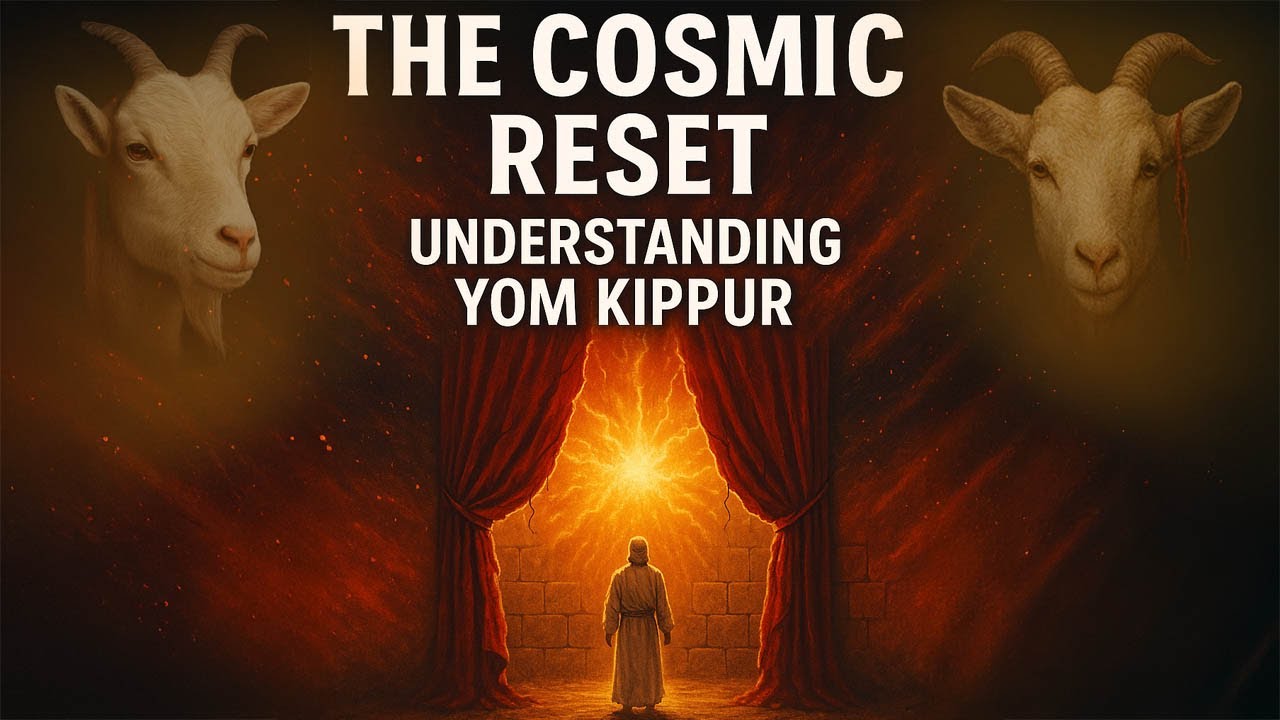
And there is a second goat, the one that does not die. The high priest lays both hands on its head, confesses out loud every category of sin the Torah has a word for, and a man walks it out of the camp into the wilderness, into what the Hebrew calls the land of the cut off. Notice the reversal: in Eden, sin got the people exiled from God’s presence. Here, sin is exiled from God’s presence and the people get to stay. (Leviticus 16:21–22)

The chapter ends with a promise: “Atonement will be made for you on this day to cleanse you, and you will be clean from all your sins before the Lord.” (Leviticus 16:30)


Why it matters

He stayed.

Hebrews takes the whole ritual and lays the gospel over it. Messiah “entered the most holy place once for all time, not by the blood of goats and calves, but by his own blood, having obtained eternal redemption.” (Hebrews 9:11–12)

Aaron went in once a year with a bowl of blood so that God could stay. Yeshua went in once with His own so that you could stay.

John says the Word became flesh and pitched His tent among us, the same word as the tabernacle in Exodus. The glory came back. Then in the temple courts Yeshua says, destroy this temple and I will raise it in three days, and John tells us He meant His body. The house of God became a body. The one who dwelt in the middle of the mess is now a man walking through Galilee touching lepers and eating with tax collectors, and the mess does not drive Him out. He goes looking for it.

At the cross the crowd throws His own words back at Him: “You who would destroy the temple and rebuild it in three days, save yourself! If you are the Son of God, come down from the cross!” (Matthew 27:40) The chief priests, the men whose job was cleaning the house, are standing right there. And He does not come down. The God who would not budge from His throne while a priest wiped blood across His altars would not come down off the cross while His own blood ran down it. He stayed.

That is why the day still lands. The trash can in Leviticus filled back up every single year, which was the point: the ritual was never the solution, it was a pointer. Yeshua is the offering that does not just clean up the effects of sin but deals with the source, the heart itself. Today is not the day God decides your sin did not count. It is the day He chose to stay in a house you have been making a mess of all year, so that He could keep living with you. The whole day is about mercy.

An open Bible on white linen with a curved ram's horn shofar laid beside it in quiet morning light

How to keep it

Two questions, and then dance.

We are on the other side of the cross, so we do not keep this day the way ancient Israel kept it. There is no temple and no sacrifice, and we can come back to God any day of the year instead of waiting 364 of them. But being forgiven is not a reason to skip the honest part. If anything it leaves us less excuse.

Get specific

Two questions carry the day: who have you actually become through the choices you made this year, and what have you contaminated? A single vague sweep of "forgive me for everything" misses the point. Write things down. Get concrete. Do not be scared of yourself.

Fast, if you can

Leviticus commands self-denial, and that is where fasting comes from: no food and no water from sundown to sundown. We fast together as a community and we invite you into it rather than require it. It is 24 hours, and it is doable.

Then celebrate

The Mishnah, a second century Jewish text, remembers Yom Kippur as one of the two most joyful days in the whole year: when it ended, young women went out and danced in the vineyards. Not tradition we are commanded to keep, but it tells the truth about the day. The celebration comes after the reckoning.

One more, if you want something to read during the fast: the book of Jonah. It is 48 verses, and it is about a man who wants judgment for the people who deserve it and mercy for himself. It is a convicting way to spend part of the day.

If you join us

What to expect.

Service times for this year are on the calendar, and we livestream, because we do not want anyone left out of this one.

A heavy room, on purpose

This is the most solemn service of our year, and it is meant to be. Worship, an opening prayer, and a teaching that goes into Leviticus 16 rather than skating over it. Come expecting depth.

Room to respond

There are prayer partners off to the side if you want someone to pray with you, and a symbolic altar at the front if you want to leave something there. Sitting quietly in your seat is just as acceptable. Nobody is put on the spot.

It ends in joy

Solemn is not the same as grim. Worship, the Shema, and a blessing to send you into the day. Face what you have become, trust the atonement, and then get ready to dance.

Honest answers

Questions people actually ask

When is Yom Kippur 2026?

Yom Kippur, the Day of Atonement, begins at sundown on Sunday, September 20, 2026 and ends at sundown on Monday, September 21, 2026. Like every biblical appointed time, the day starts in the evening, not at midnight.

What does "atonement" actually mean?

The Hebrew root behind kippur does not mean to cover something up. It means to cleanse, to purge, to wipe away. It is a detergent word. Yom Kippur is less the Day of Covering and more the Day of Purging.

Do Christians observe Yom Kippur?

We do, and not to earn anything. We are on the other side of the cross, so we do not keep the day the way ancient Israel kept it, and there is no temple and no sacrifice. But being forgiven is not a reason to skip the honest self-examination. If anything it gives us less excuse to avoid it.

Do you fast on Yom Kippur?

Leviticus 23 commands self-denial on this day, and that is where the tradition of fasting comes from: no food and no water from sundown to sundown. We fast together as a community, and we invite you rather than require it. It is doable.

Keep it with us.

First time keeping this day? You are exactly who it is for. Check the calendar for this year’s service, or plan a visit. After Monday, September 21, 2026, the next Day of Atonement begins at sundown on Sunday, October 10, 2027.

All the biblical feasts·Yom Teruah·Sukkot